
All Articles
Industry

Maximizing B2B growth with strategic account management solutions

Discover how account management solutions streamline B2B relationships. Learn about essential features, benefits, and tools to drive retention and growth.

Dan Guo
May 5, 2026

Maximizing B2B growth with strategic account management solutions

Busy B2B support teams need a clear way to track customer interactions and prioritize relationship growth. Where customer relationship management (CRM) tools focus on winning new business, account management solutions help you keep the customers you already have.

These tools are especially important for B2B support because they can boost net revenue retention (NRR), a key measure of business value. In this article, we’ll cover the important features of account management software and explain how to choose the right solution for your team.
How account management tools differ from traditional CRM systems

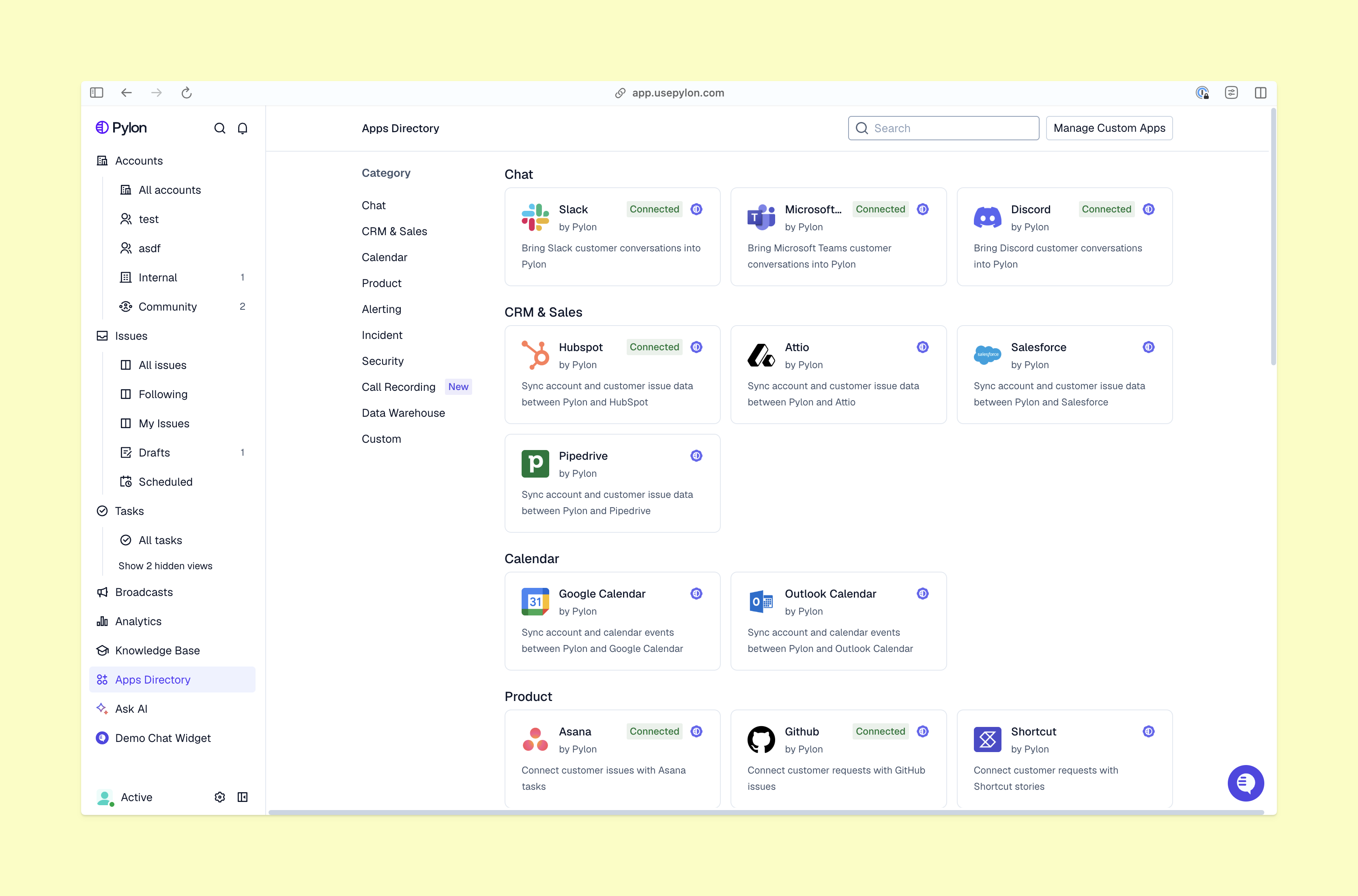
Chat integrations view from Pylon

Traditional CRM software is a great way to track customer contacts and monitor the sales pipeline. But CRMs aren’t the best fit for long-term account management. Instead, you need a system that helps your team focus on NRR and expand existing customer relationships. 

When you use account management software to boost retention, growth becomes more predictable and sustainable. Otherwise, you risk falling into the “leaky bucket” model, where you have to work hard to replace all the customers that churn

The best account management solutions are forward-looking. They help you scale customer success through automation, and they let account managers reliably predict account health and risk factors to build long-term partnerships.

Here’s a table summarizing the differences between these two tool types.

CRM software Account management solutions
Focus Pre-sales Post-sales
Timescale Short-term Long-term
Aim Track deals Build partnerships
Main users Sales team Account managers
Purpose Record customer data and manage transactions Predict customer outcomes and support relationship health

Key features of top-tier account management tools

These are the most important features to look for in account management systems:

  • Complete customer 360-degree view. Modern account management tools draw on signals from different channels, like Slack, email, Discord, and live chat, to help you manage accounts at a glance. You can see risks and opportunities all in one place.
  • Sentiment analysis. Favor tools that offer AI-powered sentiment analysis, a feature that reviews customer conversations to create health scores and spot accounts at risk of churning.
  • Whitespace analysis. The best account management software helps you see which customers are ready for upsells and relationship expansion. This type of tool analyzes customer needs and matches them to the products you offer, then gives account managers recommendations.
  • Customer success playbooks. Look for automated playbooks that trigger specific workflows when accounts hit milestones or show unusual usage patterns. Smart automation like this saves time and helps you manage accounts at scale.
  • AI agents. Today’s account management systems often offer AI agents to handle repeat tasks like meeting logs, call notes, and scheduling reminders. That lets your team focus on more important activities, like account planning and customer chats.
  • Integrations. The platform you pick should integrate seamlessly with your CRM software, support channels, and other business tools, so you can pull in account data from multiple places.
  • Customer journey tracking. Some platforms can send automated reminders and notifications at key points in the customer journey, like renewals and onboarding milestones.

Benefits of using a modern account management solution

If you’re not sure whether you should go through the effort to onboard new software, check out these key advantages of account management tools.

Reduced churn 

When you use the right software, your team gets early warnings about account risks. AI-powered tools review customer sentiment and spot issues, which helps your team step in well before renewal dates. In turn, this can stop customers from churning and improve NRR.

Increased account value

Account management solutions look at customer data to find opportunities for expansion. This lets your team grow relationships and suggest upsells or cross-sells to improve customer lifetime value.

Better workflows

When all your customer data is in one place, you eliminate the “silo effect,” where important information is stored in multiple spreadsheets or email threads. That makes it easier for your team to work together and reduces duplicate work, saving time and helping you scale successfully.

More accurate forecasting

Account management solutions can review account context and health scores to predict expansion and contraction. Better forecasting helps your company plan and make decisions, like when to hire and how to safely invest. Plus, this data can guide your success team in supporting customers proactively, so they can reach out to the right accounts at the right times. 
How to choose the best account management software

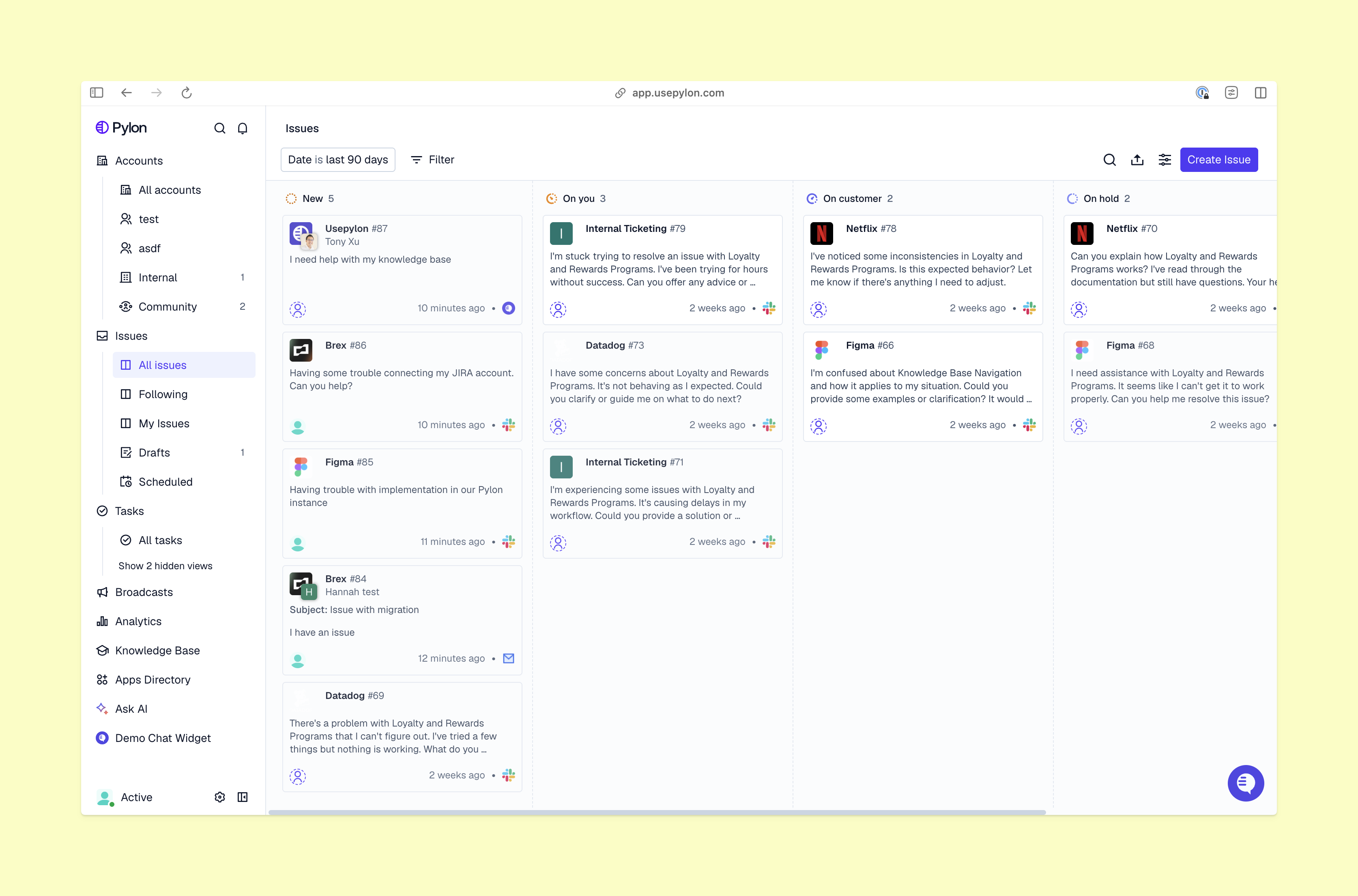
Issue view from Pylon

With all the tools out there, how do you decide which one is best for your team? As you review the options, think about:

  • Scalability. Look for solutions that can handle increased volume as your company grows. Software that relies on manual input is difficult to scale, so opt for strong automation and AI-powered tools.
  • High-level reporting. Clear analytics show account managers account health at a glance, and they give leadership real-time visibility into trends and risks.
  • User adoption. Make sure the software is easy for your team to use on a daily basis. If it’s too complex or has a steep learning curve, you’ll likely see weak adoption and less return on your investment.
  • Relationship mapping. Check out how simple it is to create maps of customer hierarchies, so your team knows who to deal with for day-to-day support, relationship expansion, or renewals.
  • Easy integrations. Audit your current tech stack and see if the account management software works well with your CRM, billing tools, and other systems.
  • Customization options. You’ll want personalized dashboards that show only the data you care about, workflows you can tailor to your team’s needs, and modules you can easily enable or disable.
  • Security and compliance. Account management solutions handle sensitive customer data, so they need strong security. And make sure the tool helps you comply with data privacy laws like the GDPR, plus any other compliance rules for your industry.

Future-proof your account strategy with Pylon

The best account management software helps you build strong partnerships and expand customer relationships. Look for tools that prioritize customer signals, so you know what accounts to focus on to improve retention and seize on expansion opportunities. You’ll also need automation and AI-powered tools that help you scale account management as your company grows.

Pylon is the modern B2B support platform that offers true omnichannel support across Slack, Teams, email, chat, ticket forms, and more. Our AI Agents and Assistants automate busywork and reduce response times. Plus, with Account Intelligence that unifies scattered customer signals to calculate health scores and identify churn risk, we're built for customer success at scale.

Book a demo

FAQ

What’s the main difference between a CRM and account management software? 

A CRM is primarily designed to manage the sales pipeline and help with lead acquisition. Account management software is built to manage the post-sales relationship, focusing on customer health, renewals, and maximizing the value of existing clients.

Can small businesses benefit from account management solutions? 

Yes. While large enterprises have complex account structures, small businesses can use these tools to ensure they don't lose their first core customers. Automated health signals are especially useful for small teams with limited bandwidth to check in manually. 

How does account management software help with upsells? 

These tools track product usage, support history, and customer sentiment. By identifying high health scores or specific "power user" behaviors, the software alerts account managers to the perfect time for an expansion conversation.

Do account management tools integrate with internal communication platforms like Slack? 

Most modern solutions offer integrations with Slack and Teams. This allows teams to receive real-time alerts about account risks or milestones directly where they already work, preventing silos.

Explore more

Industry

How to Choose a B2B Platform That Unifies Support and Success

Pylon Team
October 15, 2025
Industry

How to build relationships with customers for B2B growth

Dan Guo
January 29, 2026
Guides

Software for account management in modern B2B revenue teams

Robert Eng
April 2, 2026
Guides

How help desk solutions scale modern customer support

Advith Chelikani
March 6, 2026
Guides

Why modern teams need better customer management tools

Dan Guo
May 5, 2026
Guides

How modern tools for customer success are redefining the industry

Dan Guo
April 22, 2026
Industry

Beyond the transaction: How to connect with customers successfully

Dan Guo
January 29, 2026
Guides

Essential guide to customer complaint management for B2B support teams

Dan Guo
February 3, 2026
Industry

13 Customer Support KPIs B2B Businesses Need to Track

July 11, 2025

Explore more

Team

Wendy Vang, Founding Designer

Robert Eng
July 1, 2024
Blog post
Industry

Maximizing B2B growth with strategic account management solutions

Dan Guo
May 5, 2026
Blog post
Guides

Chatbots vs. Conversational AI: How They Differ and Why It Matters

Advith Chelikani
November 20, 2025
Blog post
Industry

How to drive accountability with an intuitive issue management system

Robert Eng
April 2, 2026
Blog post
Guides

Essential guide to customer complaint management for B2B support teams

Dan Guo
February 3, 2026
Blog post
Guides

How modern tools for customer success are redefining the industry

Dan Guo
April 22, 2026
Blog post
Team

Bryant Lin, Software Engineer

Advith Chelikani
October 14, 2024
Blog post
Industry

Cross-functional collaboration explained for modern support teams

Dan Guo
March 6, 2026
Blog post
Guides

SLA Best Practices: How to Set and Manage Customer Expectations

December 5, 2025
Blog post