
AI agents are digital teammates designed to help your support team. These automated tools are also a cost-effective way to scale support operations. A growing company means surging ticket volumes, but training AI agents to guide customers can offset that extra work without adding hiring costs.
In this article, you’ll learn a step-by-step process for how to set up AI agents that can improve the bottom line.
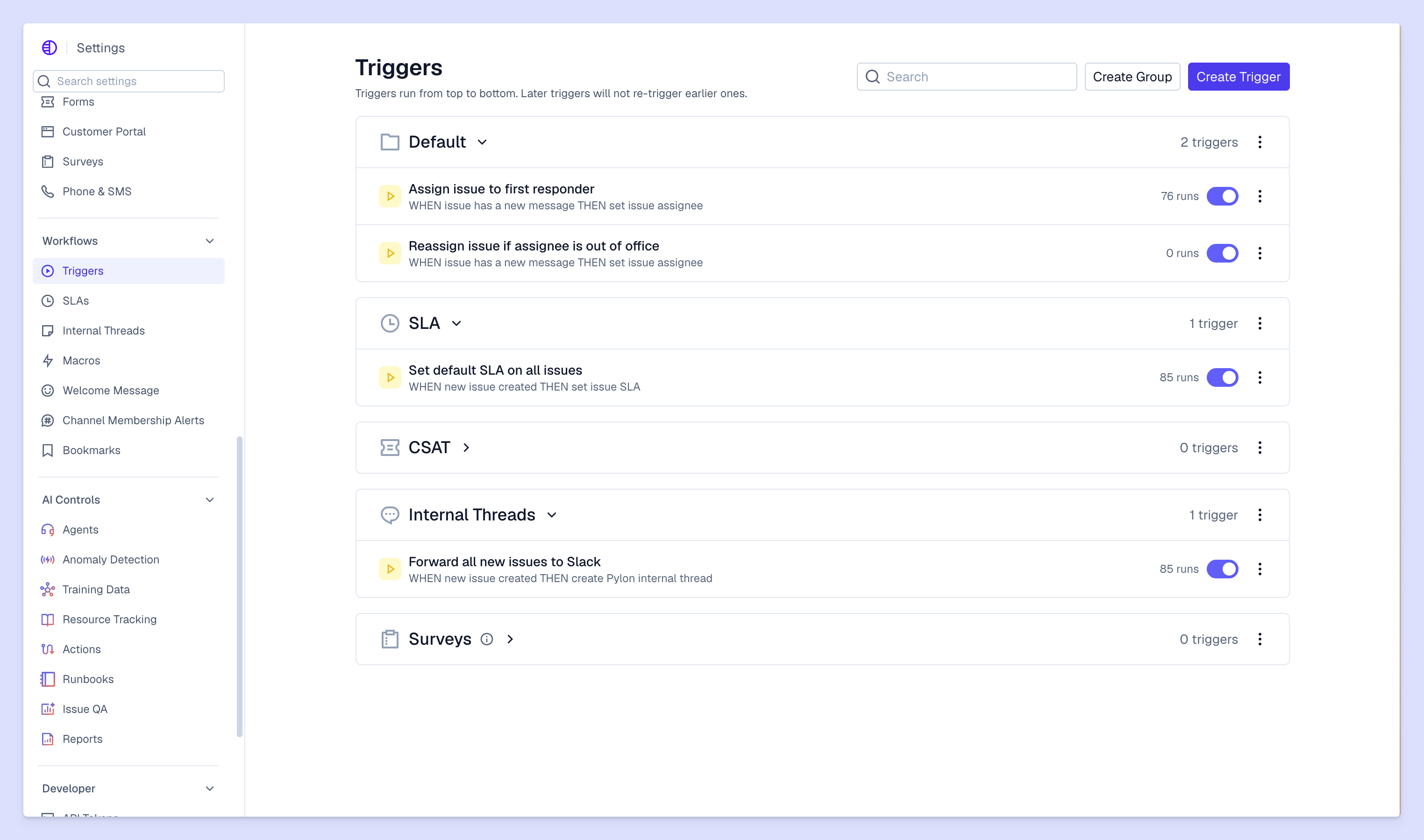
An AI agent is a type of software that can make decisions and take actions autonomously to achieve specific goals. Unlike a traditional chatbot that follows scripted paths, an AI agent uses a large language model (LLM) to understand requests, analyze intent, and interact with customers. These tools take care of straightforward support tickets so your team can handle more complicated requests that need a human perspective.
AI customer support agents can understand customer intent based on tone and learn from feedback to improve performance over time. Their ability to grow and take autonomous action means they can provide better customer support without adding re-scripting or ticketing work to your team.
While a chatbot can answer a simple, preset question, an AI agent can use runbooks to solve the underlying problem. Runbooks are sets of executable instructions that are similar to a team member’s workflow for the same scenario.
For example, if a customer asks for a refund, a chatbot might provide a link to the refund policy page. But an AI agent can gather information about why the customer wants a refund and route them to a finance team member who can process it.
There are two types of AI agents for support teams:
AI agent development has skyrocketed. People are excited about the potential of this new technology, but many are caught up in hype instead of making strategic growth plans. Gartner predicts that over 40% of agentic AI projects will be canceled by the end of 2027 because of high costs or unclear value. You can avoid these problems by studying when and how creating an AI agent will be useful for your company.
Here’s how to build a strategic pre-deployment audit to help your investment last.
The best tasks to automate are high-volume, simple, and time-consuming. Look for repetitive, predictable workflows like user permission changes and troubleshooting error messages. If a team member would respond by linking the customer to a knowledge base resource, your AI agent could likely handle it instead.
Agents need clear engagement rules to follow. That means picking the right boundaries: what it’s responsible for, how it interacts with customers (its personality), and when it needs to escalate to a team member.
For instance, an agent might be cleared to handle all queries about integrations, but has to escalate any issue that mentions a potential security vulnerability. And its conversations with customers should match your brand voice for a consistent customer experience.
Your AI agent is only as good as the data it learns from. If your knowledge base contains outdated or conflicting information, your agent won’t be as effective. Before you build, make sure your help docs are up to date and accurately reflect your offering.
Audit your knowledge base and support conversations: Review and archive old content, tag articles with relevant keywords, and group resolved tickets with the right account context.
Here are three steps to help you prepare your AI agent for a successful launch day.
Customers are more likely to reach out for help in a place they already use, like Slack or email. But repeating themselves every time they switch channels is frustrating.
Omnichannel support platforms are designed to give the whole team (including an AI agent) the context and tools they need to resolve a customer’s issue from anywhere. If a customer mentions a problem in an email and then follows it up in Slack, the AI agent should be able to access that context.
An agent needs to take action using data-backed decision-making capabilities. Modern AI agents can integrate with your other software systems using APIs. By connecting your CRM, for example, the agent can check a customer’s current contract and make recommendations about the best feature add-ons for their needs.
Pylon’s AI agents handle support requests with runbooks and integrations with popular systems, as well as the option to create your own API. A “hardware failure” runbook, for example, can instruct the agent to collect a device ID from the customer, call your internal API to check its status, and then respond with the specific error code and fix the failure without interventions from a team member.
Before going live with an AI agent, run a pilot phase. Using the agent in “shadow mode” is a good way to test it. In this setup, the agent runs in the background, analyzing incoming tickets and suggesting responses that your support team can review.
Testing the AI before launch creates a safe environment to fine-tune its performance, so it’s less likely there will be problems when it interacts directly with customers. Your support team can give the final approval on its interaction style after your AI agent tutorial, which builds their trust that this tool will handle customer needs well. And early feedback gives your AI agent invaluable training data as it learns from your team’s best practices.
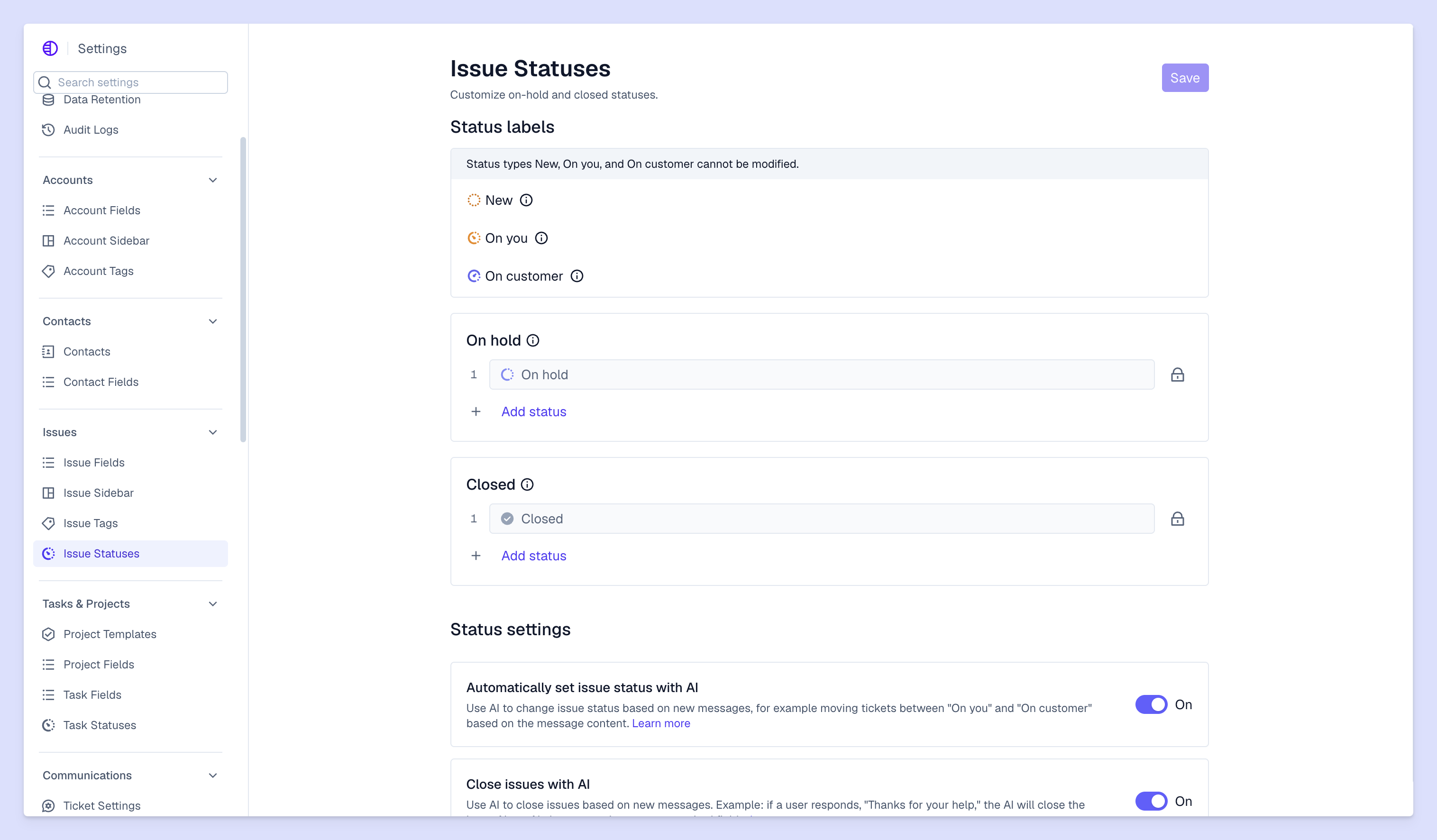
Successfully building AI agents starts with your team’s communication channels and internal data. Great customer interaction documentation offers context your digital teammate needs to independently resolve customer issues. An omnichannel support platform can keep all this information organized, especially when it naturally integrates an AI agent.
Pylon is the modern B2B support platform that offers true omnichannel support across Slack, Teams, email, chat, ticket forms, and more. Our AI Agents and Assistants automate busywork and reduce response times. Plus, with Account Intelligence that unifies scattered customer signals to calculate health scores and identify churn risk, we're built for customer success at scale.
This guideline suggests AI should perform no more than 30% of a task, ensuring the remaining 70% is human-led. This maintains oversight, ethical control, and creative integrity.
The LLM acts as the central engine. It handles reasoning, interprets natural-language instructions, and decides which specific actions or tools are needed to achieve a goal.
Memory allows agents to retain context from past interactions. Without it, agents cannot learn from mistakes, follow complex multi-step threads, or maintain a consistent persona.
The core building blocks include a brain (LLM), planning (task breakdown), memory (short- and long-term), and tools (API access) for interacting with external environments.
Pylon Workforce Management is available now. See it in action with a live demo.