
A lot of acquisition playbooks start and end with marketing, and they focus on ad spend and content creation. But despite those efforts, customer acquisition costs continue to climb. That’s because companies pour money into the top of the funnel, but ignore what happens after a customer converts.
Acquisition is the full process of attracting, engaging, and converting prospects into paying customers. Often, the companies with the lowest customer acquisition costs (CAC) don’t spend the most on ads — they form strong relationships with existing customers to encourage referrals, produce case studies, and expand long-term accounts.
In this article, you’ll learn how to increase customer acquisition and growth through better support experiences.
Your support team touches every active account, so it plays a big role in shaping whether each customer renews, expands, refers peers, or quietly churns at the end of their contract.
Customer success and support teams affect acquisition through these connected channels:
Strong acquisition layers organic, paid, and relationship-driven approaches together, and post-sales teams play a larger role than a lot of companies realize. Here are some customer strategy examples that connect post-sales performance straight to acquisition success.
Organic search is a long-term acquisition channel, since a well-written article published today can still bring in traffic two years from now. And support teams sit on a goldmine of content ideas, like the questions customers ask in tickets, objections that come up during onboarding, workarounds real accounts find, etc. All of these are raw material for blog and knowledge base articles that bring in new customers and keep existing accounts happy.
Google Ads, LinkedIn campaigns, and account-based marketing can create demand quickly, but these methods are also expensive. The median SaaS company now spends $2 on sales and marketing for every $1 of annual recurring revenue. One of the best ways to reduce those costs is to back campaigns with strong social proof, like landing pages with customer quotes and ads that show off success stories.
Lifecycle messaging that meets people where they are in the buying process often converts better than batch-and-blast campaigns, and your support team’s insights can shape that messaging. If onboarding data shows that customers who activate a specific feature in the first week are more likely to stick around, you can emphasize and explain that feature to prospects.
Referrals get customers to do some of the acquisition work for you. But to build a referral program, you need customers who are happy to share your company with their networks. Support metrics like net promoter and customer satisfaction scores tell you if there’s referral potential or if your team needs to work on existing relationships first.
A lot of successful marketing centers on a high-quality website that performs well on desktop and mobile while leading prospects through a clear funnel toward conversion. While much of that work falls on pre-sales, support can contribute to an optimized online experience with user-friendly customer portals and smooth onboarding flows.
Here’s how to attract customers more easily and at a lower cost:
Customer acquisition analytics only tell the full story when they include this post-sales data:
Every acquisition channel performs worse when post-sales execution is weak. If your support team is overwhelmed, onboarding is inconsistent, or the product experience doesn’t match what was promised, new customers tend to churn before they generate any return.
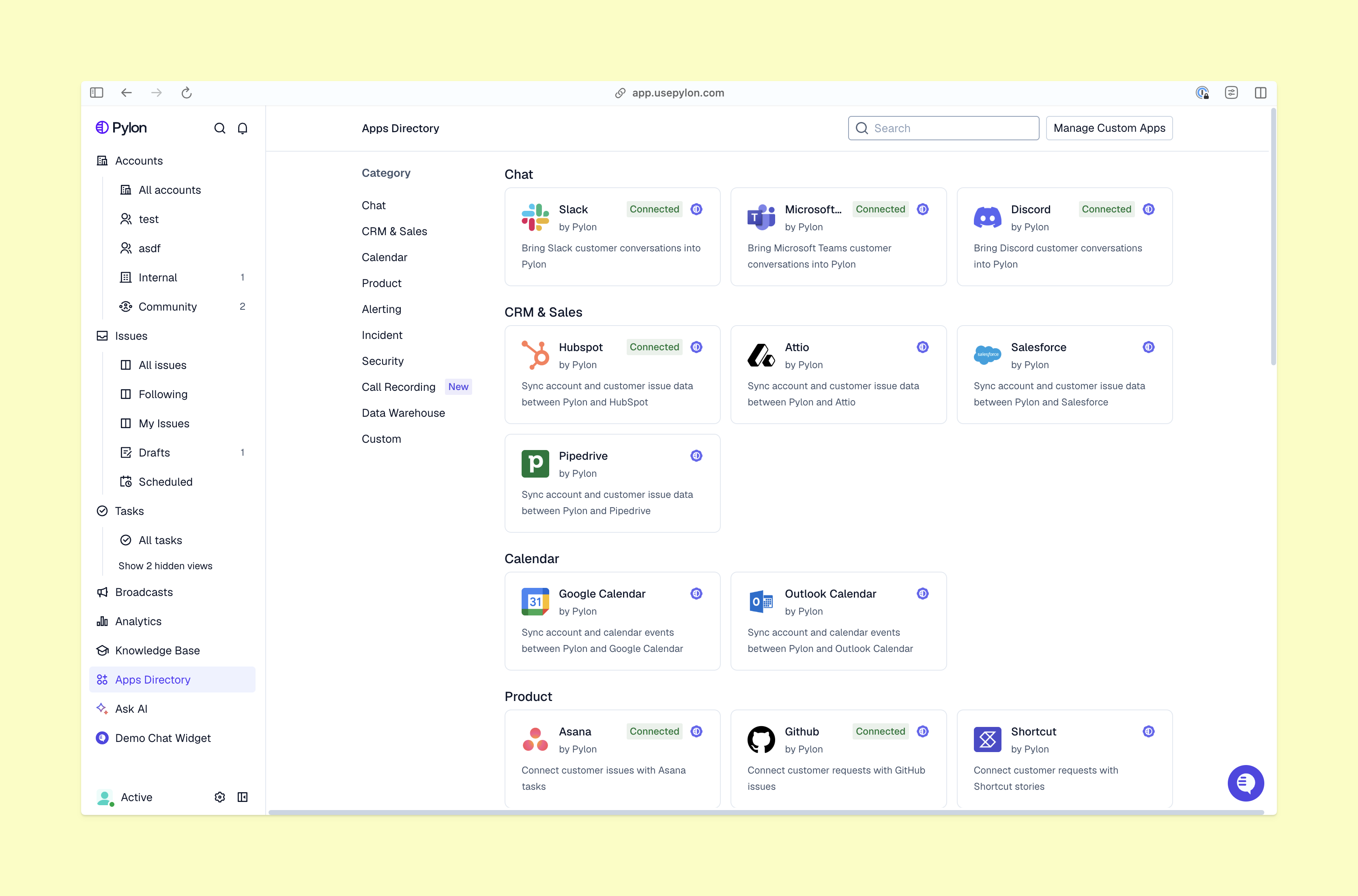
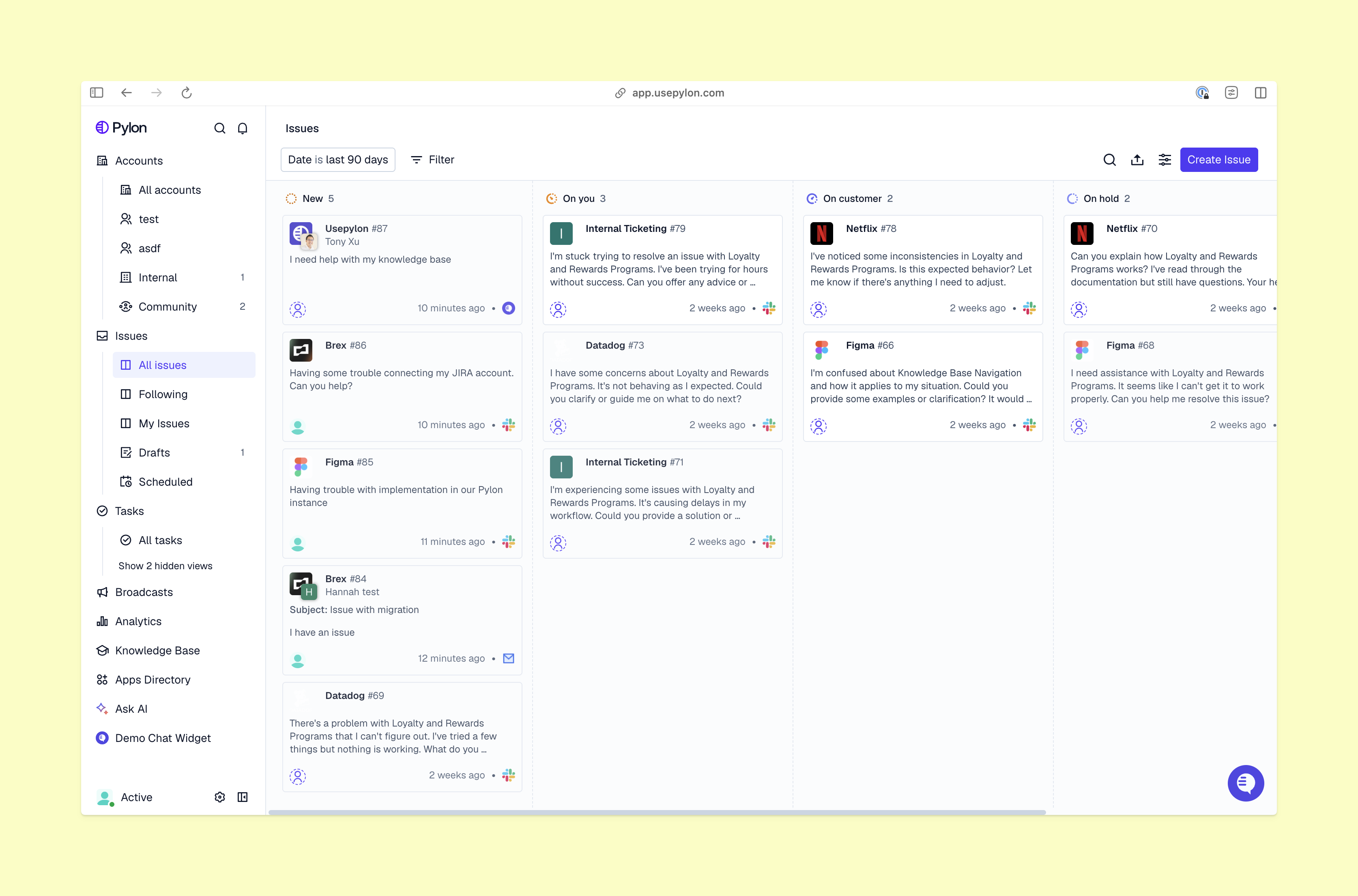
AI-powered support tools like Pylon close those gaps by helping your team deliver consistent experiences at scale. With Pylon’s omnichannel design, each team member sees full context about customer accounts so they can focus on offering the best experiences possible — leading to lower churn rates and higher LTV.
Acquisition is more efficient when existing customers do some of the work for you, and that happens when support, success, dev, and marketing operate as one connected system. Ticket data informs content strategy, onboarding quality leads to referrals, and value from long-term accounts offsets CAC.
Pylon is the modern B2B support platform that offers true omnichannel support across Slack, Teams, email, chat, ticket forms, and more. Our AI Agents and Assistants automate busywork and reduce response times. Plus, with Account Intelligence that unifies scattered customer signals to calculate health scores and identify churn risk, we're built for customer success at scale.
Customer acquisition is the process of finding or attracting prospects and converting them into paid accounts.
Small businesses can focus on SEO, content marketing, referral programs, and email marketing. These channels require lower upfront investment and can generate long-term returns when optimized.
Paid advertising can generate short-term results, while SEO and content marketing typically take several months to show consistent growth. Testing and optimization influence timelines.
Lowering CAC involves improving targeting, optimizing conversion rates, increasing lifetime value, and continuously testing campaigns to eliminate inefficient channels.
A strategy defines the overall plan, goals, and targeting approach. A channel refers to the specific platform or medium used to execute that strategy, such as SEO or paid ads.
Pylon Workforce Management is available now. See it in action with a live demo.