
Customer support dashboards help everyone track support metrics in real time and make adjustments to your support operations.
When everyone has access to the same analytics and trends, decision-making moves faster, and it’s easier for your entire team to get on the same page. Support managers can spot ticket patterns while executives track high-level support team KPIs.
In this guide, we’ll provide customer support dashboard examples and show you why teams use them. We’ll also explore how to turn customer support metrics like response time, resolution rates, and customer satisfaction into actions that help your customers.
A customer support dashboard is a visual reporting tool that consolidates your support data. It gives you a unified view across all your communication channels, like Slack and chat widgets, so you can look at your support interactions as part of a bigger picture. This makes it easier to track KPIs, monitor team performance, and identify patterns that point to underlying problems.
Instead of waiting for reports to understand what happened last week, customer support dashboards help your support team make immediate adjustments for faster response times and more effective customer support.
For example, a support manager without a dashboard could get a weekly report on Monday and discover that ticket volume spiked last Tuesday, causing response times to triple. By the time they have this information, it’s too late to do anything about it. A support manager with a real-time dashboard can see the ticket volume spike as it’s happening and reallocate team resources to handle the increase, which keeps response times from dipping.
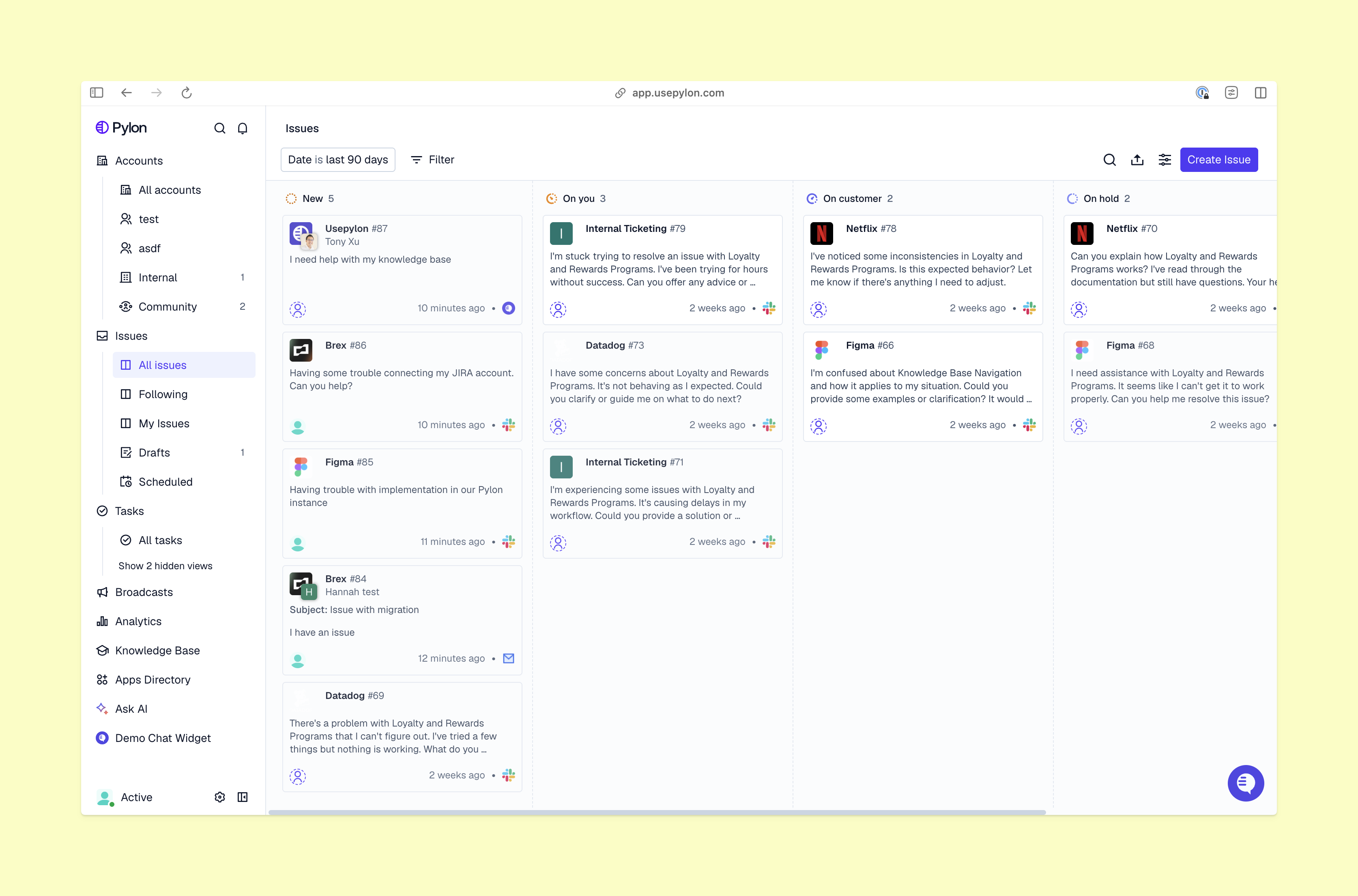
Customer support dashboards are a great place to monitor your support team’s performance. Here are some of the most common metrics you’ll find:
Here are some examples of the most important support dashboard views to spot problems and meet your goals.
Your customer support overview is the command center. Think of it like a homepage: When you need to quickly assess your support team’s health or spot issues before they escalate, this is where you should start.
Who uses it: Support managers, executives, and cross-functional teams.
Example: A manager checks their support dashboard at 9 AM on Monday and sees 47 open tickets, a 2.1-hour average response time, an 87% CSAT score, and a 15% increase in ticket volume compared to the previous week. Based on this data, they decide to schedule extra team members over the rest of the week to handle the volume spike and prevent response times from degrading.
Individual and team-level metrics, like first-contact resolution rate, CSAT, and tickets handled, are all on the team performance dashboard. You can use this data to spot coaching opportunities, recognize top performers, and balance your team’s workload.
Who uses it: Support managers and team leads.
Example: A manager reviews the team performance dashboard and notices that one of the team members has a 3.5-hour average response time compared to the team average of 2.4 hours. They investigate and discover this person is handling more complex technical issues alone. In response, the manager decides to pair them with another team member so they can troubleshoot together.
In this dashboard, you’ll see CSAT scores broken down by channel, team member, and issue type. This information is often shown alongside NPS and CES trends over time. Understanding what’s driving customer satisfaction (and where it’s slipping) helps you know what procedures are working and where to focus next.
Who uses it: Support managers, product managers, and executives.
Example: The overall CSAT score has declined from 88% to 82% over the past month. To see why this happened, the support manager can filter by chat channel, where they discover the scores are significantly lower for your chat widget after a new version launch. They raise this issue to the dev team, who find and resolve a bug that introduced a long response lag time.
This dashboard shows your demand patterns and channel performance. It breaks down tickets by channel and shows volume by day and hour, as well as response times and resolution rates for each. While the customer satisfaction dashboard can look at individual channels, the ticket volume and channel dashboard shows every ticket and metric for those channels, not just satisfaction.
Who uses it: Support managers, operations teams, and resource planners.
Example: The manager sees that email tickets have an average response time of 4.2 hours compared to Slack’s 1.9 hours and reconfigures their support system so the team gets better alerts for email tickets.
Self-service dashboards track how your customers are using your resources. They typically include metrics like knowledge base views, top search terms, and deflection rate. Combining this data with support ticket information can help you find gaps in your customer self-service options. Because stronger self-service systems can reduce team workload, improve customer satisfaction, and lower support costs, this information helps your team long term.
Who uses it: Support managers, product managers, and knowledge base managers.
Example: The manager sees a low knowledge base deflection rate for the search term “how to connect an API.” To help customers help themselves, the manager asks the knowledge base team to create a new article on the topic.
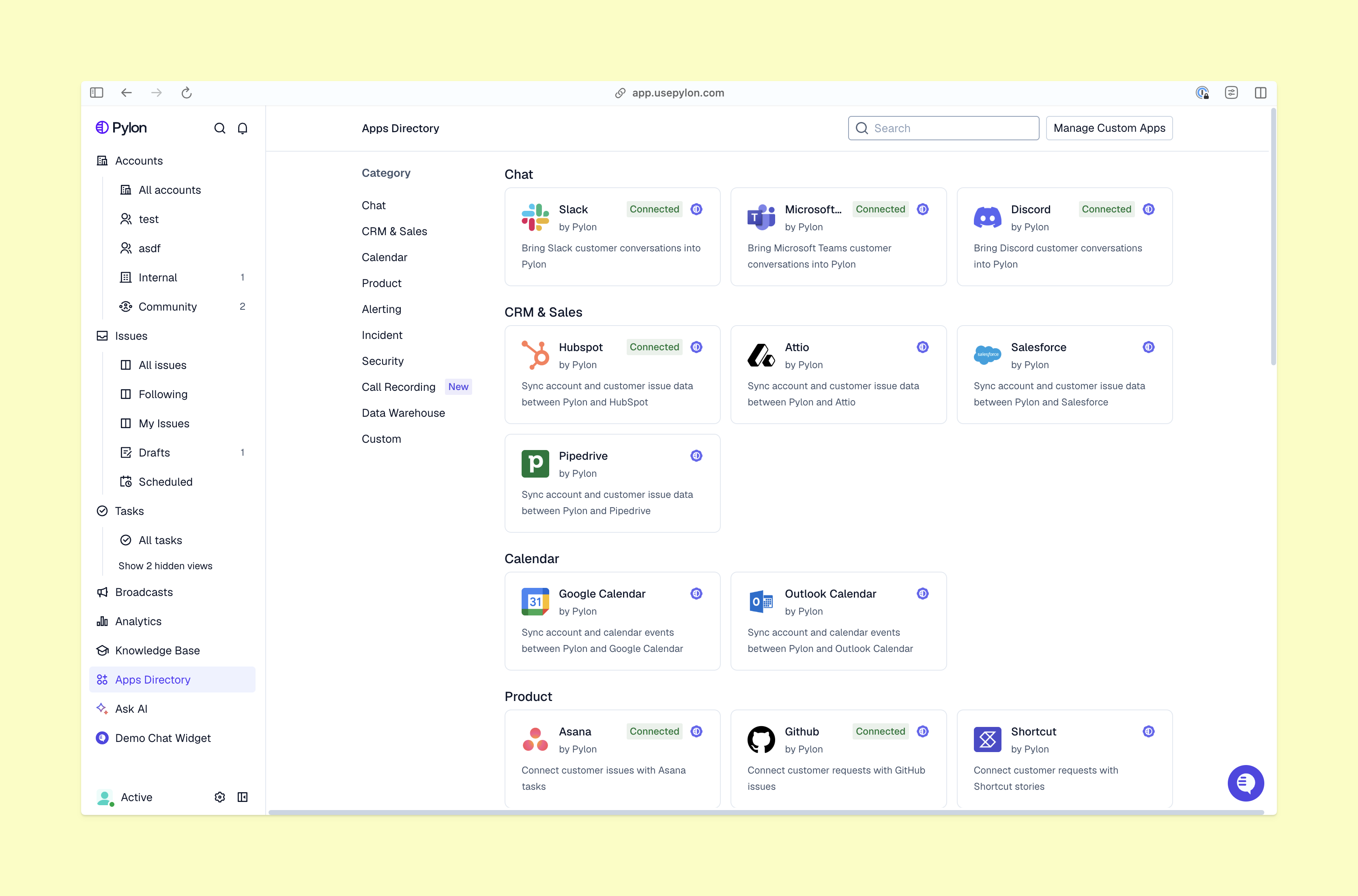
If you’re not using an omnichannel support tool, you can still put together a customer support dashboard in four steps:
Customer support dashboards turn raw data into insights that help you make faster decisions for your team and your customers. By showing you the gaps between your team’s capacity and your customers’ expectations, they can point you in the right direction for strong long-term growth.
Pylon is the modern B2B support platform that offers true omnichannel support across Slack, Teams, email, chat, ticket forms, and more. Our AI Agents and Assistants automate busywork and reduce response times. Plus, with Account Intelligence that unifies scattered customer signals to calculate health scores and identify churn risk, we're built for customer success at scale.
A good customer support dashboard is clear, focused on actionable KPIs, and tailored to specific roles, like team members, managers, or executives, so insights are easy to interpret and act on.
Most customer support dashboards are updated in real time or daily to ensure teams can quickly identify trends, bottlenecks, and performance issues as they happen.
Customer support dashboards are used by support team members, team leads, managers, and executive leaders to track individual performance, team efficiency, and overall customer experience health.
Pylon Workforce Management is available now. See it in action with a live demo.