
More and more companies are turning Slack into a customer support tool. You might already use Slack for internal chats, and it’s likely that your customers do too: Over 100,000 companies reported working with Slack in 2022, and Slack’s only expanded its reach since then.
This means there’s an opportunity for B2B support teams to help their customers in a familiar user interface.
In this guide, we’ll cover how to set up a Slack customer support integration and get the most out of this tool.
Slack channels don’t have to be limited to internal conversations. Here’s why many companies are now using Slack for customer service:
A well-implemented Slack customer support integration brings everything into one place. That way, your team can access all the information they need about each customer and query.
Slack has over 2,600 possible integrations available in their app store, so common platforms like Salesforce, Jira, and GitHub already exist in Slack. You can also add automations, such as AI assistants who can answer common questions or generate tickets from conversations in a channel.
For the best support experience, many support systems now offer native Slack integrations that turn threads into trackable tickets. For example, Pylon makes Slack a scalable support channel for B2B teams by integrating it with a ticketing system, knowledge base, and other customer support tools to track customer needs.
Here’s a six-step guide to get Slack ready for customer service case management.
Set up your channels and naming conventions consistently and purposefully. Each company will need a dedicated channel, and your team should have topic-based channels where they can collaborate and escalate issues.
It’s OK to keep general support channels public, but make sure customer channels aren’t open for everyone. Only grant access to the right support team members to keep confidential information safe.
The Slack app is a flexible customer communication tool that’s easy to integrate with other systems and apps.
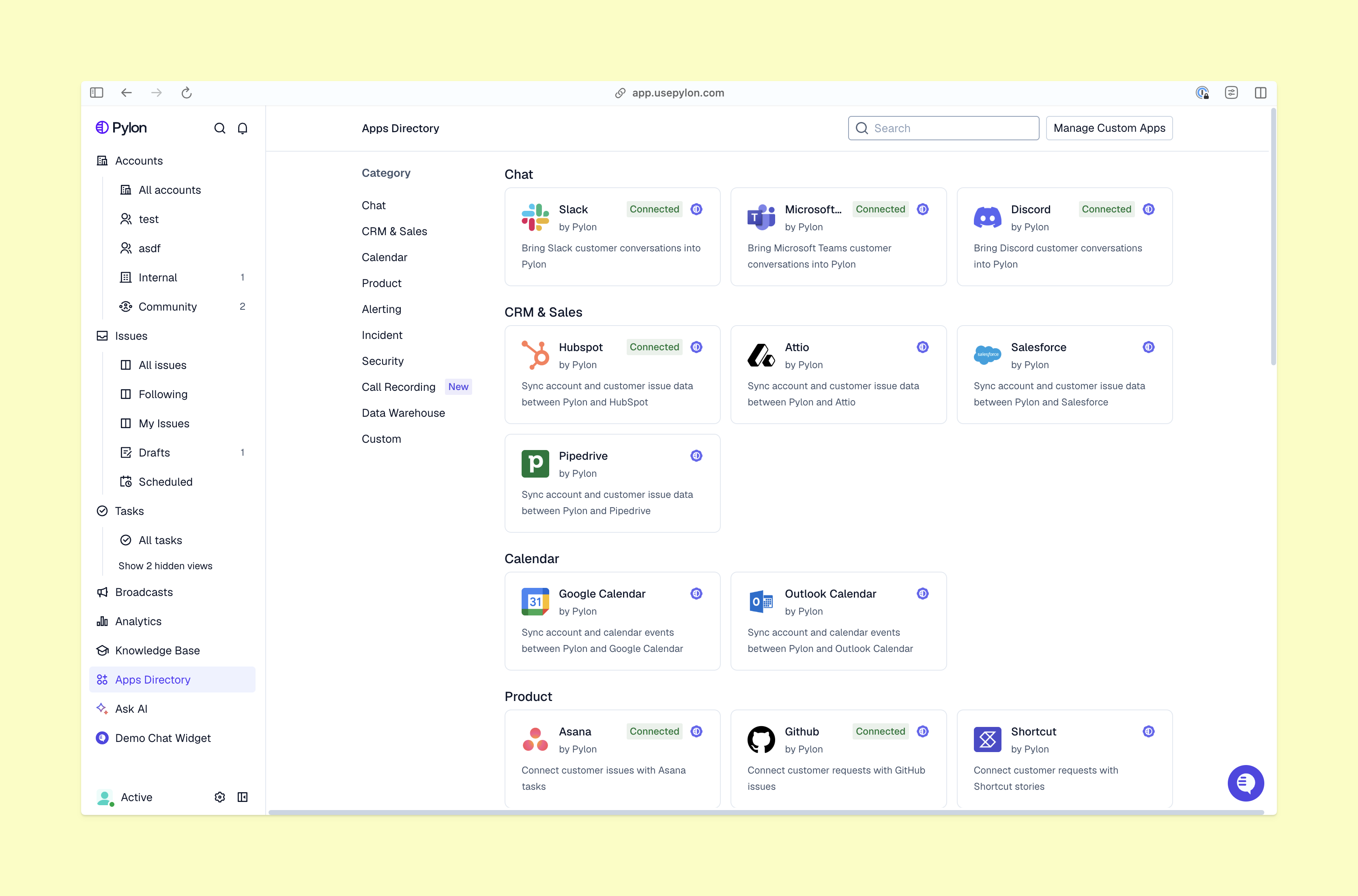
Many support platforms like Pylon offer a Slack integration so you can manage customer conversations as tickets, and connect them to other support tools you need:
Once you’ve integrated other programs with your Slack support system, determine where automated additions like chatbots and triage escalations fit. This way, you can build a truly robust and efficient support system in Slack before customers join.
When everything is set up, invite customers to join your Slack workspace via Slack Connect. Make sure your post-sales team is ready to welcome them and answer any onboarding questions they have.
If you already have a knowledge base, add it to Slack for easy reference. If not, note what questions customers often ask and use them to build an FAQ or larger knowledge base so you can offload some work from your support team.
Even if you’ve planned and set up your Slack ticketing system carefully, there will still be something you can improve. Over the first few weeks, monitor how the system integration is working, measure response times and satisfaction rates, and adjust as necessary.
Your team is the most important part of establishing a new process. Before you launch your Slack integrations, make sure everyone’s on the same page about how the integration will change their workflows. Make sure it’s clear who’s doing what and when: Pair team members with customers and specify who will respond to questions in account channels, including automated bots.
Decide what reasonable response times look like to you and set clear expectations with your team. Some customers expect instant responses to their support tickets on chat platforms, so keep expectations realistic (but fast).
For frequently asked questions, try using Slack bots to give your customers instant answers and free up your team for more complex tasks. Look for integrations that connect Slack with your knowledge base software or program a bot yourself.
.png)
Once you’ve integrated Slack into your workflow, here are some best practices to help your team make the most of it:
Turning Slack into an integrated customer support hub helps you meet customers where they are. And with platforms like Pylon that help you track Slack conversations as support issues and collaborate with teammates to resolve them, you can turn Slack into a true scalable channel for customer support.
Pylon is the modern B2B support platform that offers true omnichannel support across Slack, Teams, email, chat, ticket forms, and more. Our AI Agents and Assistants automate busywork and reduce response times. Plus, with Account Intelligence that unifies scattered customer signals to calculate health scores and identify churn risk, we're built for customer success at scale.
Pylon Workforce Management is available now. See it in action with a live demo.