
In B2B, long-term growth depends on retaining customers, not just signing them. That means earning their trust over time and showing them they can rely on your brand to support their businesses, day in and day out.
In this article, we’ll explore how to build relationships with customers. You’ll learn about practical tools and techniques to help your team create positive experiences more reliably.
B2B companies rely on high customer lifetime values, which makes relationships especially important. When you keep customers satisfied long term, you improve recurring revenue and reduce the costs of bringing in new accounts. According to Forrester research, customer-focused B2B firms grow 2.5x faster and retain over twice as many accounts.
Good relationships are built on trust, strong communication, and close attention to customer needs. Every time you interact with a customer, you have a chance to strengthen that relationship.
When you have a strong customer relationship strategy, you can expect:
Here’s how you can build customer trust and create successful, long-term B2B relationships.
Every time customers interact with your team, the experience should feel personal and meaningful. You can offer that kind of personalized customer experience at scale with AI-powered support tools.
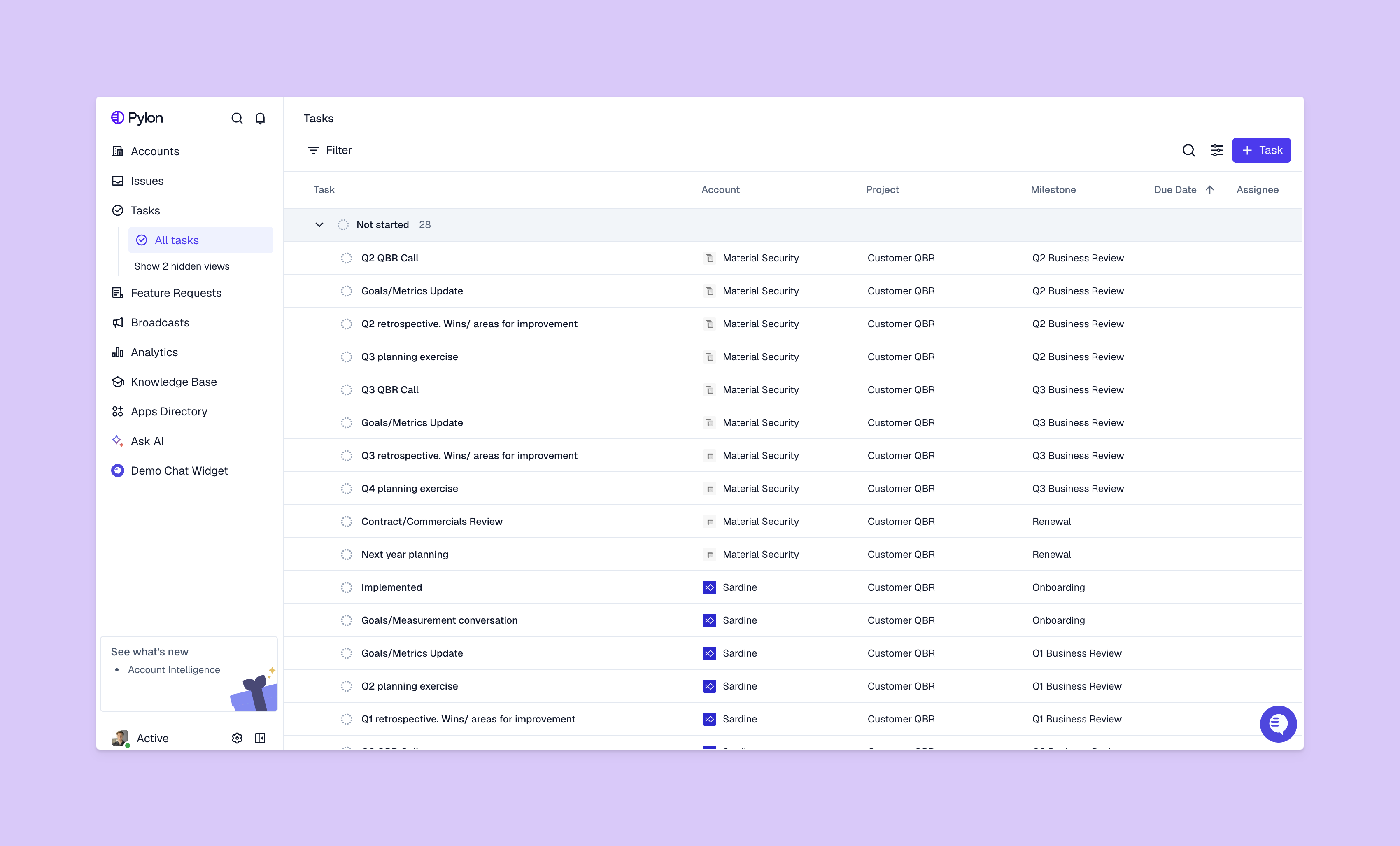
For example, if you use Pylon’s Account Intelligence, your team can see all the details about each customer at a glance and help them based on their account type and history. You can also set custom triggers to send tips and recommendations based on how a customer uses the product.
Relationships tend to break down when one party doesn’t feel the other one is listening. Train your team to listen actively so they fully understand the customer’s needs and all important context. Before they reply, support should ask questions and summarize what they heard to make sure both sides are on the same page.
To successfully manage relationships with customers, you need to collect feedback often and use it to address issues and deepen the relationship. Customer success software lets you bring all your interactions together so you can find useful insights.
This creates a positive feedback loop — when customers see that you take action on their opinions and concerns, this strengthens their trust in your brand.
It's important to reply fast to customer questions, but it’s even better to anticipate needs and take action before the customer has to reach out. So use your success tools to better understand each account’s needs and see how you can help them meet their goals.
You can also create self-service options, like a well-designed knowledge base. This helps customers answer their own questions without the need to go through your ticketing system.
Your customer success and support teams play a huge role in relationship management. It's important to give them the training and tools they need to do their jobs well, then offer the right motivation and incentives to make sure they exceed customer expectations.
For example, you can align their compensation with support metrics like retention rate and customer lifetime value, so your team sees personal benefit from stronger customer relationships. And give public kudos to team members who show the attitudes and actions you want to encourage.
To know how strong relationships are, you can use customer sentiment analysis to learn their opinions on your product, support, and brand. AI can review customer messages and gauge their emotions, which helps your team create plans to fulfill unmet needs.
Automation makes it easier to manage customer relationships at scale. When you automate repetitive tasks, you free up your team to learn about customers and build trust. Automation also helps you offer personalized experiences, and get customers the support they need quicker.
Customer relationship management software helps you keep all account data in one place, which gives your team a single view of each relationship. Your chosen platform should also offer a ticketing system and customer success tools, then make it easy to integrate all these features and share information.
Don't relax when relationships are strong — grow them by offering discounts and other benefits. If you mark a milestone like a 5-year anniversary, and surprise the customer with an unexpected gift, this cements the relationship and shows how much you value their long-term trust.
Use modern messaging tools like Slack and Microsoft Teams to talk with customers on platforms they already use and make it easy for people to reach out.
With Pylon’s omnichannel support, you can help each customer on their favorite channel, whether that’s Slack, Discord, email, or chat. Meanwhile, your team will see everything in a complete customer 360-degree view, so they don't waste time switching back and forth between platforms.

Strong customer relationships are the cornerstone of B2B success. When your team uses personalized communication, active listening, strong feedback loops, and proactive customer care, they build lasting connections that set the company up for long-term growth. The right customer success tools help you create outstanding experiences that build trust.
Pylon is the modern B2B support platform that offers true omnichannel support across Slack, Teams, email, chat, ticket forms, and more. Our AI Agents and Assistants automate busywork and reduce response times. Plus, with Account Intelligence that unifies scattered customer signals to calculate health scores and identify churn risk, we're built for customer success at scale.
A strong relationship is a partnership built on trust and mutual value. It goes beyond a simple transaction, focusing on meaningful interactions that make customers feel heard, valued, and supported.
It’s the engine for sustainable growth. Strong bonds reduce churn, increase lifetime value, and turn users into advocates who drive referrals, helping you scale without constantly overspending.
Start by personalizing the experience. Use data-driven insights to guide onboarding, communicate proactively, and provide consistent value that aligns with their specific business goals and needs.
Most journeys follow this path: reach, acquisition, conversion, retention, and loyalty. Guiding customers through these stages ensures that they move from initial awareness to becoming long-term partners.
Pylon Workforce Management is available now. See it in action with a live demo.