Register for our upcoming webinar → How Haus Analytics rebuilt its support automation



Customer relationships now happen across several touchpoints: A prospect might message your team in Slack, a new customer might submit a ticket through your portal, and a long-running account might discuss renewals over email. When those conversations live in separate systems, support teams waste time trying to piece together what happened or what the customer actually needs.
Traditional customer management tools are disparate platforms post-sales teams put together to cover everything they need for customer management. This method is difficult to scale as teams grow, plus it wastes resources and time tool-switching.
Modern customer relationship management (CRM) software covers all the bases for scaling support teams, including cross-team collaboration features, analytics that aggregate data across every touchpoint, and centralized communication.
In this guide, we cover what customer management platforms are, how they differ from CRM software, and how to choose a tool that fits your team’s work style.
A CRM platform is a comprehensive customer records system that covers everything teams need to track account health and collaborate to keep customers happy. CRMs are commonly used by sales teams to keep track of active deals, while support platforms are used by post-sales teams to manage long-term customer relationships.
This differs from customer management tools, which often come into play post-sale and only cover one or two aspects of account support work — like a customer management tool that tracks conversations, for instance.
A customer management tool might store contact details and contracts. CRM platforms typically have that base account record, but they go well beyond. These tools cover the following components of B2B customer support:
.png)
The core benefit of using CRM and support software is cross-team alignment. Sales, customer support, customer success, and account teams need the same visibility into account activity to retain customers and upsell features.
On a practical level, these systems help teams:
CRM and support software bring everything support teams need into one central place. This centralization is invaluable: It streamlines your toolkit, reduces missed context and, in turn, mistakes, and makes analytics more robust and actionable.
Here are some core benefits of using a CRM or support platform:
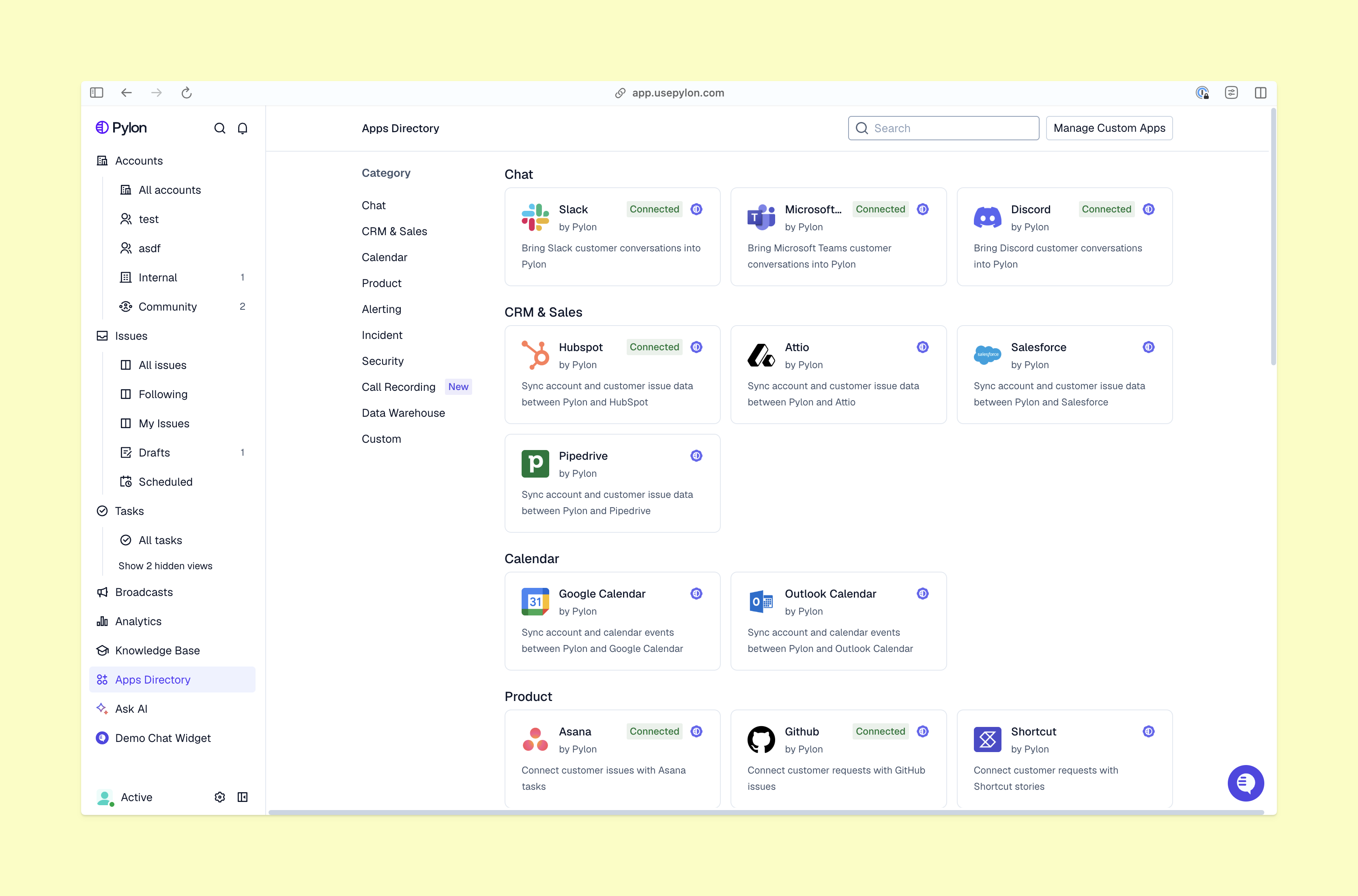
This platform will become an integral part of your customer-facing team’s day-to-day, so work with leadership individuals from customer support, success, and account management to make sure you choose something they’re on board with. Here are a few capabilities to prioritize highly during your search.
Customer profiles should cover all core account details, like the main POC for an account, when this customer signed up, who the primary contacts are from your side, the most recent ticket, and upcoming milestones. These profiles can also act as account knowledge bases, linking out to other important contexts like ongoing conversations and past tickets.
Support teams need a complete record of customer activity. This includes email threads, ticket submissions, internal notes, and all other customer support conversations.
This generally looks like one view of activity where a Slack message, an email response, and a ticket escalation all attach to the same account timeline. The best client relationship management software makes it easy to see what was said, when it happened, and who was involved.
Performance data should cover customer support metrics and user engagement metrics, like response times, backlog levels, and feature use. For example, if a feature generates a spike in tickets every month, reporting should make that pattern visible so product and support can address it together.
Choose a platform with automation features for the work you want to take off your support team’s plate, like ticket routing and escalation or agentic AI help for simple issues. You might first chat with your customer-facing teams about the work they deem tedious and uncreative, and then find a platform that supports automation for those tasks. That way, your employees are free to do more influential work and give even more attention to your customers.
Customer data rarely lives in one place. Integrations with your product, billing, and internal communication platforms minimize manual updates. When a billing status changes, for instance, that information can appear directly in the account record. And when a product issue surfaces, usage data can attach to the ticket automatically. That reduces guesswork during troubleshooting.
Plus, when you choose a platform that already integrates with other tools you use, the learning curve is much smaller and teams are more willing to adopt it.
AI agents help teams move faster and make it easier to scale without having to add further headcount. Comprehensive CRM and support software typically includes AI agents that can:
Modern CRM software includes all the features B2B support teams need to boost customer success. The right system integrates account information and internal coordination into one place so you can act with context and not spend time chasing down details.
Pylon is the modern B2B support platform that offers true omnichannel support across Slack, Teams, email, chat, ticket forms, and more. Our AI Agents and Assistants automate busywork and reduce response times. Plus, with Account Intelligence that unifies scattered customer signals to calculate health scores and identify churn risk, we're built for customer success at scale.
A customer management tool typically targets one use case, like ticket routing or conversation management. A CRM system is more comprehensive, offering post-sales teams all the features they need to track and improve account health.
Businesses of all sizes benefit, especially those managing multiple customer touchpoints across sales, marketing, and support.
Yes, some tools store communication history across channels to provide a complete view of the customer.
Security depends on the tool, but most include access controls, data encryption, and compliance features.
Costs vary widely based on features, users, and scale, ranging from entry-level plans to enterprise pricing.
Pylon Workforce Management is available now. See it in action with a live demo.