
The difference between an account you keep and one you lose often comes down to the words you use. When a customer is frustrated, a poorly chosen phrase can escalate the situation instantly. But the right language, delivered at the right moment, can de-escalate tension and build trust.
Read on to learn the practical customer support phrases that help navigate high-stakes conversations. We’ll show you how steady, confident language equips your B2B support team to scale with precision and empathy across every channel.
Customer support phrases are pre-crafted statements that guide conversations toward clarity and resolution. Customer care lines aren’t rigid scripts. They’re strategic frameworks that demonstrate you understand and help move the interaction forward.
Generic platitudes like “we value your business” often backfire because they sound hollow. Effective phrases signal that you understand the customer’s specific problem. That distinction is what separates phrases that make customers feel valued from phrases that make them feel processed.
In B2B support, the stakes are higher than in B2C. You’re dealing with software that powers another company’s operations. A delayed package from Amazon is an inconvenience. But a broken integration or a missed SLA can halt an entire workflow. The wrong phrase can signal incompetence, aggravate frustrated customers, or delay resolution. This leads to churn.
When you use the right words, you show competence. You reassure the customer that their issue is in capable hands. A well-handled conversation strengthens the account even when the news is bad. And that’s what a great customer experience looks like in practice.
There are some general principles to help handle customer conversations: Include timelines when necessary, be empathetic, and build trust. And always keep the customer’s needs at the center of the conversation.
The following sections serve as a knowledge base of practical phrase frameworks. They cover the high-stakes scenarios teams encounter most often and show how to apply the right language with confidence.
Your opening sets the tone for the customer support conversation. It should feel warm without sounding scripted. The goal is to make the customer feel like they’ve reached someone who already understands their context.
The key is specificity. Reference the customer’s name, their account, or the specific issue they raised. This signals you’re already engaged in solving the problem.
When a customer is upset, validate their frustration without conceding fault prematurely. Empathy statements show you understand the impact of their specific problem. These phrases make your customers feel valued and heard:
These phrases demonstrate active listening. They prove you understand the impact. The goal is to acknowledge the emotion and name the specific consequence the customer is dealing with. That combination turns a tense customer support conversation into a productive one.
When a conversation escalates, the goal is to avoid defensiveness and redirect focus from blame to resolution. These phrases shift the focus from the past (whose caused the issue) to the future (how you are solving it):
When you gather details and set expectations, you reduce the emotional intensity of the moment and reinforce accountability.
Bad news is hard to hear, but it should be delivered with ownership and clarity. Whether it’s an outage, a missed SLA, or a feature gap, provide a path forward, even if the solution is temporary.
The goal is to offer support that acknowledges the problem and gives concrete details. This prevents confusion and reduces follow-up questions.
Clear expectations prevent customers from chasing updates. It also keeps them informed without making commitments you can’t meet.
B2B customers expect a timeline if you can’t resolve the issue right away. Always include clear follow-up language in your conversations to reassure the customer their issue remains active.
How you close a ticket can leave a lasting impression. The following phrases confirm the issue is resolved and offer additional help. They also show how to respond to positive feedback, which is equally important if you want to reinforce trust:
Ask for feedback through post-support surveys like NPS or CSAT. This helps your team know they’re doing their jobs well, and it provides KPIs for them to hit each quarter.
Some phrases create friction and damage trust. These are the keywords for customer support teams to eliminate from their vocabulary:
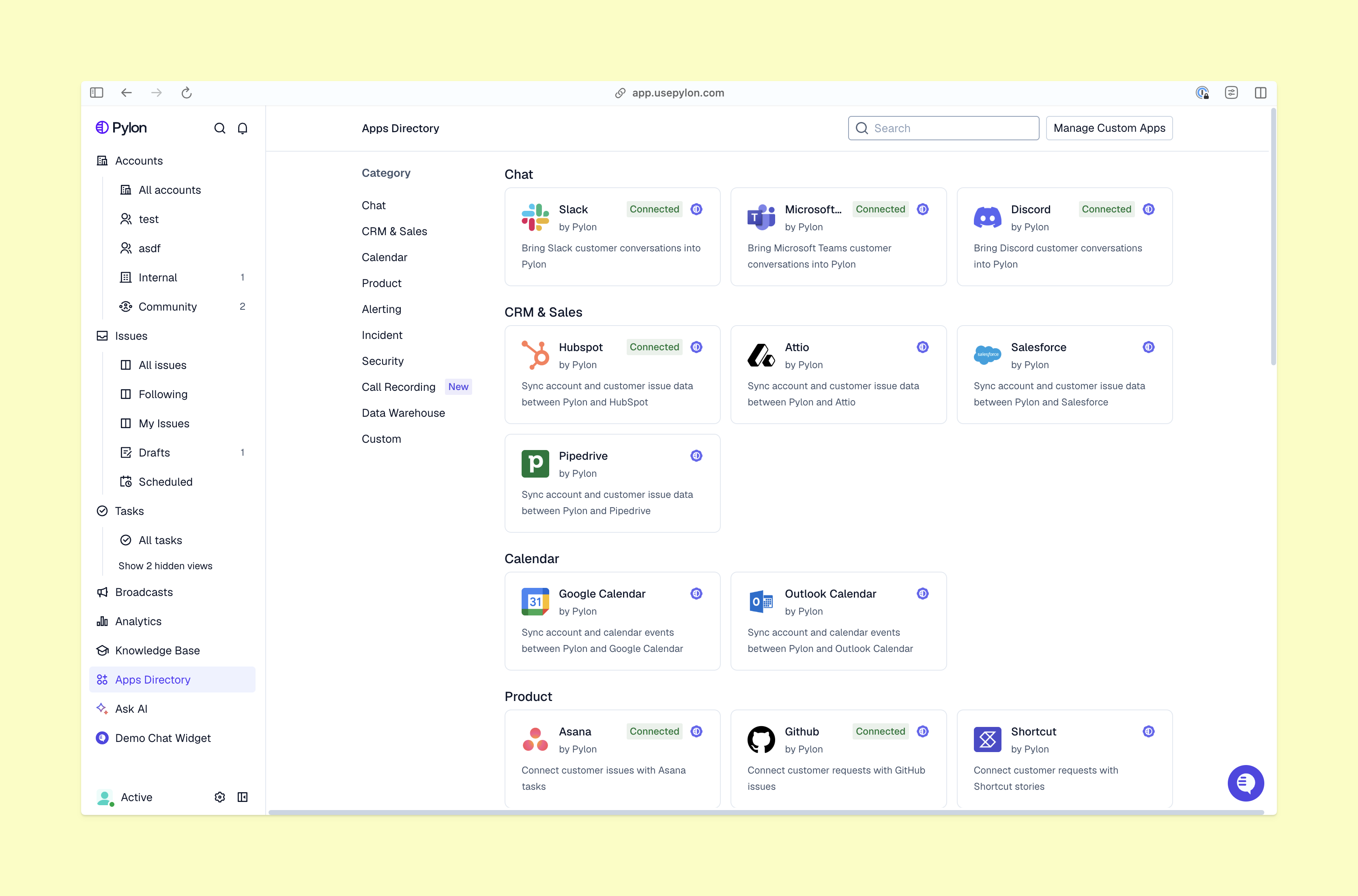
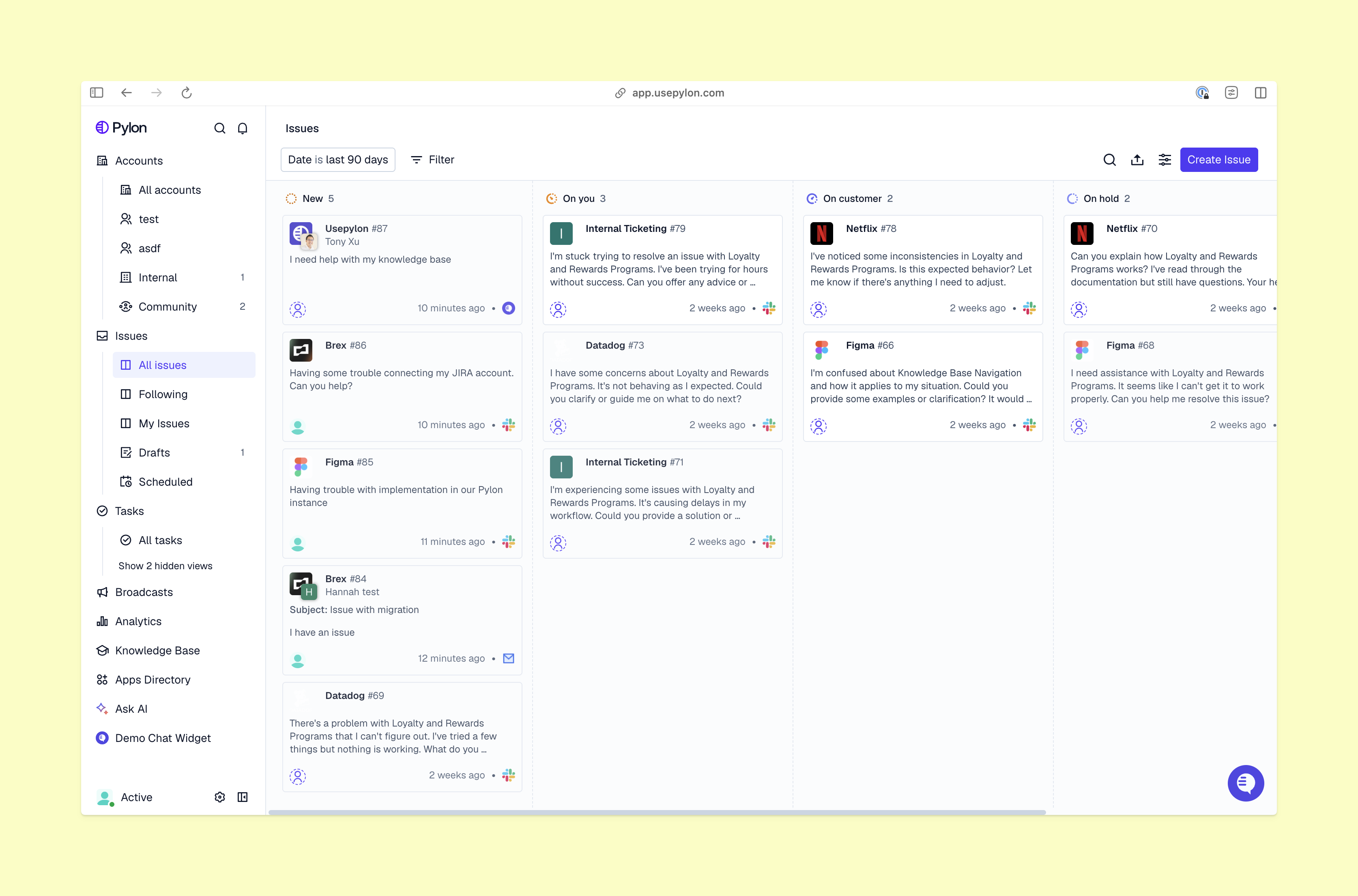
The right phrases are only half the battle. The other half is to use them consistently across every channel. Pylon lets you encode your knowledge base articles, your approved phrase frameworks, and your escalation playbooks into an AI-powered system that surfaces the right language in real time.
Pylon is the modern B2B support platform that offers true omnichannel support across Slack, Teams, email, chat, ticket forms, and more. Our AI Agents and Assistants automate busywork and reduce response times. Plus, with Account Intelligence that unifies scattered customer signals to calculate health scores and identify churn risk, we’re built for customer success at scale.
B2B support teams should prioritize empathy statements, expectation-setting language, and clear resolution confirmations. These directly impact customer retention and satisfaction scores.
Lead with acknowledgment before you jump to solutions. Use phrases that name the customer’s frustration and validate the impact to them. These help de-escalate faster than immediate troubleshooting. Then redirect to a concrete next step with a clear owner and timeline.
Rigid scripts backfire in B2B contexts where conversations are complex, and customers notice inauthenticity. Instead, teams should maintain a knowledge base of phrase frameworks. Pylon's AI Knowledge Management surfaces these frameworks contextually, so reps get the right language without the need to memorize a playbook.
AI improves consistency and speed. It surfaces approved phrases at the moment a rep needs them without having to search a doc. Pylon's AI Assistants draw on your team's existing knowledge base to suggest on-brand, accurate language. This reduces ramp time for new reps and keeps responses consistent across the entire team.
Pylon Workforce Management is available now. See it in action with a live demo.