How to respond well to positive feedback from customers
Learn how to respond to positive feedback from customers. We’ll share examples and best practices to help you manage reviews smoothly.
Dan Guo
April 2, 2026
When a customer tells you how much they like your product or service, you get a chance to deepen that relationship and build trust. Whether customers offer private feedback or leave public reviews, the right replies show that you value their opinions, which over time can boost your company’s reputation.
In this article, we’ll explore how to respond to positive feedback from customers. We’ll look at the elements of a strong reply, then help you build a process you can use every time you get good feedback.
Why responding to positive feedback matters
When you reply thoughtfully to customers who give good feedback, you:
Strengthen relationships. Responding to feedback like reviews shows that you appreciate customers and listen to what they’re saying.
Build trust. When you respond to online reviews, you signal to prospects that your company is responsive and wants to build connections.
Improve your online reputation. A Gartner survey of B2B software customers found that 98% care about online reviews when they make purchasing decisions.
Stand out from competitors. When you respond consistently to both positive and negative feedback, you strengthen the company’s brand presence and authority.
Boost retention. Personalized responses to reviews makes customers feel valued, so they're more likely to renew their contracts and expand the relationship.
Support search engine optimization.Research shows that customer interactions matter for search engine rankings, and consistent, helpful 5-star review responses can improve your company’s visibility.
Tips for good replies to positive customer reviews
Not sure in what way you should respond to a good review? These are the elements of a strong reply:
Respond fast. Monitor online review sites and customer channels, and aim to reply to each message within 24 to 48 hours. A response that comes weeks or months later can feel like an afterthought or simply go unnoticed.
Show gratitude. Thank the customer for the feedback, so they know you appreciate the time they took to write the review or comment.
Personalize your reply. Avoid generic responses that feel robotic, and always add a personal touch. Address each customer by name, and make sure your reply also comes from a named member of your support team.
Mention specific details. Bring up points the customer made to show that you actually read the feedback and aren't just spamming a template reply.
Match the customer’s tone. Mirroring is a simple way to build rapport, so notice whether the customer uses formal or casual language and follow suit.
Keep your message concise and professional. A response that feels unprofessional can damage customer trust, while replies that are too long discourage people from reading them.
Prompt engagement. A positive review can be a platform for future business, so you could add a subtle mention of your hopes for a continued relationship.
Examples of strong positive feedback responses
Now let's look at some examples of how to respond well to positive reviews in common B2B support scenarios:
Positive feedback after project completion. “Thank you for your thoughtful feedback! It was a pleasure partnering with your team on this project, and we’re proud of what we accomplished together. We look forward to supporting your next initiative.”
Online review highlighting measurable outcomes. “We truly appreciate your review! We always strive to create a measurable impact, and we’re pleased to see your results. We’re excited to keep building on this momentum together.”
Recognition from a long-term customer. “Thanks for your continued trust in our team! Long-term partnerships like this are incredibly valuable to us, and we’re grateful for the opportunity to support your business as it grows. We look forward to many more milestones ahead.”
Praise for a specific member of the support team. “Thank you for your kind words, and we’re glad to hear that you valued [team member's name]’s work. We’ll be sure to pass on your feedback, and we’re excited to support you in your next project!”
How to reply to a positive customer review: 5 steps for a repeatable process
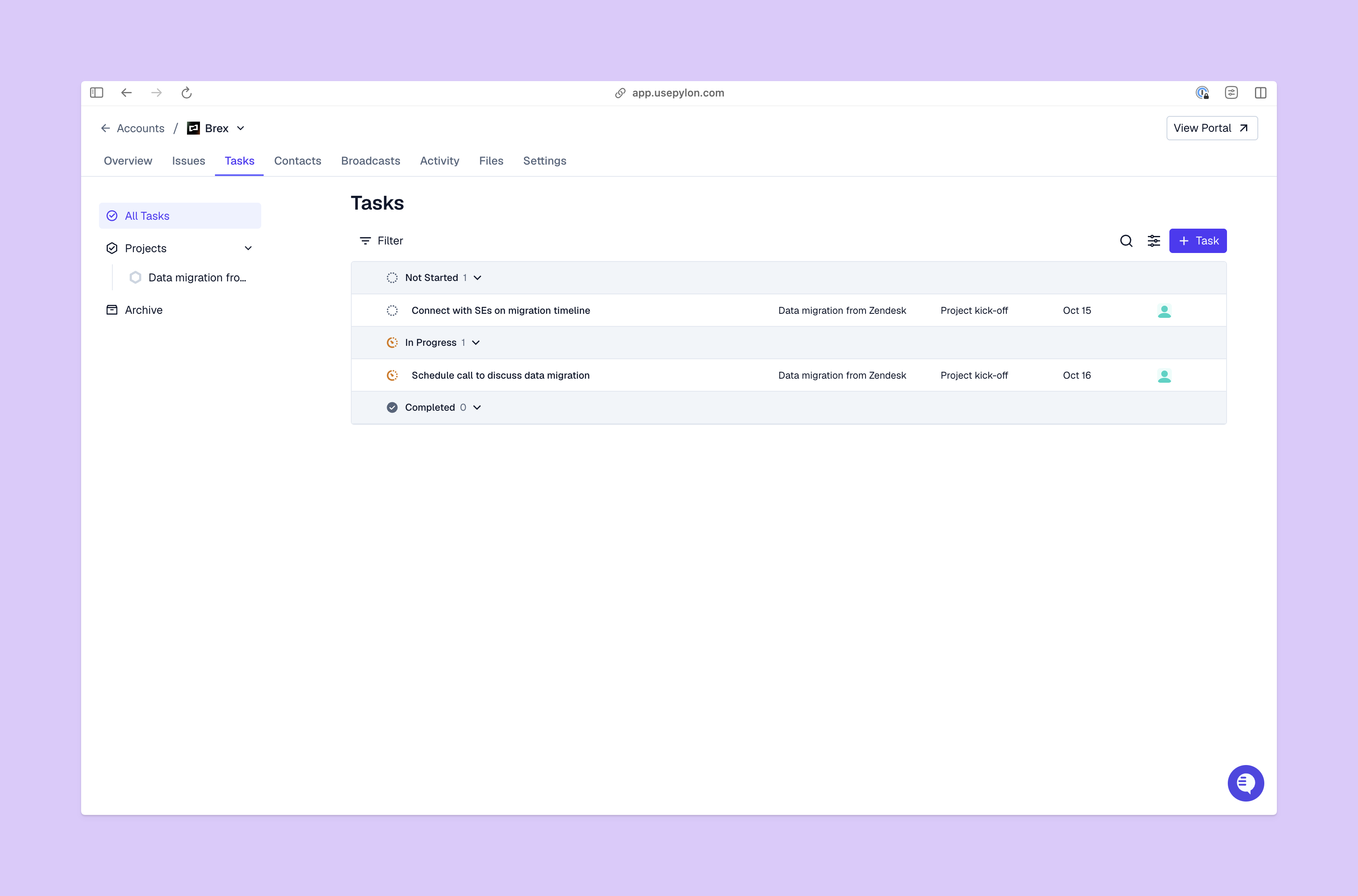
Pylon Task Management View
Follow these steps to build a clear, simple workflow your team can use every time they reply to positive feedback.
1. Collect feedback across channels
You can’t respond to feedback you don’t see, so gather messages and reviews on a regular basis. Run customer surveys and monitor public review sites like G2. Then set up a customer feedback loop, where you look at day-to-day interactions so you can collect feedback to reply to and act on.
2. Use structured templates
Create a series of response templates that cover common situations for your industry and products. You can use the review examples from the previous section as a starting point.
Templates give your team a clear structure to work from, so they can save time and focus on adding personal touches.
3. Customize each reply
Once your templates are set up, your team should tweak each message to include the customer’s name and other specific details about the feedback. The template will do the bulk of the work, while the personal additions make your replies feel more genuine.
4. Share feedback with your team
As your team works hard each day to deal with rising volumes and complex problems, it helps to hear that customers appreciate their work. Share feedback among the team via a dedicated channel on your customer success platform. This also gives public recognition to any team members customers mention.
5. Use AI to scale responses
AI-powered customer support tools let you automate parts of this process so you can respond at scale. For example, Pylon’s omnichannel platform collects and reviews customer messages from all your support channels, so you don’t miss anything you want to reply to. Plus, AI Assistants help your team draft responses fast, and Account Intelligence makes it easy to turn feedback into improvements.
Turn positive feedback into long-term growth with Pylon
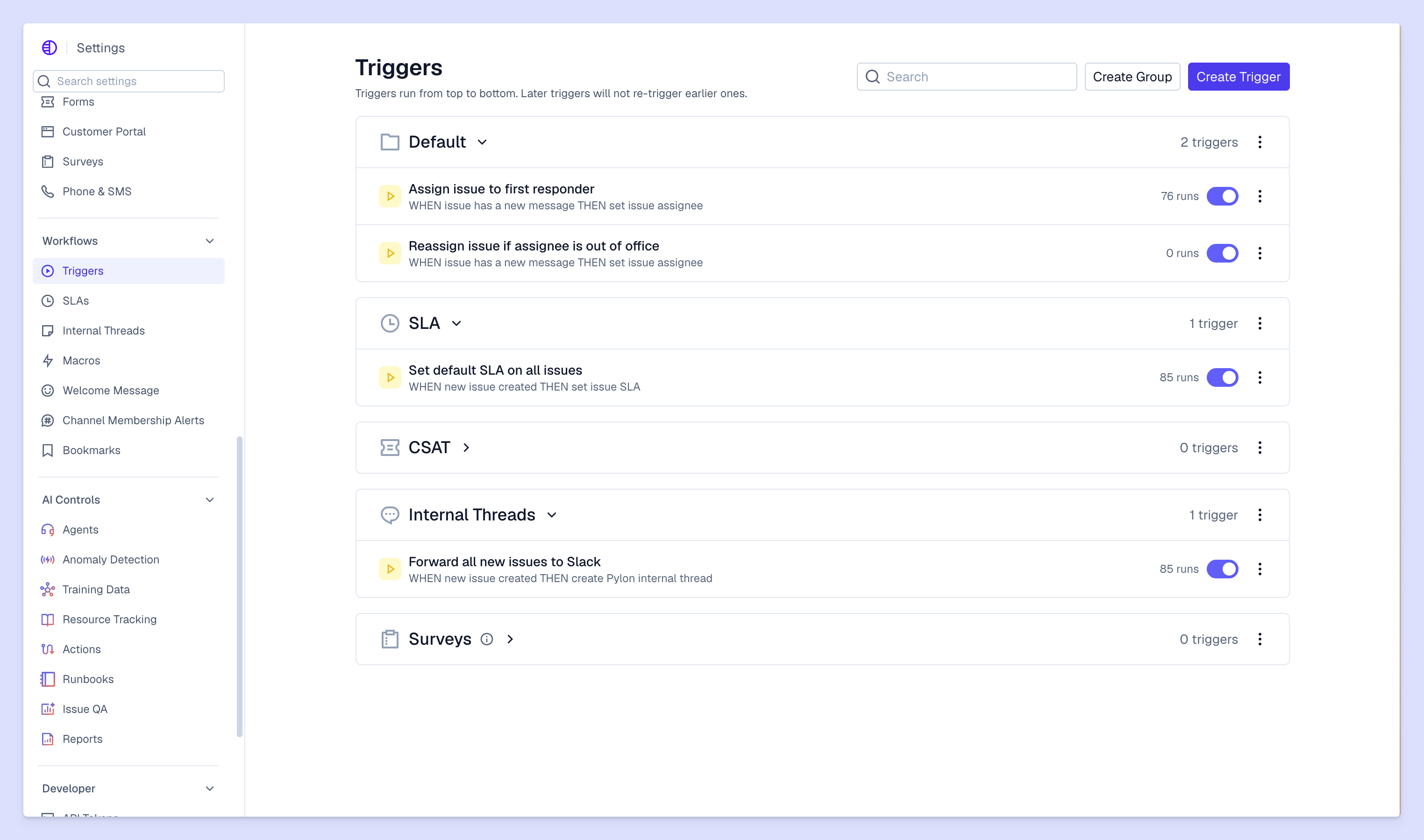
Pylon Triggers Workflow Automation
Customer feedback is a valuable source of insights and a great opportunity to deepen long-term relationships. The best way to respond to positive messages is to set up a repeatable workflow, supported by structured templates and the right tools. A quality customer support platform will help you collect feedback, reply to it quickly, and use it to drive growth.
Pylon is the modern B2B support platform that offers true omnichannel support across Slack, Teams, email, chat, ticket forms, and more. Our AI Agents and Assistants automate busywork and reduce response times. Plus, with Account Intelligence that unifies scattered customer signals to calculate health scores and identify churn risk, we're built for customer success at scale.
Should I respond to both positive and negative customer feedback?
Yes. Responding to both shows transparency, professionalism, and commitment to customer experience.
How quickly should I respond to positive feedback?
Ideally, within 24 to 48 hours. Prompt responses signal attentiveness and customer care.
Can I use templates when responding to positive feedback?
Yes, but they should always be customized to avoid sounding generic. Automate playbooks and create workflows based on customer signals with Pylon’s Account Intelligence.
Built for Modern B2B Support
Resolve issues faster, strengthen relationships, and uncover opportunities across every customer interaction.