
You need more than a good product to grow your startup — you also have to understand what your customers want and how they feel about your company. When you build a strong voice of the customer (VoC) strategy, you get the feedback you need to improve your product and offer better support, so you can keep accounts around for longer.
This guide breaks down what VoC is, how VoC programs work, ways you can collect feedback, and tips for using what you learn.
VoC is when you collect and pay close attention to customer feedback across all your post-sales channels, like support tickets and emails. This information tells you how customers experience your product and how satisfied they are.
VoC matters a lot in B2B because accounts rely on your product to do their jobs every day. When you understand their wants and needs, you can:
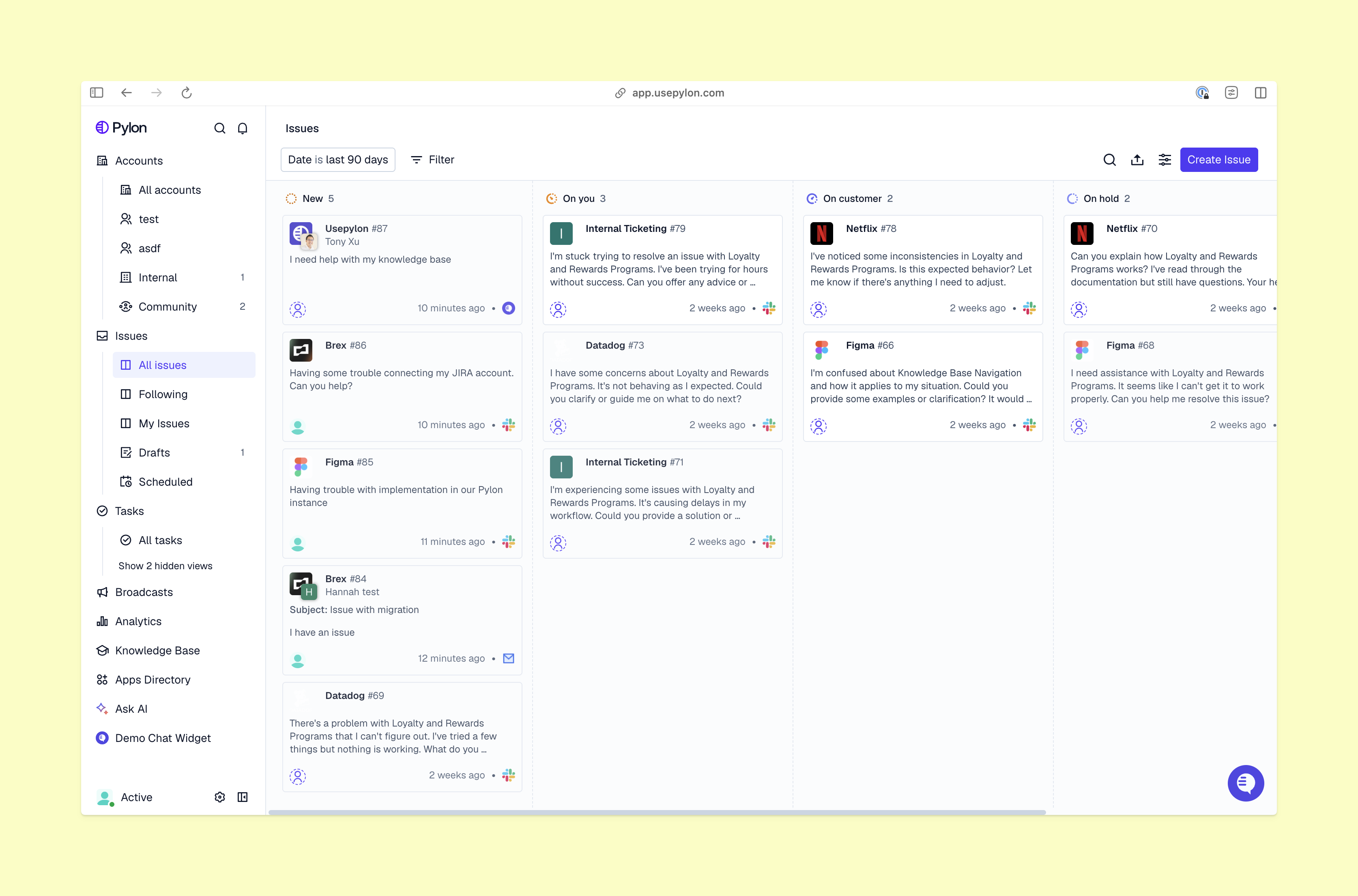
A VoC program is the system you use to collect, organize, understand, and act on post-sales feedback. It starts with gathering information from places like:
Once you have enough feedback, you can identify patterns to help you predict future customer behavior and make changes. With that in mind, let’s look at the main benefits of VoC programs.
Teams can’t manually read every ticket or message, especially once you start growing. A VoC program helps you spot trends in product and support needs across thousands of conversations.
When you track VoC data with an AI or analytics tool, it’s easier to forecast customer behavior. You could notice:
This lets you act early on warning signs and keep more accounts happy. For example, if customers tend to send negative feedback during their first weeks with your product, you could optimize your onboarding or create clearer documentation.
VoC gives support teams better context for every conversation. Your team can see the bigger picture, like how often a problem happens and whether similar accounts also struggle. This information helps your support team deliver fast and personalized help that solves problems.
One of the most common reasons customers churn is that they don’t see ongoing value in your product. VoC helps you:
With these insights, your customer success team can reach out with solutions before accounts leave altogether.
Companies that listen to customers tend to earn trust faster and build stronger relationships. When you act on feedback and communicate how you’re improving, customers often view your team as reliable and transparent.
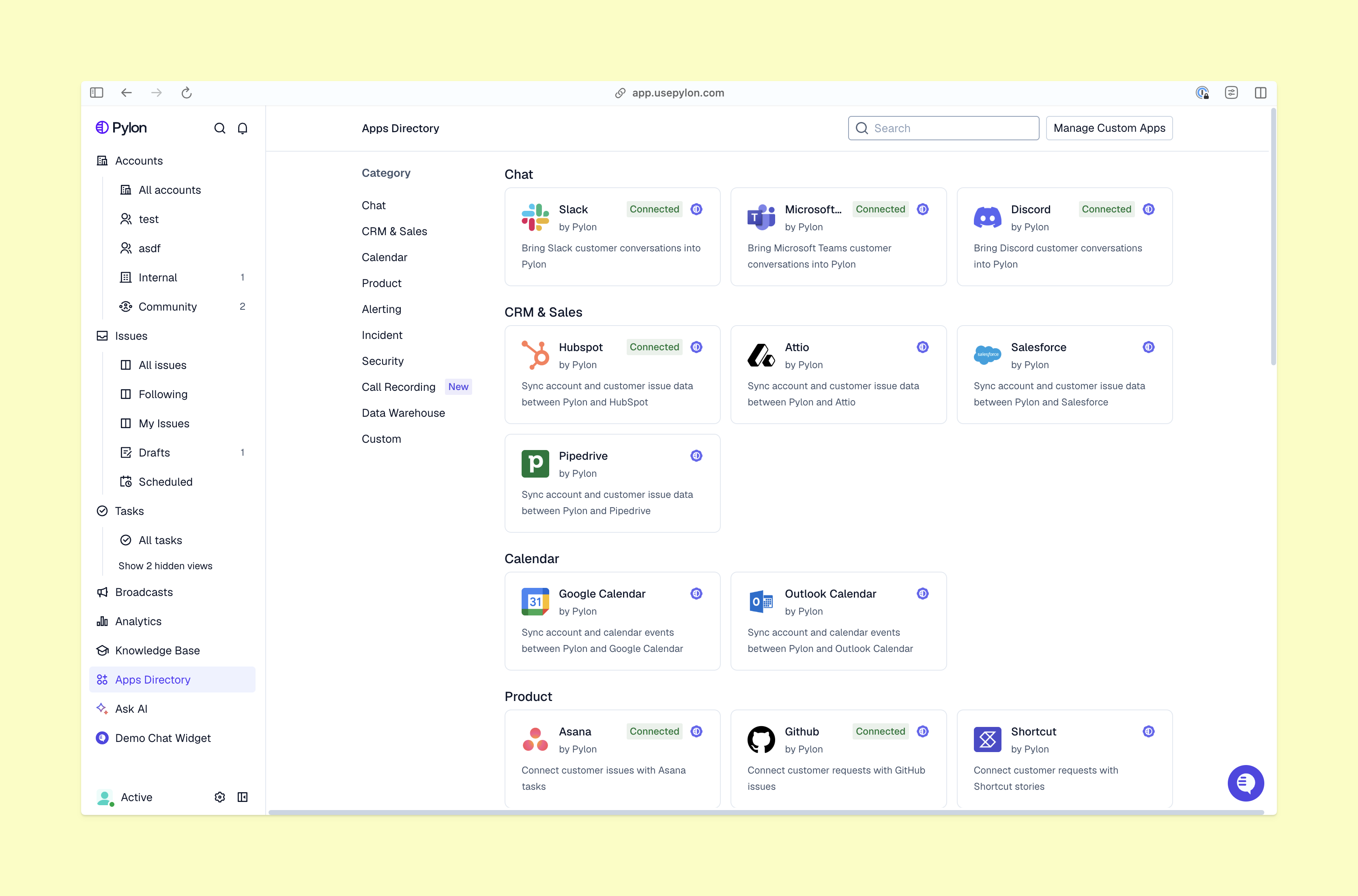
You’ll need plenty of information to understand your customers’ experience, so here are some useful methods for collecting VoC data.
Customer feedback surveys are an easy way to collect valuable details, letting you track net promoter scores, satisfaction ratings, and feature requests over time. Other tools like Pylon’s Product Intelligence analyze your customer conversations to automatically track feature requests and identify which product changes your customers actually want to see.
Reviews help you understand overall customer opinions about your company and product (instead of their feelings about one interaction only). Reading competitor reviews and ratings also tells you how well your product stacks up against alternatives and what prospects look for before starting contracts.
Product usage data shows you what customers actually do post-sales. When combined with other VoC information, this shows why customers choose your product and why they stick around, plus what causes confusion or makes them churn.
Your customers talk to you in lots of places, like email, chat, Slack, and Teams. Pulling all those conversations together gives you a complete view of how customers feel at every touchpoint. Support platforms like Pylon make this a lot easier because they help you manage all your customer channels in one place.
AI makes VoC programs more scalable because it can:
This gives you fast, actionable insights in context, without hours of manual work.
A connected support platform makes VoC even more useful. When you combine customer conversations with product feedback and account context, all in one place, you close gaps between product and support.
Pylon automatically helps you group, track, and bring customer feedback directly to your product team. Our VoC tools help you build what customers actually want, so you can turn feedback into a product strategy.
Book a demo to see how this works
Here’s a step-by-step framework for building a strong VoC program.
First, figure out where customers already talk to you, including:
Manual spreadsheets and scattered notes don’t scale well, so choose a platform that:
This gives your team a single source of truth and a starting point for creating voice of the customer-based solutions.
Look for patterns across product issues, onboarding problems, satisfaction changes, and usage drops. Then tie those patterns back to your roadmap so you know what improvements to make. Pylon helps you with this process by unifying data from your support interactions, CRM, call recordings, customer feedback surveys, and more.
When customers know you’re listening, they share better insights. So keep them informed about feature progress, product fixes, and improvements that were driven by their feedback. This open, two-way communication builds trust.
VoC isn’t a one-time project. Set up regular reviews so you can:
A strong VoC strategy helps your startup grow faster, because every team understands what customers actually want. When you listen to customers often and use AI tools to act on what you learn, you can improve the post-sales experience and make better support decisions.
In turn, this helps you retain customer accounts and stand out from competitors. This process is easier when you can bring all your customer conversations into one place.
Pylon is the modern B2B support platform that offers true omnichannel support across Slack, Teams, email, chat, ticket forms, and more. Our AI Agents and Assistants automate busywork and reduce response times. Plus, with Account Intelligence that unifies scattered customer signals to calculate health scores and identify churn risk, we're built for customer success at scale.
Pylon Workforce Management is available now. See it in action with a live demo.