Register for our upcoming webinar → How Haus Analytics rebuilt its support automation



A structured customer support recovery framework gives your team the blueprint to identify failures early, respond with proportionate gestures, and rebuild trust before an account churns. When you execute recovery well, you can actually turn a broken experience into a trust-building moment that helps you scale B2B support without bleeding revenue.
In this guide, you’ll learn the exact process for building that customer service recovery framework from scratch.
A service recovery framework is a structured process for detecting support failures, responding to affected accounts, and restoring their confidence in your product. In a B2B context, the meaning of service recovery is deeper than a standard apology. You’re repairing the relationship at the account level, which goes far beyond resolving a single ticket.
When you execute this process well, it creates what’s known as the service recovery paradox: A customer who experiences a failure and a subsequent excellent recovery often becomes more loyal than a customer who never experienced a failure at all.
In B2B, this dynamic is valuable because it proves to the buying committee that your team will stand behind them when things go wrong. And that proof is what separates reactive support teams from teams that treat recovery as a strategic lever.
The context of a B2B failure makes recovery infrastructure critical because you’re managing longer sales cycles, multi-stakeholder relationships, high contract values, and reputational risk through referrals and review sites. Each of these amplifies the cost of getting recovery wrong:
A reliable recovery system removes the guesswork from your team so that when a failure happens, everyone knows exactly how to respond without waiting for executive approval or improvising under pressure.
If your response to an outage depends entirely on which customer success manager happens to be online, you don’t have a recovery framework. You have a dependency on individual heroics, and that doesn’t scale.
Here’s a seven-step process for building a resilient structure that fits your team.
You can’t fix what you haven’t defined. Document exactly what qualifies as a failure that triggers a formal recovery. This might include missing a critical service level agreement, a platform outage lasting more than 10 minutes, or a ticket that gets escalated three times without resolution.
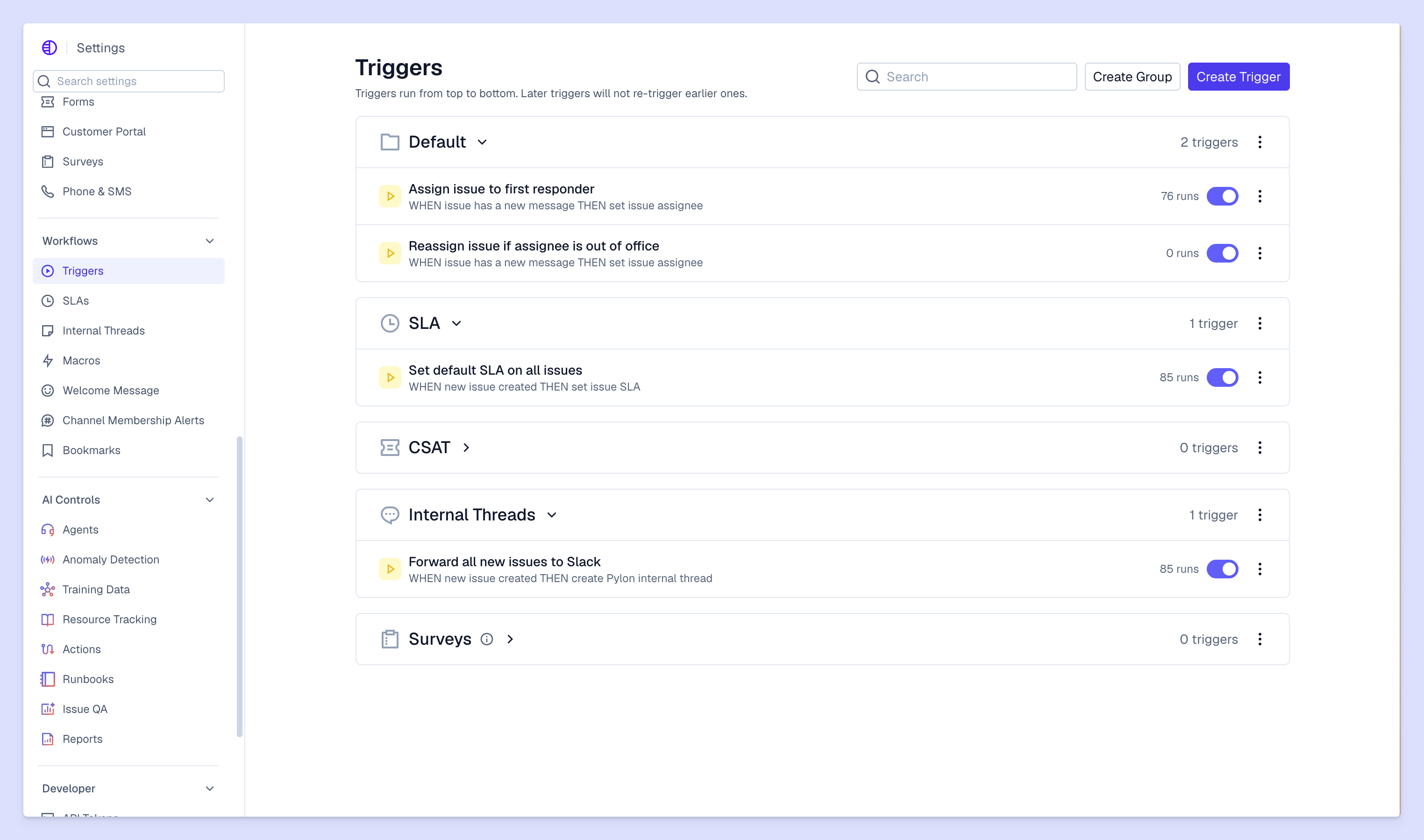
Don’t wait for a formal customer complaint to show up. Set automated alerts that notify your team the moment a failure occurs. If a ticket breaches an SLA, your system should automatically flag it for the customer success manager. Early detection gives you the chance to reach out before the customer has to chase you.
A minor bug for a free-tier user needs a different response than a critical outage for a top-tier enterprise account. To address this, build a matrix that maps failure severity against account value, and define the appropriate response for each tier so your team knows exactly how much time and budget they can put toward recovery.
This matrix keeps you from over-investing in minor issues and under-investing in critical ones. It also gives your frontline team the authority to act immediately. For example, if a tier-one failure hits, they should already know they have pre-approval to offer a specific service credit without asking a director.
Document the steps, templates, and approved remedies for each tier. Store this playbook in your internal knowledge base. When a failure happens, your team should be able to pull up the playbook and run the recovery steps right away.
Who owns recovery? For technical failures, it might be the support engineer. For relationship failures, it’s usually the customer success manager. Define this clearly so no account falls through the cracks when something goes wrong.
Once the issue is fixed, confirm the resolution with the customer(s) directly. Don’t assume a closed ticket means a satisfied account. Document the entire recovery in your CRM, including the initial failure, time to resolution, and customer’s response to your recovery efforts. This data becomes your benchmark for measuring recovery quality over time.
A recovery framework is also a feedback loop when you collect the right data. To keep it up to date, review your failures monthly. If the same issue triggers multiple recoveries, you most likely have a systemic product or process problem that needs engineering or operational attention. Customer satisfaction data from post-recovery surveys is one of the clearest signals you have for spotting these patterns early.
When you’re actively trying to save an account, the execution matters as much as the framework itself. The service recovery process at this stage is less about following a checklist and more about showing genuine accountability.
Here are the most effective examples of service recovery tactics for B2B teams:
The teams that build a structured service recovery process retain accounts that would otherwise churn, and they turn those recoveries into some of their strongest relationships. When your team has a clear playbook for catching failures early and responding with the right gesture, recovery stops being a scramble and starts being a competitive advantage.
Pylon is the modern B2B support platform that offers true omnichannel support across Slack, Teams, email, chat, ticket forms, and more. Our AI Agents and Assistants automate busywork and reduce response times. Plus, with Account Intelligence that unifies scattered customer signals to calculate health scores and identify churn risk, we’re built for customer success at scale.
Speed is the single biggest variable in recovery success. For high-value accounts, an acknowledgment within an hour and a resolution plan within 24 hours is a reasonable benchmark. The longer a failure goes unacknowledged, the harder it is to restore trust.
The most effective gestures are proportionate and practical, such as service credits, temporary priority support access, or a direct call from a senior leader. Generic discounts or one-size-fits-all apologies tend to feel hollow. The best recovery gesture is one that solves the problem the failure created.
By tracking post-recovery CSAT scores, whether the account renewed or expanded, and whether the same failure recurred. A successful recovery is an account that remains healthy because the root cause has been addressed.
The core steps are:
Pylon Workforce Management is available now. See it in action with a live demo.