
Customer success metrics show how your accounts are doing, so you can fix issues before customers even notice something’s off. And even if a customer moves on, tracking these metrics might highlight what went wrong so you can improve the B2B customer experience for future accounts.
In this article, we’ll cover some of the core metrics your post-sales team will want to keep an eye on — and how to use this data to your advantage.
Customer success metrics show how satisfied and engaged your accounts are. They help you understand customer behavior so you can identify risks early and build longer-term retention.
Here are some core key performance indicators customer success teams usually monitor (more on these and others below):
These top 10 success KPIs give post-sales teams the insights they need to track account health and make thoughtful adjustments to customer support.
A customer health score covers insights about product usage, sentiment, ticket volume, escalations, and relationship signals. This metric highlights if an account is healthy, neutral, or at risk.
Most teams decide internally what matters most and how to measure their health scores. And some tools, like Pylon’s Account Intelligence, calculate these scores automatically using conversational data, sentiment, and activity patterns.
NPS measures customer loyalty by asking customers how likely — on a scale from 0 to 10 — they are to recommend your product. High scores usually show strong adoption and satisfaction, while low scores could indicate product friction or gaps in support.
CSAT measures how satisfied customers are after a specific interaction, like a closed support ticket or an onboarding session. It’s one of the fastest ways to understand how customers feel at the moment. CSAT helps you monitor service quality and identify coaching opportunities for your support team.
CES shows you how easy it is for customers to get help. The fewer steps (aka effort) required to solve a problem, the higher your CES. Making things easier for customers is one of the fastest ways to build trust and drive retention.
Churn rate tells you how many customers end their contracts within a certain time period. It’s one of the clearest signals of retention and product fit. When customer churn rises, it usually means customers are struggling to use or find value from your product/service.
CRR is the opposite of customer churn; it tells you how many customers stay over a period of time. High retention means your product delivers value and your success team supports customers well.
CLV predicts the total revenue an account will generate throughout the relationship. This metric helps your success team prioritize high-value accounts and allocate resources where they’ll have the biggest impact on growth.
MRR measures predictable revenue, like feature subscriptions or recurring payments from long-term contracts. Customer success teams use MRR to track revenue gained from expansions and revenue lost from downgrades or churn. This helps teams forecast resources, understand account changes, and spot churn signals earlier.
NDR tells you whether your revenue grows or shrinks from your existing customers over time. When NDR is above 100 percent, your expansion revenue outpaces churn. This metric is one of the strongest indicators of product value and customer success program strength.
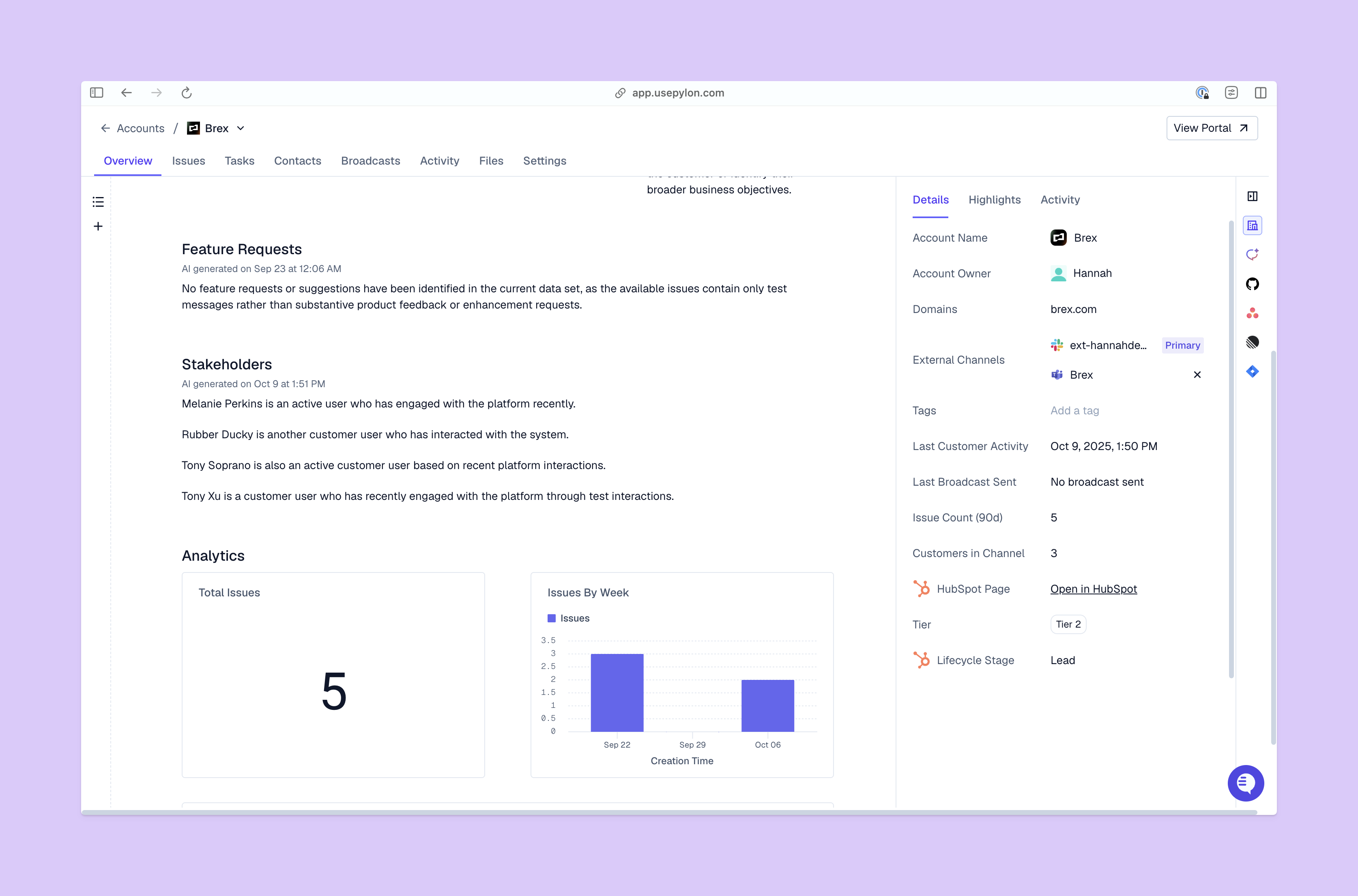
Numbers don’t tell the whole story; many customer success managers use qualitative signals to understand the full context behind account health. Your team might get this context via various support channels, like support tickets, onboarding calls, QBR notes, and Slack or Teams messages.
The best way to measure customer success metrics is by viewing things as a whole. A single KPI can tell you what happened, but combining them shows you why it happened and how to act on it.
For example, a SaaS company might measure their customer success KPIs by:
Customer success platforms with analytics dashboards help your team visualize these relationships so you can prioritize issues and take action faster.
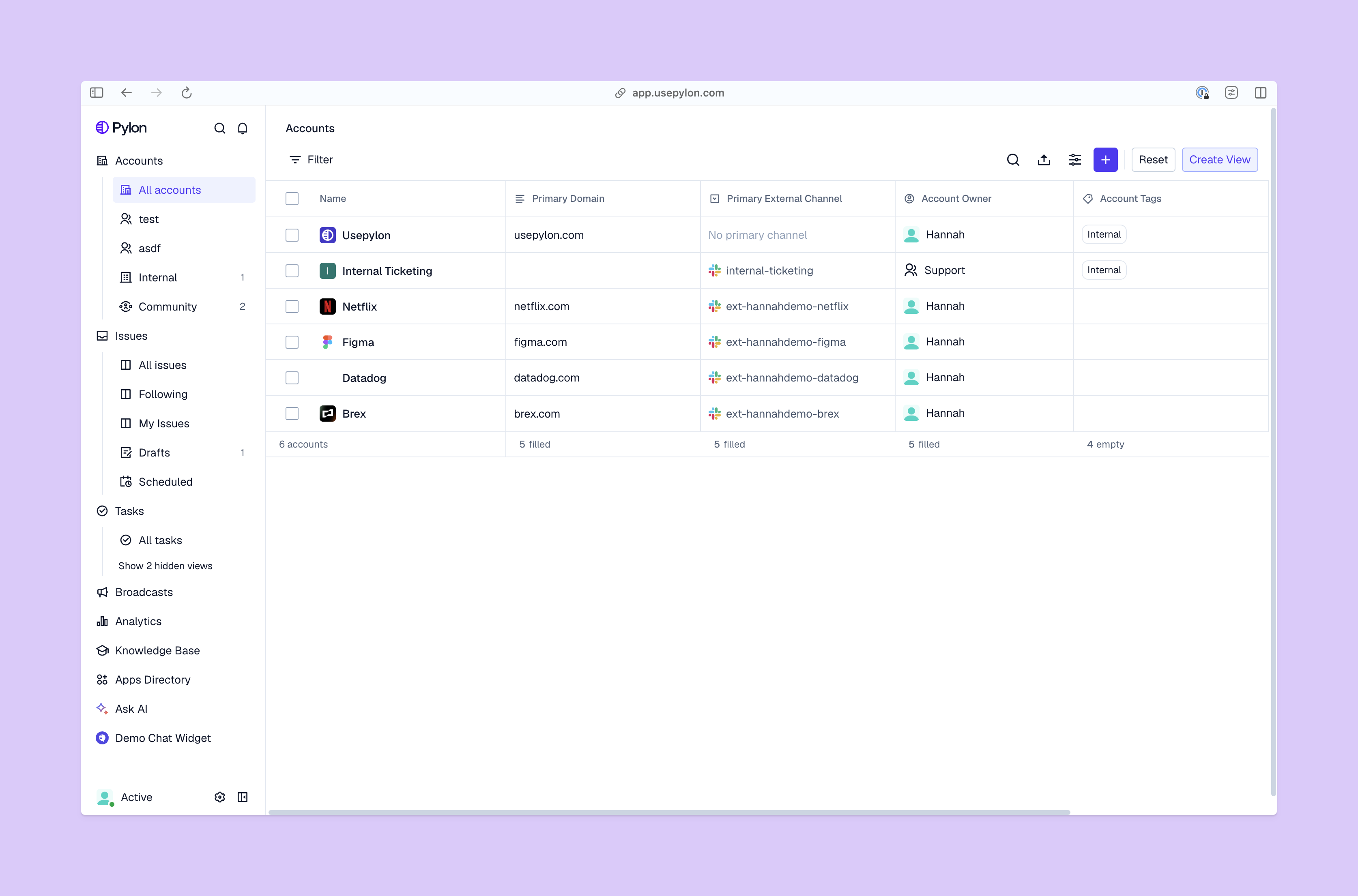
Pylon’s analytics dashboards let you track customer satisfaction metrics like NPS and CSAT in real time. Account Intelligence then layers in sentiment trends and predictive risk signals so you can understand customer health at a deeper level. When issues happen, Pylon can automatically flag them and generate tasks for your team to follow up.
This gives you a single place to see your KPIs and the real context behind each metric.
Tracking customer success metrics is only part of the job. You also need a system that helps your team act on them. Pylon’s Account Intelligence turns raw metrics into practical next steps. Instead of piecing together scattered KPIs, your team gets proactive alerts, health scores, and summaries that help you understand what each customer needs.
Pylon is the modern B2B support platform that offers true omnichannel support across Slack, Teams, email, chat, ticket forms, and more. Our AI Agents and Assistants automate busywork and reduce response times. Plus, with Account Intelligence that unifies scattered customer signals to calculate health scores and identify churn risk, we're built for customer success at scale.
There’s no single “best” metric — it depends on your team's goals — but customer health scores cover a lot of the bases. They combine signals from product usage, support history, sentiment, and revenue so you can understand the full customer picture in one metric.
You can monitor your customer support team’s success via a mix of KPIs like retention rate, CSAT, NPS, expansion revenue, and customer health scores. Pair these numbers with qualitative insights like feedback trends and onboarding satisfaction so you can spot coaching opportunities.
Pylon Workforce Management is available now. See it in action with a live demo.