
If you want to succeed in B2B customer service, consumer-focused strategies won’t work. B2C customer support emphasizes quick interactions to support recent transactions. B2B support, on the other hand, is about long-term customer relationships with multiple stakeholders and cross-team coordination.
They’re completely different approaches and require unique skills, practices, and mindsets. In this article, we’ll explain the key components of business-to-business customer service, such as why it’s important and how to put tested best practices into action.
When you give proactive support and create a positive experience, your customers notice. These actions create higher retention, trust, and customer satisfaction (CSAT).
Studies show 76% of customers say they’d go out of their way to switch to a company known for outstanding support. If you deliver excellent service, you establish a clear competitive advantage and increase your chance of contract renewals. These accounts stay for longer and contribute more revenue, which boosts your customer lifetime value (CLV). High CLV means enhanced profitability with less customer management and outreach — your current accounts simply produce more revenue over a longer period.
Here’s why B2C strategies don’t always work with B2B clients.
In B2C customer support, support usually helps one consumer with a single transaction. The key is primarily speed and convenience. In B2B client services, on the other hand, you manage a whole company with multiple stakeholders in different roles. You have to handle conversations with several people at once, each with different needs and priorities.
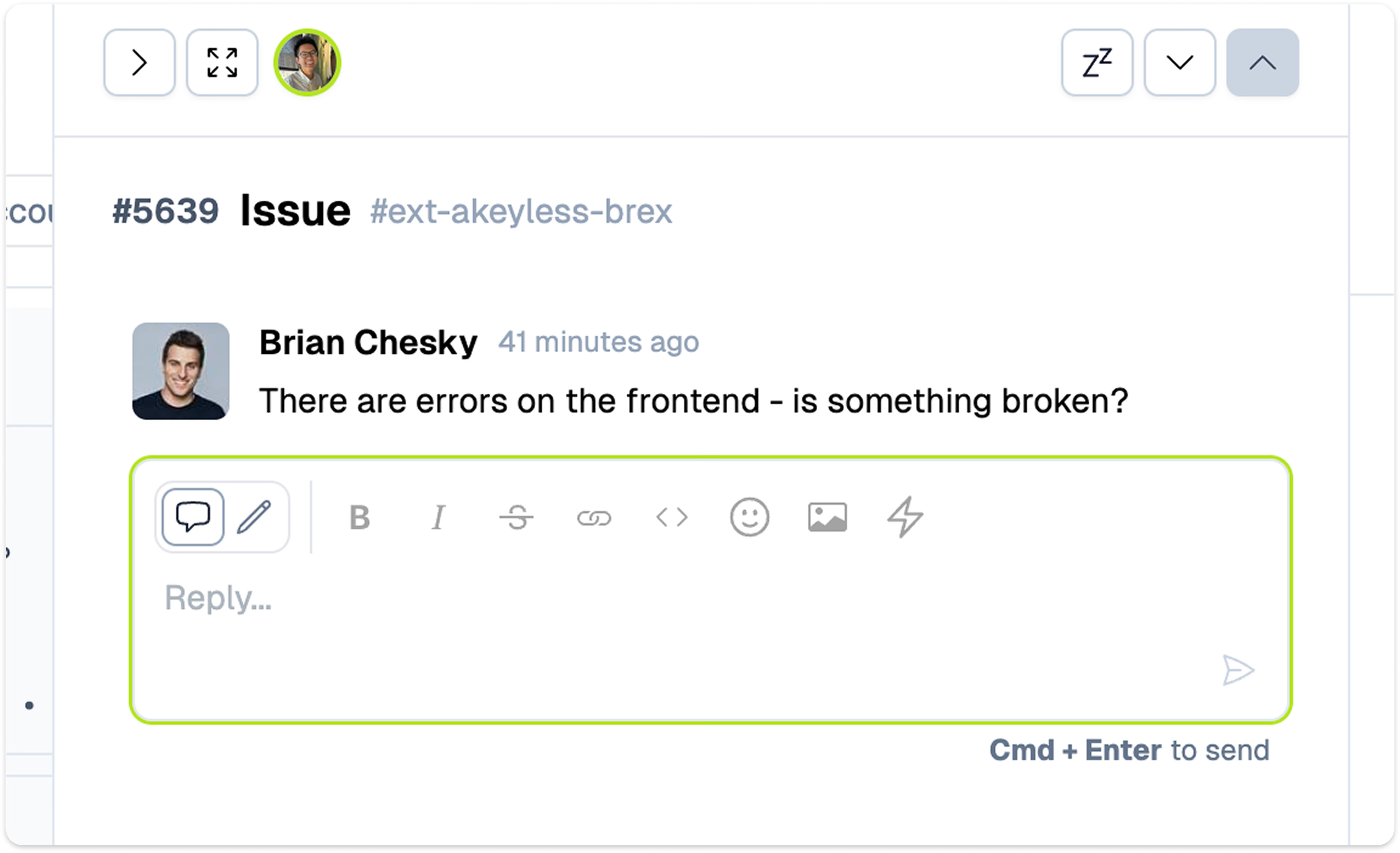
Whereas B2C service manages a high volume of very similar transactions, B2B customer support is about personalization and customization. Customer needs vary widely, and you need to tailor the customer experience to each client. For example, a B2C support rep may process item returns all day. However, a B2B team member might resolve a billing problem and route a glitch ticket to engineers in the span of 30 minutes.
B2C issues tend to be simple and routine. B2B customers, on the other hand, often need help with complex integrations, technical issues, and compliance questions. The solutions are just as difficult and usually involve longer conversions and cross-team collaboration.

B2B customer inquiries often have serious business impacts, so delays put large contracts and revenue at risk. Your team needs to meet specific SLA targets, like first response and resolution time, and is accountable through detailed performance metrics.
B2C customers want quick answers too, but the stakes aren’t typically high. These customers may simply issue refunds or ask shipping questions.
B2C support is highly transactional. A customer may ask for delivery details on a package, and then thank the team member and never speak to them again. On the other hand, long-term relationships are what B2B customer service relies on. Every support interaction either strengthens or weakens the partnership, which affects CLV and future communications.
Here are a few B2B customer service best practices to create a memorable experience and maintain long-term accounts.
Strong B2B support starts with a comprehensive onboarding process focused on customer enablement. This helps customers learn your product and quickly get value from it. With this approach, you make a great first impression and lay a foundation for a long-term relationship. Accounts begin the partnership confident and positive with no frustration in sight.
Schedule regular check-ins with support team members to answer questions and provide guidance. It’s also best to set up self-service options to help customers fix small issues themselves.
The best support teams align their work with customer goals. Gather regular feedback, and use it to build detailed customer profiles. Capture this customer context in a shared support platform so all team members have quick access.
When you understand customer needs, you can deliver personalized support. Say an e-commerce account operates across multiple time zones and loses customers with every moment of downtime. Their support team could create out-of-hours escalation paths to prioritize technical fixes 24/7.
Every B2B account is different. Customers may run personalized integrations, have unique team structures on distinct work schedules, or only work through certain platforms. Offer solutions tailored to each setup. For instance, a support team who uses Google Docs will have to transfer documents to Microsoft Word if a customer uses 365 exclusively.
Support a variety of communication channels too. Some customers prefer an app like Slack or Teams, while others use email. An omnichannel support platform helps you deliver fast, efficient support on any channel, and consolidates all messages to one accessible hub.
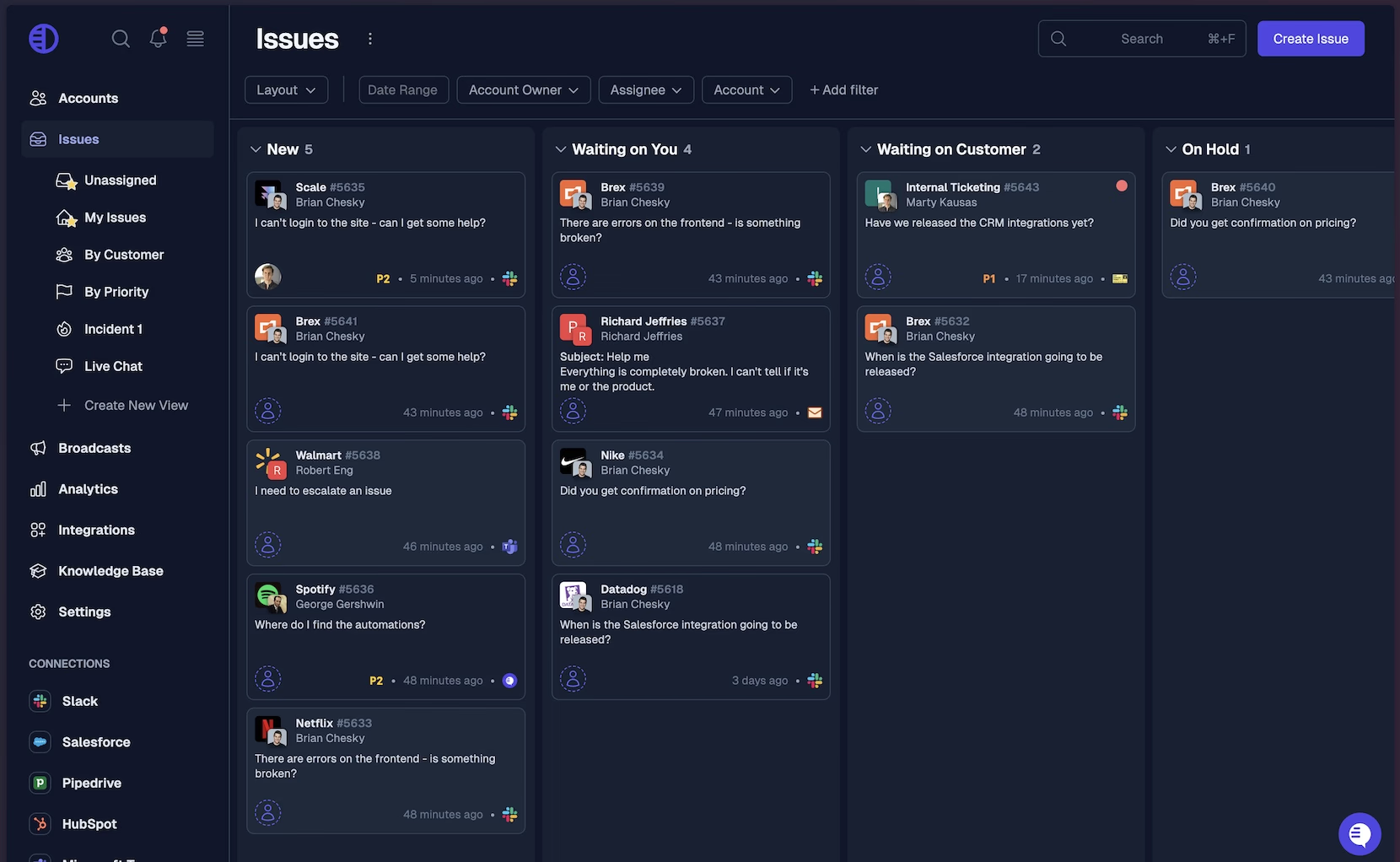
B2B support platforms give teams shared workspaces. This lets them easily see full ticket context and access relevant customer details, so they have the information that lets them enter each conversation confidently. Support platforms also provide detailed real-time analytics to help you monitor SLAs, spot potential issues, and offer proactive solutions.
They also provide AI-powered tools to automate repetitive workflows and handle routine interactions. AI agents and self-service options complete routine tasks end to end, which resolves customer issues quickly and frees teams to work on more complex issues.

To solve complex issues for B2B companies, you need to coordinate across multiple teams. For example, if a SaaS account reports that customer data doesn’t sync, the solution will involve several teams:
Most companies use central support tools to coordinate departments. This reduces hand-offs and back-and-forths, and lets teams collaborate smoothly.

B2B customers rely on self-service options because they’re available 24/7 and give fast solutions. Support your accounts with a fully functional knowledge base that answers all common customer questions. Regularly update the knowledge base with new information, and include a search so customers can find what they need quickly.

AI gives customers quick solutions and reduces pressure on support teams. Use AI agents to troubleshoot technical issues, suggest knowledge base articles, and escalate complex issues to the right person the first time.
These tools also spot patterns in customer interactions and flag repeat issues, so you can investigate further. Pattern identification helps you anticipate customer needs and address problems before they cause any damage.
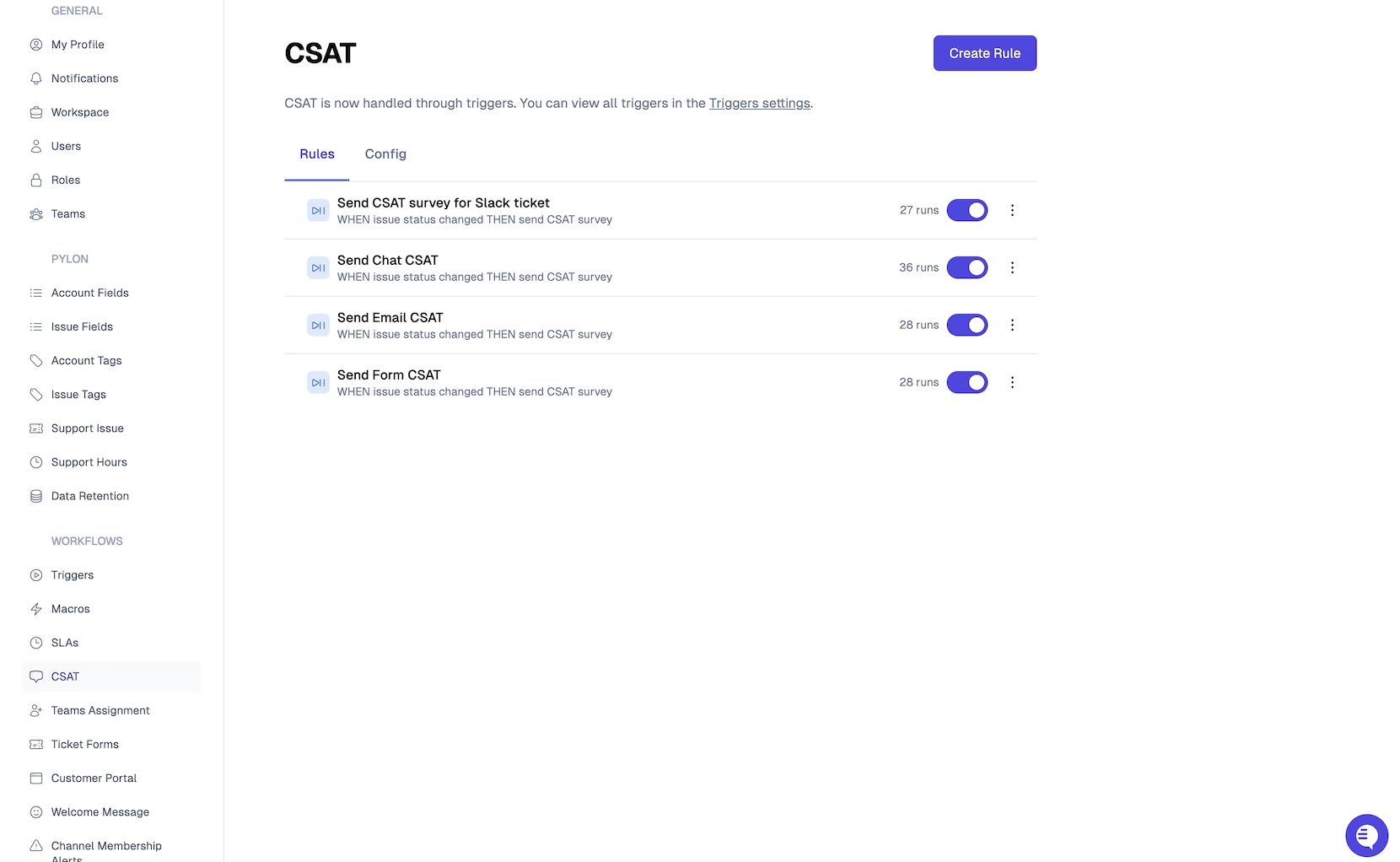
Run frequent surveys to collect feedback from customers, both qualitative and quantitative. Use the data to spot trends and opportunities in your support process. This information tells you exactly what your customers need — often in their own words — so you can shape processes around them.

Key performance metrics (KPIs) give you tangible standards to consistently meet. Here are the most important metrics to track.
Run automated CSAT surveys after each interaction to measure customers’ satisfaction. This is often on a simple scale of 1 to 5. CSAT lets you check how happy customers are with your solutions, which allows you to double down on what works and change what doesn’t.
Track your net promoter score (NPS) to see how likely customers are to recommend you to others. High scores are a good indicator for customer retention and referrals, while low scores indicate churn risk.
When your customer support falls short, customers leave. Track churn rate to discover the percentage of customers that left in any recent period, and use it to identify why they left. Say an account left due to low response time. A company may automate routine issues with a ticketing platform to speed up responses, which could reduce future churn.
Here are some examples of how B2B companies overcame challenges and improved customer support.

Material Security is a cybersecurity company that managed customer support primarily through Slack. This hands-on approach became a burden when teams started to scale.
The company implemented Pylon’s customer support platform. It offered a user-friendly interface, customizable workflows, and smooth integrations with the team’s current systems. Material Security handles communication with Pylon’s complete omnichannel support. This lets them maintain a high-touch support model and meet accounts where they already live — like in Slack — without increased headcount.
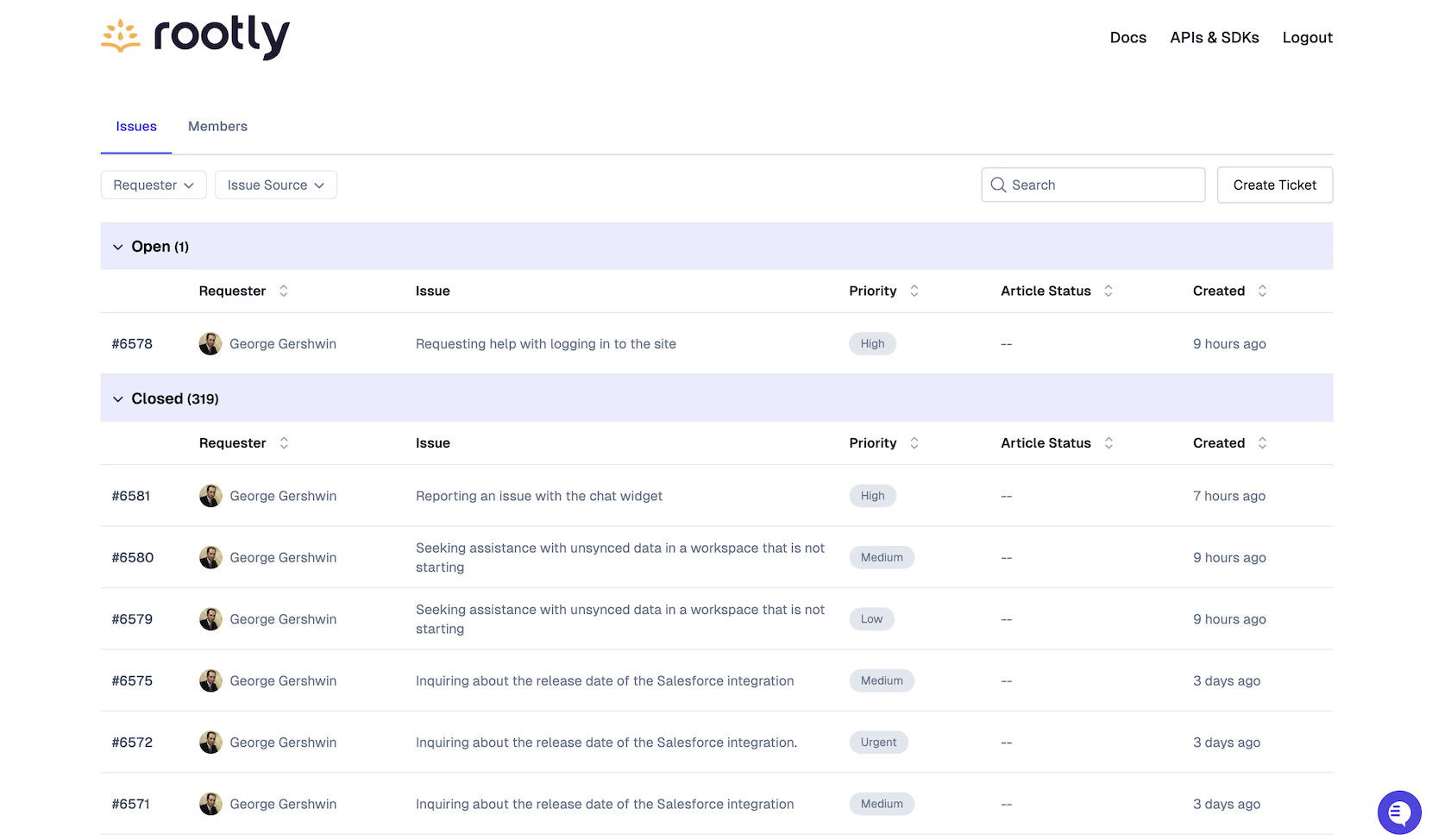
Rootly is an on-call incident management platform, which means communication and quick response are non-negotiable. Its teams need to manage high-value customers across multiple channels and maintain high service standards.
This company chose Pylon for its comprehensive features, like native Slack integration, a customer portal, and detailed B2B knowledge base. Now, it runs efficient omnichannel support from a single interface. This includes private Slack channels, in-app chat, email, and a customer portal.
B2B customer support demands accurate, tailored support. Success depends on efficient collaboration across different teams and personalized service for multiple stakeholders. When you use the latest technology to automate processes and offer proactive support, you build trust and lay the groundwork for long-term partnerships.
Pylon is the modern B2B support platform that offers true omnichannel support across Slack, Teams, email, chat, ticket forms, and more. Our AI Agents and Assistants automate busywork and reduce response times. Plus, with Account Intelligence that unifies scattered customer signals to calculate health scores and identify churn risk, we're built for customer success at scale.
High-quality B2B service is critical because the loss of a single account can significantly impact revenue. It builds the trust needed for long-term partnerships and reduces churn in high-value accounts.
Pylon is a premier solution designed specifically for B2B. It centralizes shared channels like Slack and Microsoft Teams into a unified inbox, and offers deep CRM integrations and native AI agents.
AI automates routine inquiries and provides proactive notifications. It analyzes customer sentiment and history to deliver hyper-personalized experiences that increase satisfaction.
Pylon Workforce Management is available now. See it in action with a live demo.