
B2B success depends on whether you can keep customers satisfied and get them to renew their accounts long-term. To do that, you have to make sure customers see value in the product and can rely on your support team for fast, accurate help.
As competition grows in crowded markets, retention becomes an even more important metric. High retention rates drive growth, since you don't have to spend as much on marketing and can invest those resources elsewhere.
This guide explains the benefits of customer retention and explores how to build a reliable customer base.
Retention measures how well your company keeps customers around. In B2B, this means customers continue to use your services and renew their contracts year after year.
The objective of customer retention is to build strong relationships so you get steady revenue from accounts. While a good product or service is key, retention also tends to increase when customers know where to go for answers and trust that your support team understands their goals.
To calculate retention, use this formula:
(Total accounts at the end of the quarter – New accounts added this quarter) / Total accounts at the start of the quarter x 100 = Retention rate as a percentage
You can use any time period you like, so instead of quarterly you can calculate retention per month or year. What’s considered a ‘good’ retention rate varies a lot based on your niche and company size, but most industry averages range from 65–85%.
Here’s how good retention encourages growth and helps with long-term planning.
When retention is high, customers generate more value over their lifecycles with your company. And that’s not just due to monthly or yearly contract fees — accounts that get more comfortable with your product and learn to trust your support team are more likely to expand their usage.
It’s almost always cheaper to keep an existing customer than to bring in a new one. Strong retention means you spend fewer resources attracting and onboarding customers to replace churned accounts. Support teams can also help established customers better, since they can use account context to understand needs fast.
Customer retention supports advocacy because you can build connections and trust through quality experiences. When customers feel supported and heard, they’re more likely to recommend your product to peers or share positive feedback with partners.
High retention creates a more predictable revenue stream. Renewals are easier to forecast since fewer accounts churn unexpectedly — which helps your teams plan staffing, product investments, support capacity, and growth efforts.
Acquisition matters, but retention is the backbone of B2B because:

These retention strategies give your team practical ways to boost the customer experience and keep accounts happy and engaged.
Customers want to feel recognized, so they know what to expect and can solve problems with less effort. When your support team understands account context and usage, customers don’t need to repeat background details or re-explain the same issue in multiple conversations.
For example, if a customer reaches out with a question about feature access, a team member who sees recent plan changes and onboarding notes can answer the question directly, instead of asking clarifying questions that slow resolution. You can encourage this personalization by keeping customer profiles up to date and making sure everyone has access to the same details.
To build strong relationships, don’t just talk with customers when there’s a problem. Reach out proactively to check in, offer help, suggest resources, and share updates. This reminds customers that you value their business, and it encourages them to engage more with your product and community.
You can also combine this tip with the previous strategy, since customers find communication more useful if your updates and outreach connect directly to their goals or challenges.
Customers like it when they see that their feedback leads to real changes. Send surveys and act on customer input to show that your teams care about creating the best product and experience possible.
For example, if multiple customers ask the same onboarding questions, you can update your knowledge base or proactively share solutions during early check-ins. Then you can reference the feedback and changes in follow-up conversations to build confidence in your company.
Retention plays a central role in reliable, sustainable B2B growth. When you focus on getting the most value from each customer, you bring in regular revenue, expand accounts, build a strong brand image, and encourage referrals. To improve retention, offer each customer active, personalized support that’s consistent and goes above and beyond expectations.
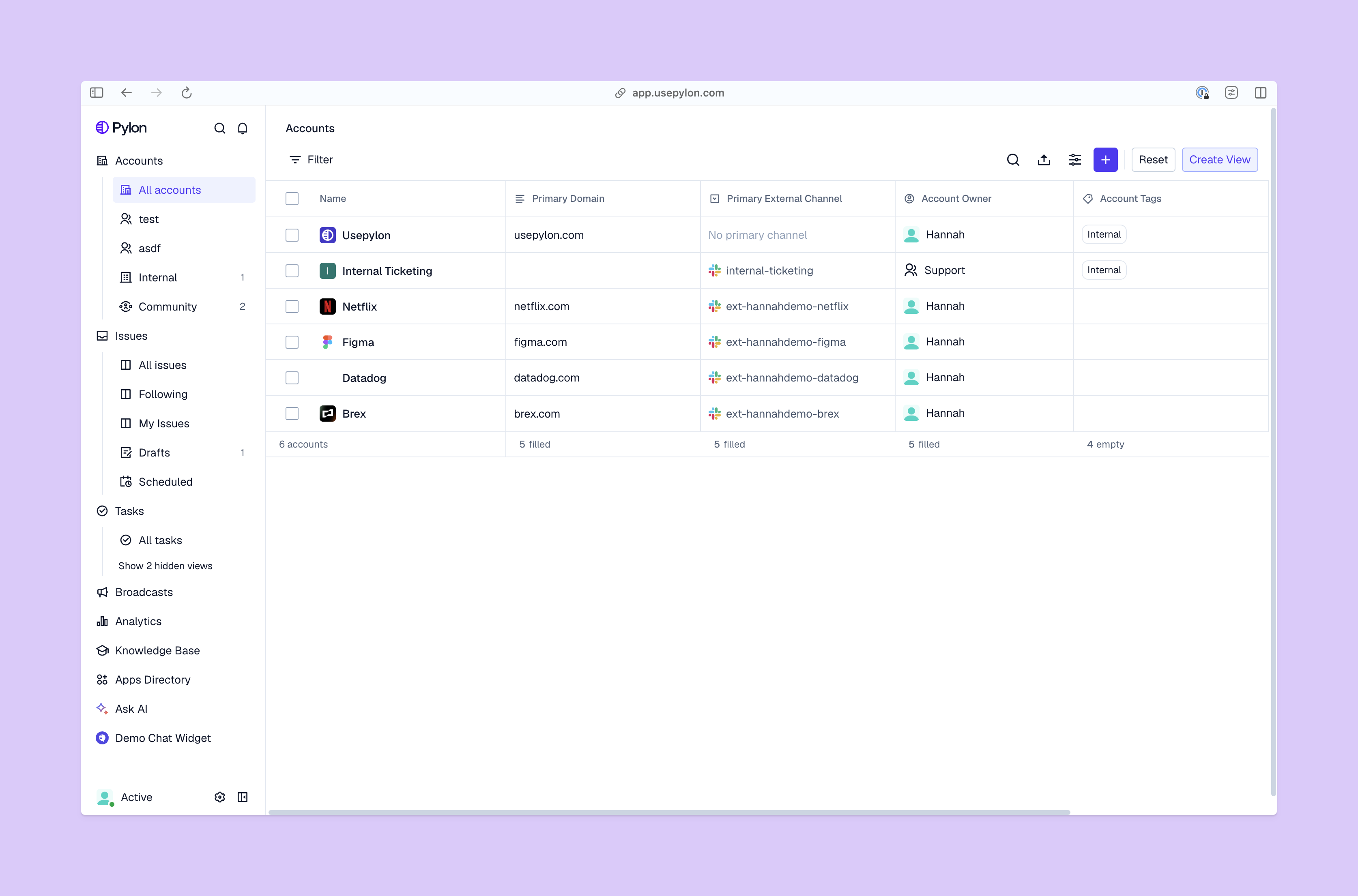
Pylon is the modern B2B support platform that offers true omnichannel support across Slack, Teams, email, chat, ticket forms, and more. Our AI Agents and Assistants automate busywork and reduce response times. Plus, with Account Intelligence that unifies scattered customer signals to calculate health scores and identify churn risk, we're built for customer success at scale.
The three Rs are retention, related sales, and referrals. Focusing on these allows a business to maintain its base, increase revenue via upselling, and acquire new leads through trusted advocacy.
Modern loyalty is built on communication, choice, control, and connection. These pillars shift focus from transactional discounts to emotional engagement, so customers feel empowered and valued by the brand.
A specific example is: “Increase the customer retention rate by 10% over the next 12 months through a personalized email re-engagement campaign.” This is measurable, achievable, and time-bound.
Consistency and emotional connection are key; 88% of consumers say it takes three or more purchases to build brand loyalty. Additionally, 84% are more likely to stay with brands that offer loyalty programs.
Pylon Workforce Management is available now. See it in action with a live demo.