
Customer success tools used to be reactive systems, built for post-sales teams to respond to issues only after they happened. But now, data-driven and AI-powered platforms help teams take proactive steps to strengthen customer relationships and improve retention.
In this article, we’ll look at what today’s teams need, where traditional options fall short, and what benefits modern tools for customer success offer.
For a small startup, a basic customer relationship management tool or ticketing system can be enough to handle most support needs. But as your company scales, your team will probably outgrow these systems and need more professional tools for customer success.
Traditional tools have drawbacks like:

More modern platforms give your team the tools they need to follow customer success best practices and create better outcomes. Here’s what to look for.
Great teams track a range of customer success metrics that offer data about product usage, communication history, and account health. The best customer success software collects all that data in a single place and lets you view it easily, so your team always has quick access to the context they need.
Success teams have a lot of work to do if they want to stay connected with customers and maximize account value. Some of that work calls for an expert, but you can pass off a lot of simple tasks to your support platform. The right automations reduce the need for manual follow-ups and make sure you send every customer message on time.
Modern tools use AI in customer success to help you spot risks and opportunities earlier. For example, your system might detect sentiment changes in customer messages or drop-offs in product usage, and identify the relevant accounts as “at risk.” The right tool could also note high engagement as a signal that the account is strong.
Here are the main benefits of using tools with the above features:
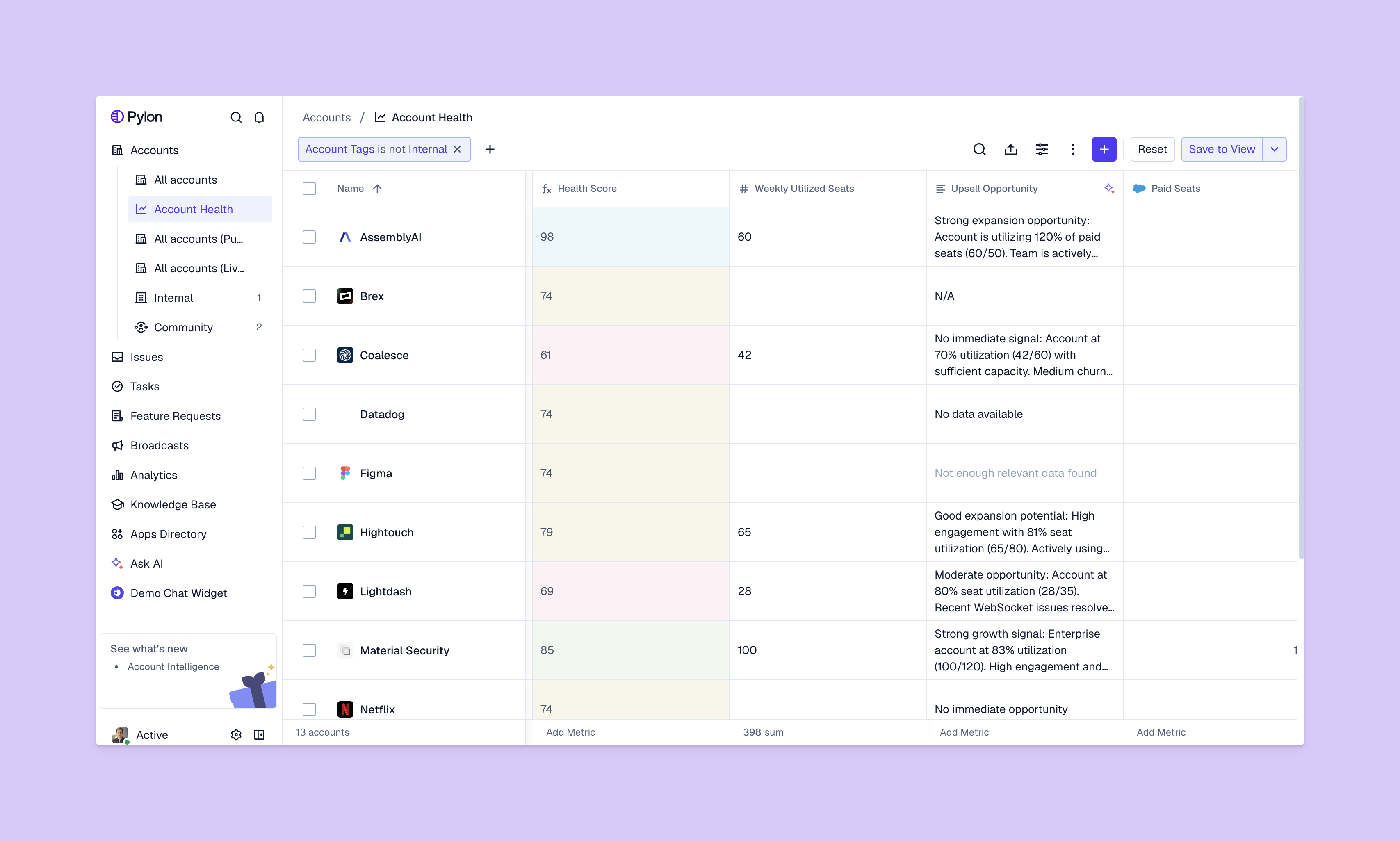
Let’s look at how a modern platform like Pylon helps your team work smarter and deliver a better customer experience.
Unlike traditional help desk software, which is mainly designed to handle tickets, Pylon helps you manage customer relationships proactively. You can customize triggers so the system reaches out to accounts at key milestones, and improve follow-up messages with suggested wording or context from AI assistants. Plus, account health data helps your customer success managers spot and handle churn risks well before contract renewal dates.
Pylon’s tools are easy for your team to use, so they save time and reduce friction. AI agents lower your workload by automating workflows, and omnichannel support helps your team manage complex relationships across platforms. This frees up your team to offer fast onboarding and prompt support throughout the customer lifecycle.
As a company grows, customer relationships become more complex. Pylon’s AI customer service tools automate repeat tasks like follow-ups and onboarding instructions, while highlighting issues and expansion opportunities. You also get rich, well-organized customer context, so it’s easy to offer personalized communication at scale.
Here’s what to look for when you choose a customer success platform.
These questions will help you figure out if a tool is right for your team:
As customer success strategies shift to include more use of AI-driven insights, you need a tool that can support your needs for years to come. All customer data should be kept in one platform, with real-time updates so you don’t need to keep syncing with different systems.
You’ll also want a system that’s flexible enough to support whatever comes next, both for your company and the industry as a whole. For example, prioritize automated workflows with triggers you can customize to match key events in your customer lifecycle. These workflows help your team offer a great customer experience at scale.
Modern tools for customer success give you unified customer data, automated workflows, and detailed account insights. This lets your team create great experiences at scale and increase retention through strong relationships.
Pylon is the modern B2B support platform that offers true omnichannel support across Slack, Teams, email, chat, ticket forms, and more. Our AI Agents and Assistants automate busywork and reduce response times. Plus, with Account Intelligence that unifies scattered customer signals to calculate health scores and identify churn risk, we're built for customer success at scale.
Customer success tools focus on proactive relationship management, retention, and growth across the customer lifecycle, while support software primarily handles reactive issue resolution through tickets and help desks.
Companies typically benefit from a dedicated platform once they have a growing customer base, recurring revenue, and a need for scalable processes to manage onboarding, engagement, and renewals.
Teams often see improvements in retention rate, expansion revenue, time to value, customer health visibility, and overall team productivity.
Pylon Workforce Management is available now. See it in action with a live demo.