Register for our upcoming webinar → How Haus Analytics rebuilt its support automation



Informal customer support is fine for most early-stage startups. Anyone can resolve issues directly in Slack or via email without a formal ticketing system or standardized processes. As the company grows, the informal approach breaks down. Team members lose track of who’s answering what questions between platforms, and response time slows.
A well-defined customer support workflow removes bottlenecks and creates simple, clear processes for repeatable operations from customer onboarding to cross-channel follow-ups. In this article, we’ll explore how to create a scalable customer service workflow process that doesn’t add unnecessary complexity.
A B2B customer support workflow is a standardized process that defines how your support team responds to customer requests.
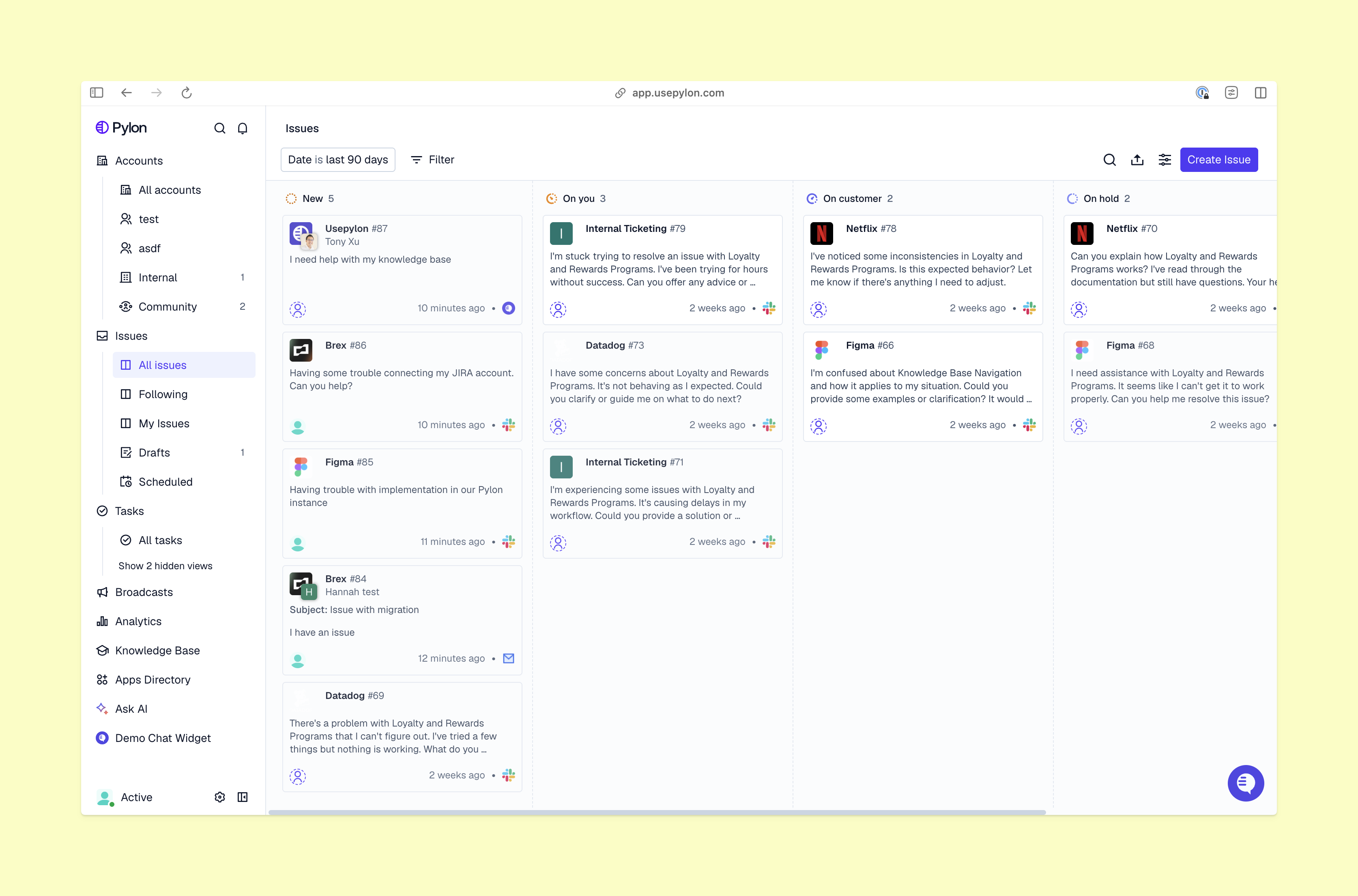
Systems built on a shared email inbox and Slack DMs stop working when there are hundreds of tickets every month and multiple people who route and resolve them. A formal workflow can help you coordinate across ticketing and communication channels as your company grows. Adding omnichannel coordination to a customer support workflow, which collects information from all threads, means structures can evolve with your company and support teams’ needs.
Here’s a six-step example of a customer service workflow for a B2B SaaS company:
There are a lot of details you’ll need to decide for each of these workflow stages to make sure the workflow fits your company’s needs. For example, in the “escalation” stage, it’s important to define specific escalation paths for different scenarios so your team always knows who to contact. In the “follow-up” stage, you should also document a process for capturing customer feedback to improve the product or refine your customer support workflow.
Each phase of the customer experience, from onboarding to renewal, should have its own workflow as well. The goal is to create comprehensive documentation for every customer interaction your support team has so they can follow a logical playbook instead of having to start from scratch each time.
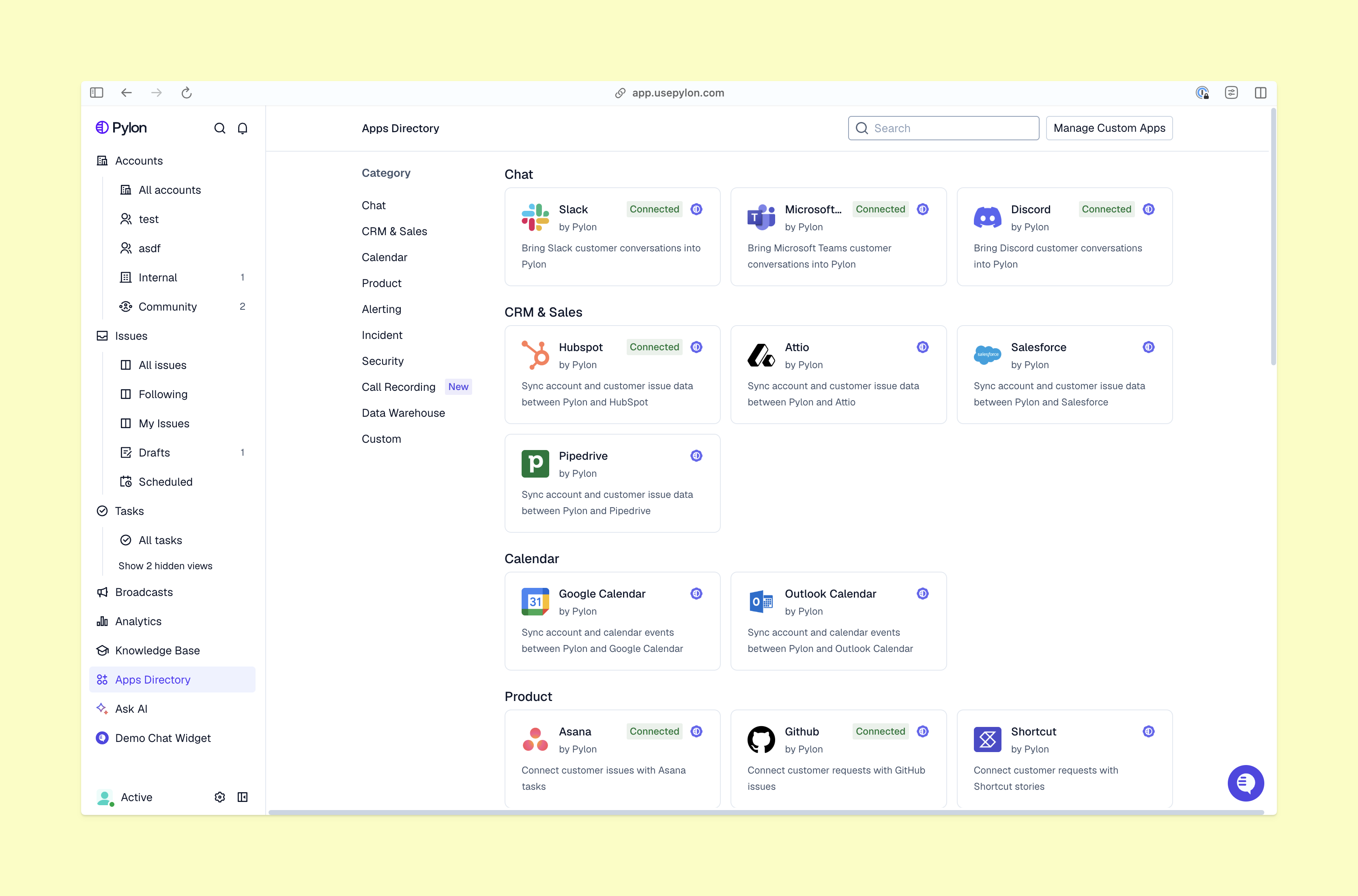
When you’ve created a solid workflow, you need to have the systems to put it into practice. Pylon’s omnichannel platform helps your team track issues as tickets move through the support workflow, then coordinate responses across multiple teams and channels. Pylon integrates easily with many existing support systems, so it’s a natural evolution for a growing startup that needs a more systematic, coordinated customer support strategy.
As your startup moves past early-stage customer support, there are a few common ways your support workflow might break down:
When you document your customer support workflows clearly and use a powerful ticketing system to enhance it, you’re more likely to overcome these growing pains. Your team follows a defined process to preserve context and define ownership across handoffs. Automated follow-ups lighten manual workloads, and your team uses the results for continuous improvement. And your customers are more likely to feel that their needs are being met by people who care.
If you use AI-powered tools, you can scale your support operations without losing a compassionate touch. After you’ve documented your workflow, review it to find sections that would be easy to automate. Use this approach to handle repetitive tasks so you can free up your team to focus on the customer experience.
These are the areas where B2B customer service automation usually has the most impact.
Manual triage is time-consuming and doesn’t make a big difference in how customers feel. This stage is easy to automate simply by defining the rules you want an AI tool to follow.
Refer back to your support workflow to define which types of issues should go to which teams, which high-value customers or account tiers need to be prioritized, and which team members have the right experience and skills to handle particular queries. Then, build those pathways for your AI tool so tickets go to the right places at the right times.
You’ll see improvements to your first response times, and your team can use that saved time for more important and impactful parts of the workflow.
Just like initial triage and routing, escalation is a repetitive process that is easy to automate. Your customer support workflow already defines escalation paths and clarifies when to escalate tickets and who to escalate them to. Feed these rules to your AI-powered support platform, and it will handle the process automatically.
Automation at this stage makes escalation much more consistent. The system follows the same rules for each ticket, so outcomes are predictable for customers, and you can be proactive by handling new problems before they become emergencies.
Most teams can turn status updates into a simple automated workflow. These messages keep customers informed with details about the status of outstanding issues and expected resolution times. They also trigger notifications about service outages and other technical issues.
The more proactive your communication, the less customers will have to ask for updates. That reduces your ticket volume and avoids customer frustration.
Onboarding generally follows the same process for each new customer, so it’s another strong candidate for automation.
You can streamline the onboarding process by automatically sending out welcome emails and training resources, and triggering reminders to your team to check in as customers reach specific milestones. Customer questions are often repetitive at this stage too, so you can handle many of them with automated self-service options like knowledge bases and FAQs instead.
As your team drafts messages to customers, AI assistants can speed up the process with automated suggestions based on customer history and knowledge base articles. Your team still has full control over customer messaging and can check and customize each message, but it’s faster and easier to start from an AI-generated draft than a blank screen.
Your team can also use AI assistants to summarize complex problems or long conversation histories. This prompt saves time, but more importantly, it helps team members consider the full customer context before they reply.
Your knowledge base already contains the answers to many common questions, but customers may not know where to look. Automation can analyze ticket content and respond to customers with links to suggested knowledge base articles and FAQs that could answer the question instead of creating another ticket.
You can also use AI agents to answer customer questions directly via live chat. Your knowledge base content will inform their responses, and anything that can’t be answered should escalate to a team member.
Use automation to standardize your follow-up process. Gather feedback on each interaction with automated CSAT surveys, and set up reminders and notifications for your team in the CRM or customer support dashboard. Using structured follow-ups means your support team will be much more consistent in their outreach and will receive more useful feedback in return.
A structured workflow helps customer support teams keep the same personal touch central to a startup’s early stages, but make it easier to maintain a consistent customer experience under rising ticket volumes. As your teams follow the workflows you’ve defined, they’ll likely work more efficiently and deliver faster response times, which boosts customer satisfaction and retention. But to put these workflows into action, you need a support platform that can handle the growing complexity of B2B operations.
Pylon is the modern B2B support platform that offers true omnichannel support across Slack, Teams, email, chat, ticket forms, and more. Our AI Agents and Assistants automate busywork and reduce response times. Plus, with Account Intelligence that unifies scattered customer signals to calculate health scores and identify churn risk, we're built for customer success at scale.
Most B2B workflows include intake, assignment, execution, review, and optimization to improve consistency, visibility, and operational efficiency.
A support workflow diagram should map ticket intake, routing, escalation paths, ownership, follow-ups, and resolution steps across channels.
Startups automate support workflows with ticket routing, SLA triggers, AI-assisted replies, and omnichannel queue management.
Startups should implement a ticketing system once customer conversations become difficult to track across Slack, email, and chat.
Omnichannel workflows centralize conversations, reduce context switching, and help support teams resolve issues faster across channels.
Pylon Workforce Management is available now. See it in action with a live demo.