
It’s hard to manage B2B support across channels like chat, email, Slack, and Teams: Customer info is scattered, your team gets overwhelmed, and response times suffer. But the right help desk software fixes this and makes it easy for your team to improve customer satisfaction.
In this help desk software comparison guide, you’ll learn how to pick software that simplifies your team’s work and gives them tools to increase retention.
.png)
Imagine that a customer emails your support team with a complex issue. Later they ask a few questions via chat, and then they reach out through Slack. Each time, they have to repeat their problem and details, because your team is tracking 3 separate conversations instead of an ongoing discussion.
A good help desk software solution pulls all those channels into one place. You have context on the full conversational thread, alongside context like account history and past tickets.
This means your team can offer more useful support, and customers get answers faster with less frustration. This support quality typically leads to higher customer satisfaction and retention rates.
To pick the best support desk software for your team, you need to understand what problems they’re facing. This way you can look for features that actually solve those issues.
Here are some tools that could help:
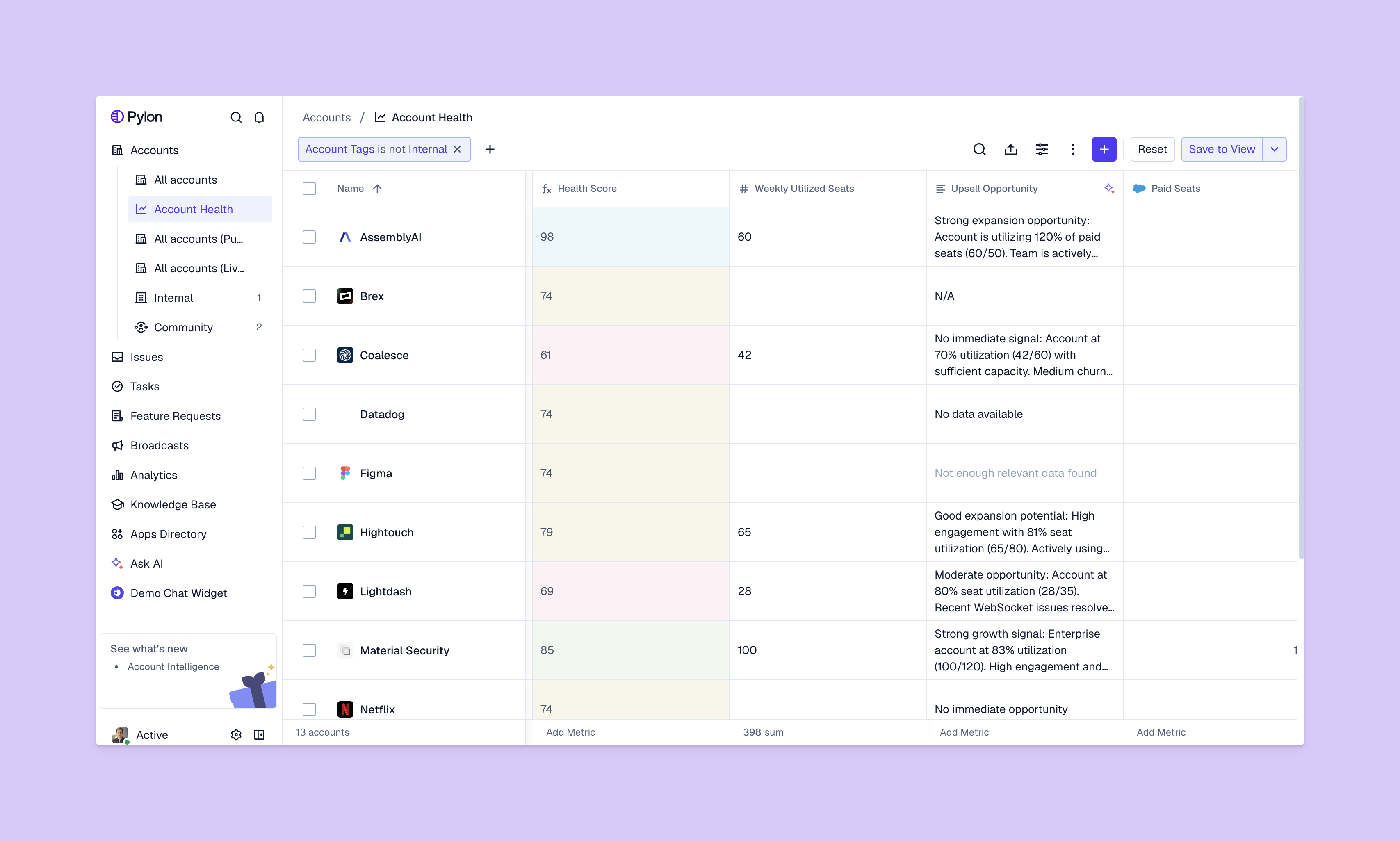
Not all help desk tools are built the same, and they serve different types of companies and industries. For example, B2B teams need support desks that go beyond simple ticketing. That usually includes features to manage complex customer accounts and drive retention over the long term.
Here’s our comparison of 5 popular help desks, so you can pick the one that best fits your needs.
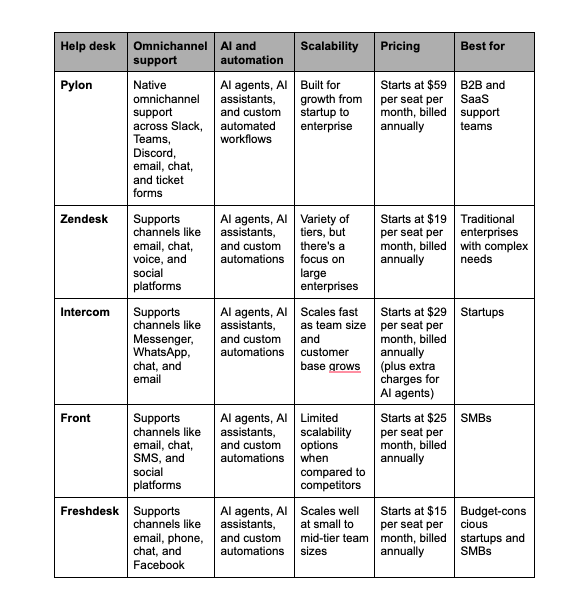
The right help desk software helps your team respond to customers faster and give them accurate, personalized support every time. Avoid simple ticketing tools, and look for a complete solution that brings all your customer support operations and data into one place.
Pylon is the modern B2B support platform that offers true omnichannel support across Slack, Teams, email, chat, ticket forms, and more. Our AI Agents and Assistants automate busywork and reduce response times. Plus, with Account Intelligence that unifies scattered customer signals to calculate health scores and identify churn risk, we're built for customer success at scale.
Pylon Workforce Management is available now. See it in action with a live demo.