Register for our upcoming webinar → How Haus Analytics rebuilt its support automation



Freshdesk handles high-volume email queues well, but B2B support has moved beyond that one channel. Customers ask questions in places like Slack and Microsoft Teams threads, and Freshdesk isn’t designed to manage those chats natively. As your support team grows, you can run into limitations in Freshdesk’s AI and automation tools as well.
In this guide, you’ll learn about the strongest Freshdesk alternatives and how easy they are to start using. We’ll look at some popular free and premium options, so you can find a help desk solution that matches how your customers actually communicate.
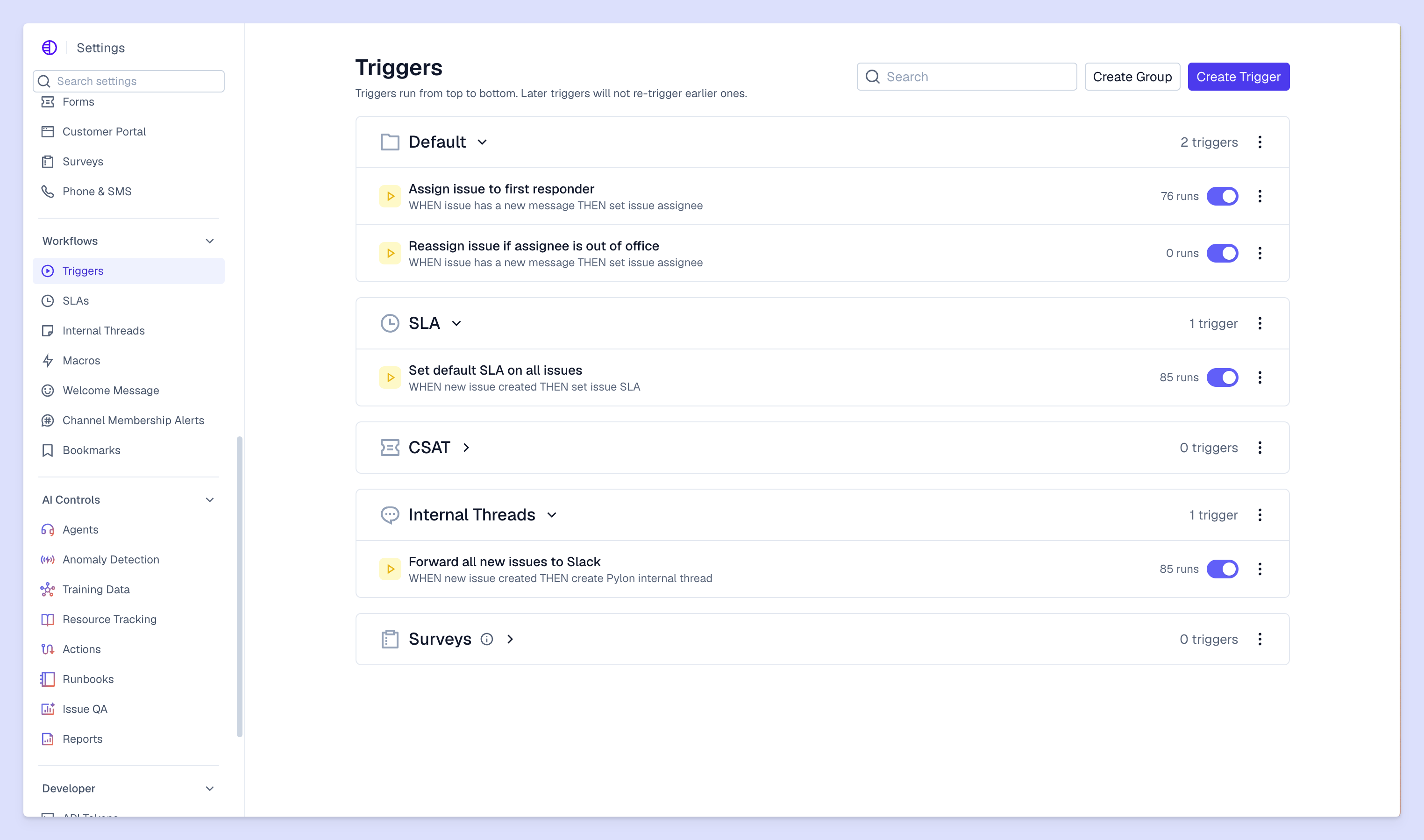
B2B companies that migrate from Freshdesk to an alternative often share two key frustrations: the product doesn’t fit their workflows, or the pricing doesn’t match their growth plans. Let’s look closer at the main reasons to search for a new support platform.
Freshdesk was built around the email ticket, where every message enters a central queue, is assigned a number, and follows a straightforward resolution path. That model works well for transactional support, but B2B relationships are ongoing and multi-threaded.
A single account might have three open issues across two Slack channels and an email thread, and Freshdesk treats them all as unrelated events. There is a Slack integration, but it simply alerts you when something happens. You can’t triage, share, assign, or resolve issues from within Slack. All of this friction can add up to hours of lost productivity every week.
Freshdesk’s pricing tiers gate some of the most important features behind costly upgrades. If you want advanced reporting or sandbox environments, you’ll need an enterprise plan even if your team is fairly small. The platform’s AI agent is also a paid add-on with session-based billing, which further strains your budget.
When you review Freshdesk’s tools versus other customer support software, focus on these key areas:
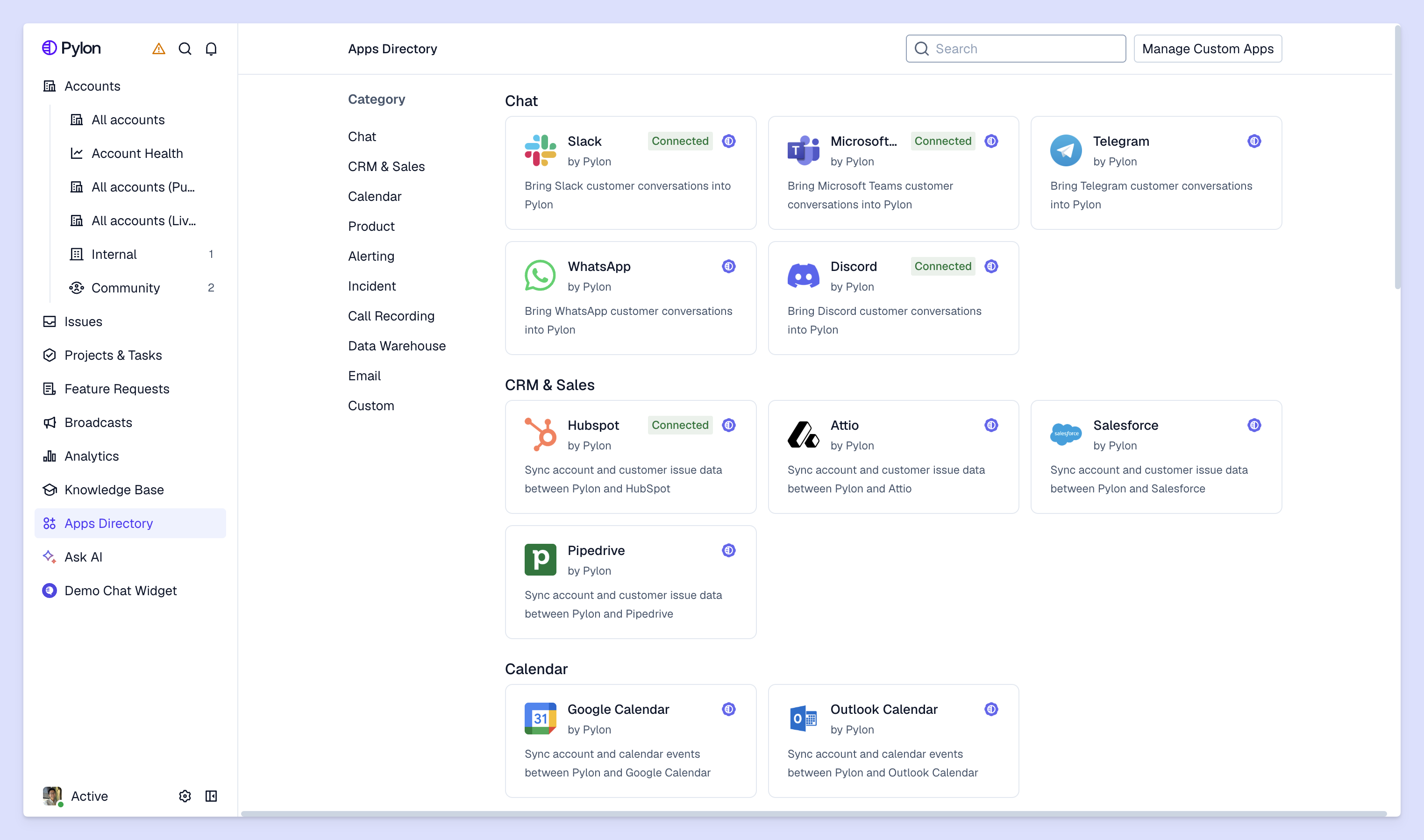
Now let’s compare six of the top Freshdesk competitors for B2B teams. We’ll look at factors like team fit, pricing, AI depth, and migration complexity.
| Platform | Channels | Key AI capabilities | Migration effort | Best for |
|---|---|---|---|---|
| Pylon | Slack, Teams, email, chat, forms | Agents and assistants, ticket routing, knowledge retrieval | Low (guided onboarding) | B2B teams using multiple channels, like Slack and Teams |
| Zendesk | Email, phone, chat, social, messaging | Agents and assistants, triage, ticket and article summaries | High | Large teams that want deep customization |
| Zoho Desk | Email, chat, phone, social | Agents and assistants, sentiment analysis and predictive insights | Medium | Budget-conscious omnichannel teams |
| Help Scout | Email, chat, knowledge base | Agents and assistants, thread summaries | Low | Lean teams wanting minimal setup |
| Intercom | In-app chat, email, WhatsApp, social | Agents and assistants, knowledge retrieval, content suggestions, multilingual voice agents | Medium | Product-led growth teams |
| FreeScout | Email only | None | High (DIY setup) | Self-hosted teams with limited budgets |
Pylon is designed for the way modern B2B companies communicate with their customers. This platform takes the chaos out of shared Slack Connect channels, and turns them into a structured support operation with SLA tracking and ownership assignment. Your team can see details, like each customer’s health score and interaction context, while they draft replies.
You’ll also get AI and automation tools for intelligent triage and routing, surfacing insights, and filling knowledge gaps. AI Agents and knowledge base articles offer customer self-service, while AI Assistants help your team find the info they need and draft relies fast.
Tradeoffs: Pylon is purpose-built for B2B channels, so it’s not suited for high-volume consumer brands that have a large volume of relatively simple requests.
Best for: B2B support teams that need an all-in-one platform for nurturing strong customer relationships
Zendesk handles complex routing, multi-brand setups, real-time analytics, and advanced SLA configurations well. This platform offers omnichannel support tools, and its large third-party app ecosystem lets teams customize Zendesk to suit their needs.
Tradeoffs: The native AI agent is a separate add-on with an extra charge, and the platform’s complexity means you’ll usually need a full-time admin to maintain it.
Best for: Enterprise organizations that need deep customization and a deep integration marketplace
Zoho Desk is a natural fit if you already run Zoho CRM and Zoho Analytics. This omnichannel platform also stands out thanks to its user-friendly and customizable workflow automations. Like Freshdesk, Zoho Desk targets mid-market teams, but the latter offers more affordable starting plans
Tradeoffs: Setup and management can be complex, and Slack support is limited to basic notifications.
Best for: Teams already invested in the Zoho ecosystem that want affordable omnichannel coverage
Help Scout mimics the feel of a standard email inbox, so it’s easy to start using and onboard new team members. Unlike some alternatives, key AI features like message drafts and content summaries come included in standard plans at no additional cost.
Tradeoffs: This platform is email-centric, and it doesn’t offer native Slack and Teams support or complex chat routing.
Best for: Lean teams that value a minimal shared inbox
Intercom is a good tool for teams that embed chat widgets inside their products. The Fin AI agent pulls information from your help center and autonomously resolves a large share of inbound questions.
Tradeoffs: The pricing model stacks a base seat license on top of per-AI resolution fees.
Best for: Product-led growth companies that want in-app messaging and AI resolutions
FreeScout is an open-source tool that gives you unlimited mailboxes at no cost. It offers multi-channel support, custom automations, customer context, and collaboration tools. You host FreeScout on your own servers, and you can extend its capabilities with community-built modules.
Tradeoffs: There’s no real-time chat or AI features, and every security patch, backup, and uptime guarantee falls on your team.
Best for: Dev-led teams with small budgets and the infrastructure to self-host
Switching customer support solutions can seem intimidating, but moving from Freshdesk to Pylon is a low-friction process. Our dedicated onboarding team handles data export via the Freshdesk API.
They'll pull your tickets, contacts, and knowledge base articles, then map everything directly to your Pylon workspace. Plus, they'll configure your Slack Connect channels and set up AI routing rules.
After that, you’ll run both systems in parallel for a short window so you can catch any configuration errors. Once your knowledge base is indexed, the AI validates against historical conversations internally before going live. Most teams are fully operational within weeks.
The right support platform depends a lot on where your customers prefer to communicate. If email, phone, and social media are the primary contact methods, a conventional help desk or ticketing system could handle those workflows well. If customers live in Slack and Teams, you’ll want to pick a tool built for real-time messaging and cross-channel workflows.
Pylon is the modern B2B support platform that offers true omnichannel support across Slack, Teams, email, chat, ticket forms, and more. Our AI Agents and Assistants automate busywork and reduce response times. Plus, with Account Intelligence that unifies scattered customer signals to calculate health scores and identify churn risk, we’re built for customer success at scale.
The best alternative depends on your team. Pylon is increasingly chosen by B2B teams that run support inside Slack and Microsoft Teams, tracking issues across shared Slack channels, Teams, email, and in-app chat. Zendesk suits enterprises needing depth, Help Scout works for email-first support, and Zoho Desk fits budget-conscious omnichannel teams.
Migrations typically take two to four weeks, depending on which platform you’re migrating to. This includes exporting your data, configuring the new platform, recreating automations, and training your team. Running parallel support before canceling Freshdesk is what prevents downtime. Many platforms offer migration assistance or dedicated onboarding to speed this up.
Yes. Slack Connect enables secure shared channels between your company and your customers, and tools like Pylon, Plain, Thena, and ClearFeed are built to manage external customer conversations through Slack. Pylon brings ticket management, automation, and a shared view of customer interactions directly into Slack and Microsoft Teams.
It depends on whether your team is more focused on B2B or B2C. For B2C teams, Intercom offers the strongest AI of any Freshdesk alternative through its Fin agent, which resolves 50–70% of B2C support tickets without human intervention. For B2B teams, Pylon offers a different kind of AI advantage: account intelligence and workflow automation.
Pylon Workforce Management is available now. See it in action with a live demo.