
Front handles shared emails well, which keeps teams aligned when customers mainly submit tickets through a traditional support address. But when your highest-value customers expect support in Slack, Teams, chat, and other real-time channels, an email-first inbox can become an obstacle your team has to work around.
As a consequence, your support team faces fragmented conversations and inconsistent routing workflows. Reports and context can become lost or out of date, while duplicated work slows down resolutions.
In this article, we’ll talk about what Front alternatives can offer for B2B support teams. We’ll explain what to look for, then introduce some top platforms.
Teams tend to struggle more with Front when their channel mixes change, and when enterprise accounts rely on more touchpoints than email-only support can offer. Here are some of the main reasons your B2B support team could want to look for an alternative.
Today, a lot of enterprise customers expect connected Teams channels. But Front lacks native, bi-directional support for Microsoft Teams. That means support can’t work within the channel some customers are most comfortable with, which forces people to switch tools and can delay resolutions.
Front was designed to turn email threads into a collaborative workspace, but that focus can be limiting when your operation expands to include in-app chat, phone calls, Slack channels, and dedicated customer portals. In Front, the underlying support object is the conversation itself, while B2B teams need a system with account-level organization and routing.
The moment a customer writes in, your team needs immediate details about their current ARR and whether they’re at risk of churn. While Front offers customer profiles and contact grouping, it organizes data around individual conversations instead of deep account intelligence.
Account-level context helps your team assign priorities and scale to serve more customers. To fully understand each account relationship, you need easy access to data like plan tiers, open issues, past escalations, and product usage.
Front includes assistive AI features that help your team draft replies and summarize long email threads, while answering routine questions for customers. But modern B2B teams need agentic AI support tools that understand the nuances of enterprise relationships and take defined actions autonomously. This includes agents that can investigate issues, escalate based on account priority, update systems, and draft responses.
As you consider new platforms, look for:
Here’s a quick look at how some of the top Front competitors handle growing ticket volumes and collaborative support.
There's no one best support desk software, so this choice depends on your team’s workflows and your customers’ needs. Let’s dive deeper into these five alternatives.
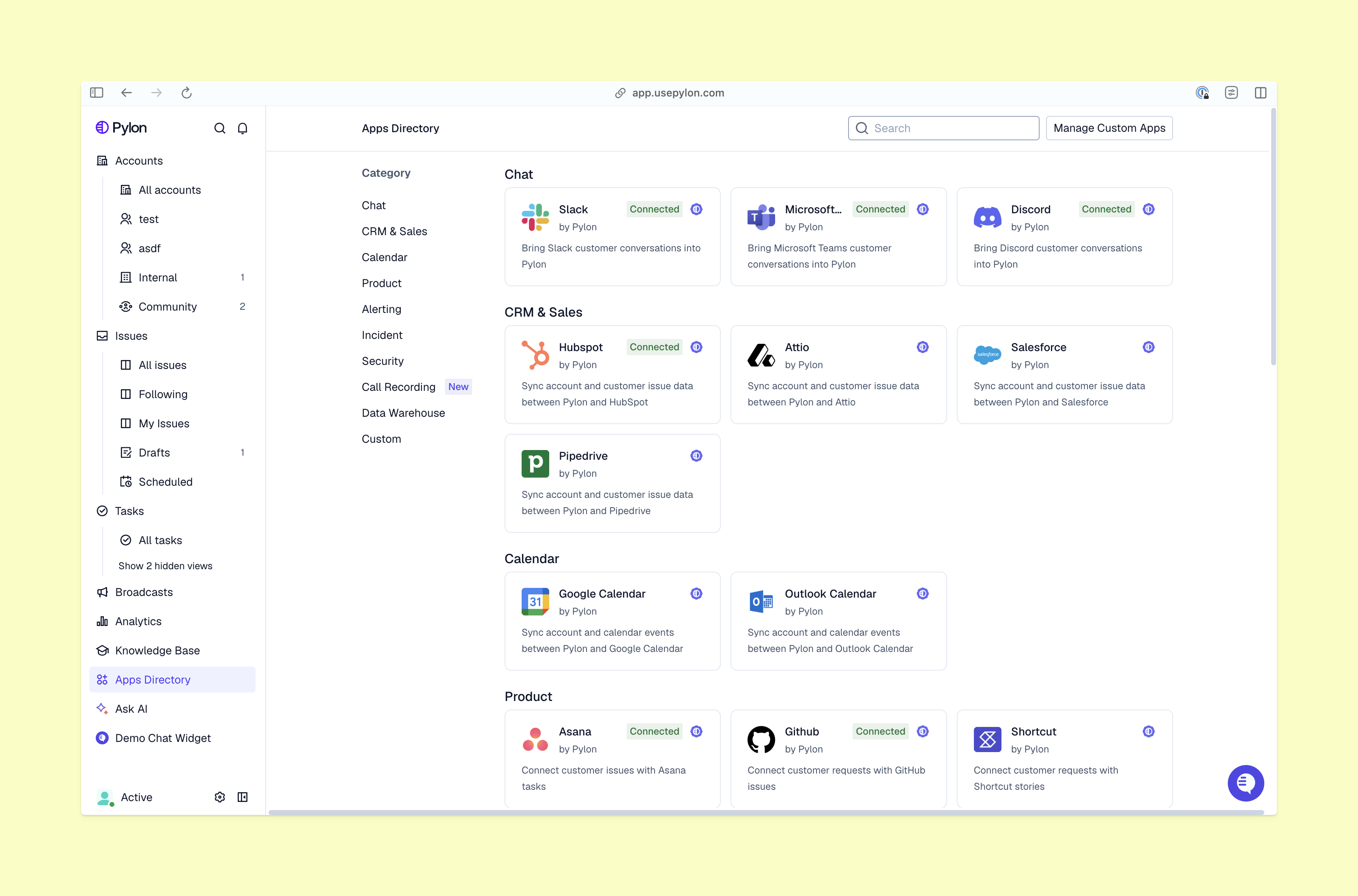
Pylon is built for B2B support teams with customers who no longer live in a shared inbox. This platform unifies Slack, Teams, email, chat, and ticket forms into a single, B2B omnichannel workspace.
In contrast to Front, Pylon treats modern messaging apps like Slack and Teams as first-class, fully integrated channels. Built-in account context shows account health scores and churn signals, while agentic AI uses connected data to surface insights and run complex workflows autonomously.
Those features and more translate into saved time and improved outcomes for many teams. For example, Whispr Flow saved hours each week on ticket categorization and reporting after switching from Front to Pylon, while seeing 9x faster first response times and 8x faster resolution times.
Best for: B2B companies and support teams managing multi-stakeholder enterprise accounts.
Zendesk offers an in-depth ticketing solution backed by custom reporting dashboards and a large app marketplace. This platform is often the default choice for large B2C companies that need granular control over every aspect of the routing logic.
Other key features include AI agents and assistants, plus detailed performance tracking. Just keep in mind that setting up and using Zendesk productively tends to mean dedicated engineering resources and a longer team training timeline.
Best for: High-volume B2C support and teams managing complex, multi-product portfolios.
Intercom focuses on in-app messaging and automated workflows tied to the customer lifecycle. It works well for bringing customer onboarding and ongoing support into the same space.
Intercom’s Fin AI agent is built to handle routine questions, and customizable chat widgets let teams design front-end customer experiences. Note that this platform does lack deep, account-level intelligence to help with enterprise relationship management.
Best for: Product-led organizations focused on in-app support and engagement.
Freshdesk is accessible customer helpdesk software for companies evolving away from simple email-based workflows. This platform includes a unified omnichannel routing system and plenty of integrations with popular CRMs.
AI agents and assistants help with both team productivity and customer self-service. However, the non-native Slack integration can create friction for teams that rely heavily on business messaging channels.
Best for: Smaller support operations expanding into non-email channels.
Help Scout offers a minimal, collaborative inbox paired with an integrated knowledge base. This tool is a popular choice for growing startups that need to organize their support addresses quickly, without learning a complex new system.
That simplicity is a benefit for small-scale teams that are still focused on email, but want a more streamlined and people-first solution. Help Scout doesn’t include native tools for Slack or Teams messaging, though, and it lacks account-level intelligence and deep AI features.
Best for: Lean support organizations with email-centric workflows
Front works especially well for teams with support motion centered on email and shared inbox workflows. As your B2B operation matures, though, your channel mix will likely shift toward Slack, Teams, and in-app messaging. The best customer support platform for your next stage of growth should manage modern channels natively, while giving your team the account-level intelligence they need to prioritize work and help accounts.
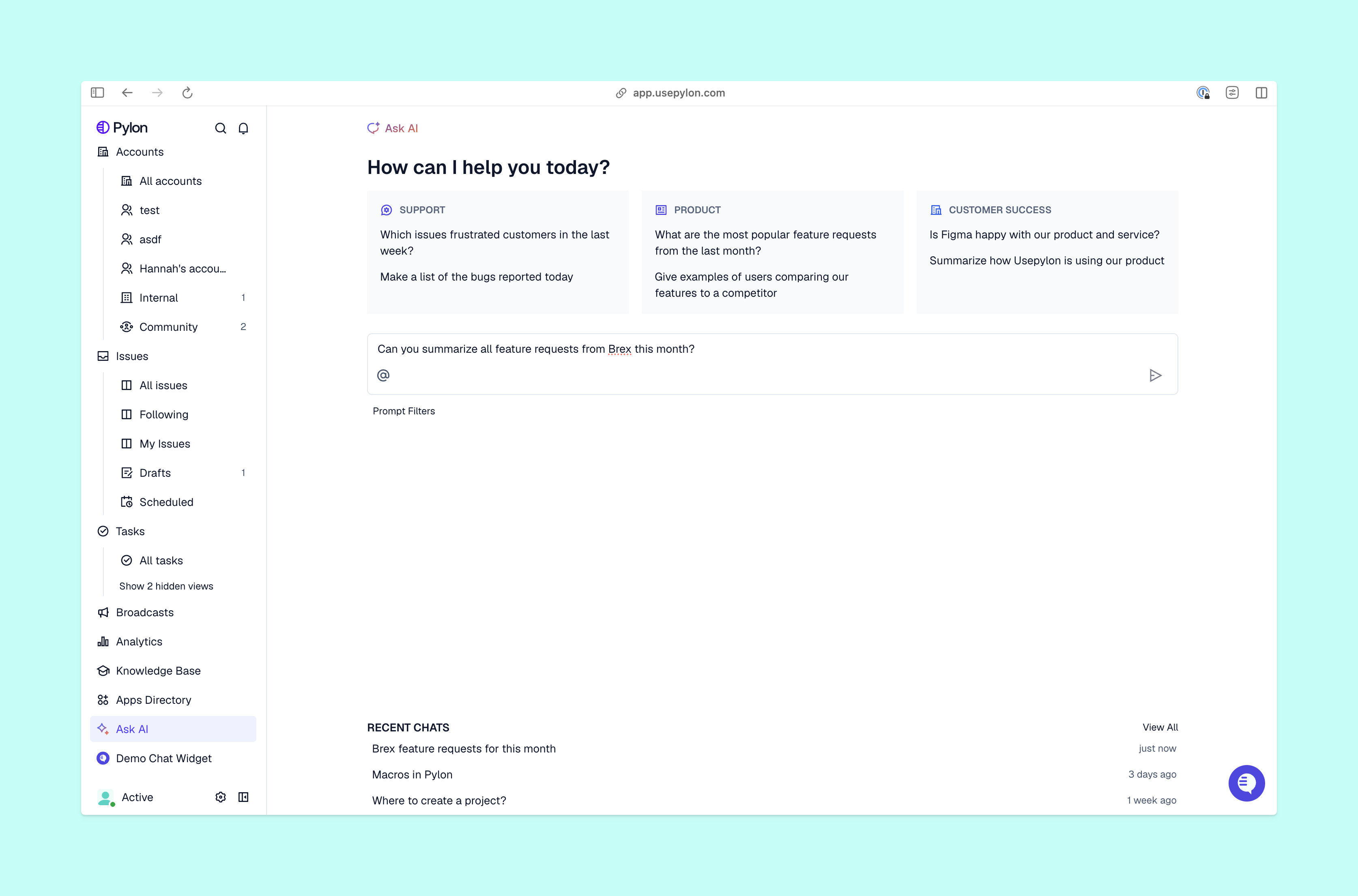
Pylon is the Agentic Support Platform built for B2B support teams. It brings conversations across Slack, Teams, email, chat, and other channels into one place, giving AI the context to help resolve customer issues and continuously improve your knowledge base. Pylon can identify missing or outdated documentation, generate new content from real support conversations, and help your team keep knowledge accurate as your product evolves.
Front's AI assists agents with replies, summaries, and suggestions, but it lacks autonomous workflow automation. Pylon's AI Agents manage multi-step, account-aware interactions, detect real-time churn signals, and escalate based on account context.
Front supports Slack, including Slack Connect channels, letting teams manage Slack messages alongside email in one inbox. But private channels aren't supported, and email still has to be handled separately in Front, so there's no fully unified workflow. Pylon handles both Slack and email natively in one place.
Pylon is purpose-built for Slack Connect and MS Teams support, making it ideal for teams whose enterprise customers live in Slack. Unlike Front's add-on model, Pylon treats Slack as a native channel with two-way conversation handling, account context, and built-in AI workflows.
Pylon Workforce Management is available now. See it in action with a live demo.