Updated February 27, 2026 | 17 min read
As enterprise teams are exploring AI workflows and better tools to scale their support operations, many have reconsidered Zendesk's legacy platform. Instead, teams are switching to modern alternatives with AI capabilities, workflows, and support tools built specifically for B2B.
This guide covers 9 current Zendesk alternatives, what makes each one better for different enterprise needs, and how to choose the right platform for your team.
Enterprise teams are increasingly moving away from Zendesk. As B2B teams turn to AI tools to help scale workflows, Zendesk's legacy platform has lagged behind.
Zendesk's per-seat pricing looks reasonable at first glance. But as you add features and purchase third-party integrations to power your team's core workflows (advanced AI, better integrations, customer intelligence capabilities), you're suddenly paying for expensive add-ons that are native to other platforms.
Zendesk takes months to implement for enterprise teams. You're spending weeks on configuration, building custom workflows, and figuring out technical details just to get basic features working.
Meanwhile, your team is stuck in training instead of helping customers. Modern alternatives get you productive in weeks instead of months.
As a legacy platform originally built for B2C service workflows, Zendesk was late to add integrations for B2B channels like Slack and Microsoft Teams. Their basic integrations allow you to manage message notifications and create tickets from those channels, but lack the robust collaboration workflows that enterprise support teams actually need.
Here's how the leading Zendesk alternatives compare for enterprise support teams.
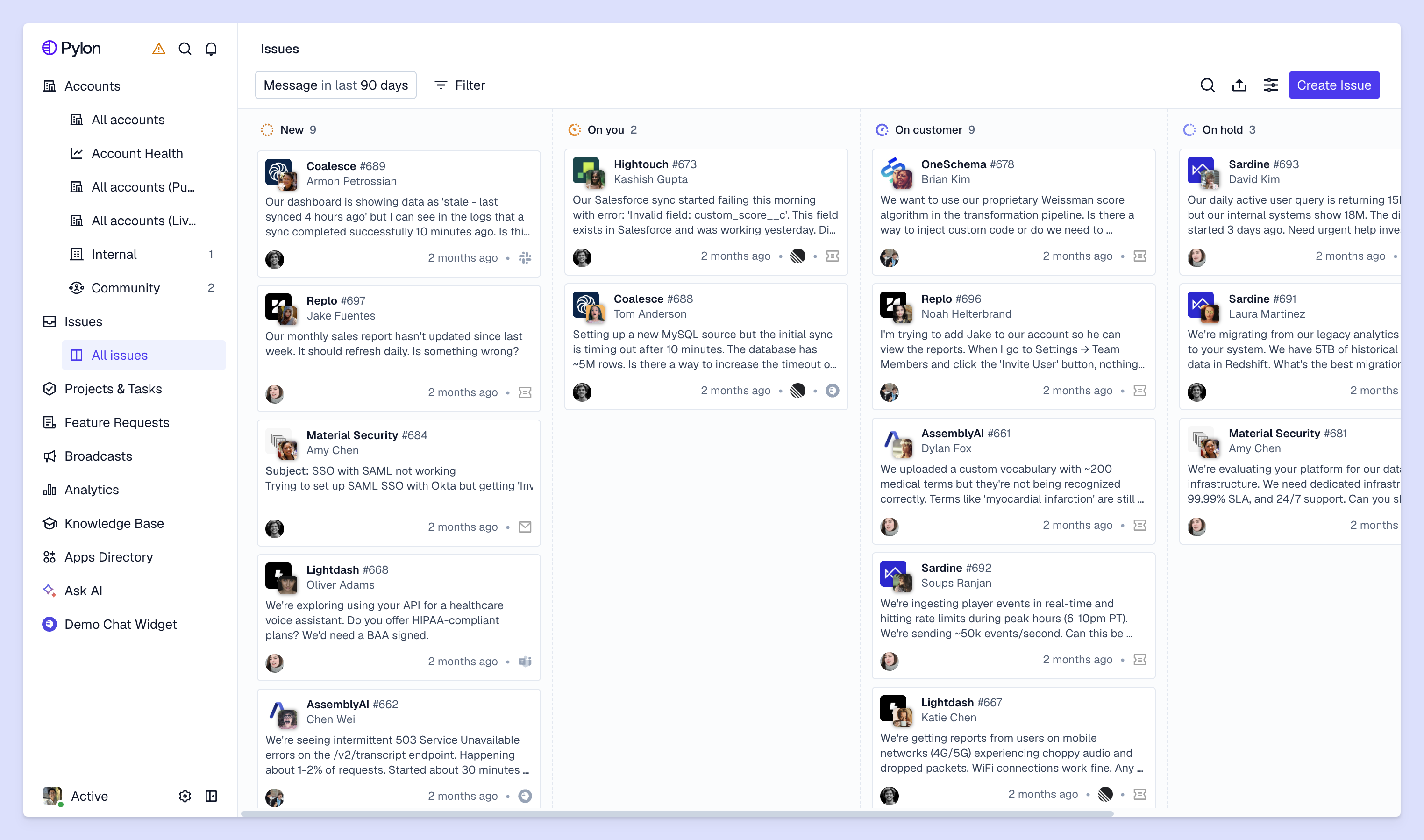
Pylon is built for B2B teams supporting customers through modern channels like Slack, Microsoft Teams, email, and in-app chat. The platform combines true omnichannel support with AI workflows for managing ticket volume, handling individual tickets, and measuring support quality across your organization.
Plus, Pylon offers account-level intelligence that helps you calculate account health and identify churn risk from customer signals across your entire post-sales organization.
What sets Pylon apart is how it unifies your post-sales team around a shared system of record: Support data informs your retention strategy while customer success context helps you personalize support for each account.
What Pylon does better: Native workflows for B2B collaboration tools, account-level context instead of just ticket-level data, unified intelligence connecting support to customer success outcomes.
Where it might fall short: Not purpose-built for primarily B2C use cases.
Best for: B2B companies who support customers via Slack or Teams — or want their post-sales teams living in the same platform.
Salesforce Service Cloud works best if you're already using Salesforce CRM. You get deep native integration with your sales and marketing data, plus advanced analytics connecting support metrics to revenue.
Einstein AI provides automation and predictive insights based on your entire Salesforce ecosystem. You can customize complex workflows and scale to thousands of support team members.
What it does better: Seamless CRM integration, enterprise scalability, robust reporting that connects support to revenue outcomes.
Where it falls short: Implementation is expensive and complex, often requiring Salesforce consultants. Overkill if you're not already using Salesforce.
Best for: Large enterprises with existing Salesforce investments who want support data connected directly to their CRM.
ServiceNow is designed for IT service management and technical support at enterprise scale. The platform excels at incident management, change tracking, and workflow automation across technical teams.
You get enterprise-grade security, compliance features, and integrations with IT infrastructure tools. ServiceNow's ITSM workflows are built for DevOps and IT teams managing internal or technical customer support.
What it does better: IT service management capabilities, complex workflow automation, enterprise security standards.
Where it falls short: Not designed for customer-facing support — the interface assumes technical users. Steep learning curve even for experienced teams.
Best for: Enterprise IT departments and DevOps teams managing technical support at scale.
Intercom focuses on real-time chat and conversational AI for product-led companies. The platform excels at in-app messaging, proactive support, and chatbot automation that guides customers through your product.
Strong live chat capabilities and conversational workflows feel more like messaging than traditional ticketing. Intercom's AI answers common questions and routes complex issues to your team.
What it does better: Live chat experience, in-app messaging, conversational AI that feels natural.
Where it falls short: Limited traditional ticketing features. Pricing escalates quickly as you add features and seats.
Best for: Product-led SaaS companies prioritizing in-app support and conversational experiences.
Front is a shared inbox blending email, chat, and SMS into one collaborative workspace. The platform works well for teams that primarily support customers through email but want better collaboration than Gmail or Outlook offers.
Your team can assign conversations, leave internal comments, and see who's working on what—all without forwarding emails. Front's interface feels familiar to anyone who's used email.
What it does better: Email-centric workflows, team collaboration features, simple interface that doesn't require extensive training.
Where it falls short: Limited automation compared to full help desk platforms. Advanced features like AI triage aren't as robust.
Best for: Teams that primarily support customers via email and want better collaboration.
Freshdesk offers a feature-rich, affordable alternative with strong automation and an intuitive interface. The platform handles email, phone, chat, and social media support with solid ticketing workflows.
AI-powered automation, customizable workflows, and a clean interface that's easier to learn than Zendesk. Pricing is more predictable with fewer expensive add-ons required for core features.
What it does better: Affordable pricing tiers, intuitive interface, solid automation at lower price points than Zendesk.
Where it falls short: Less robust for complex enterprise workflows and advanced customization.
Best for: Mid-market teams needing omnichannel support at a lower cost than Zendesk.
HubSpot Service Hub makes sense if you're already using HubSpot's marketing and sales tools. The platform provides seamless integration with your existing HubSpot data, creating a unified customer timeline across the entire lifecycle.
Your support team sees marketing interactions, sales conversations, and previous support tickets in one place. The shared database means no duplicate data entry or context switching.
What it does better: Seamless HubSpot ecosystem integration, unified customer timeline across marketing, sales, and support.
Where it falls short: Limited advanced support features. Best value only if you're already paying for HubSpot CRM.
Best for: Companies already using HubSpot CRM who want support connected to existing customer data.
Kustomer provides a 360-degree customer view with an automation-first approach. The platform is built for high-volume support teams (often in retail, e-commerce, or B2C industries) handling thousands of conversations while maintaining personalization.
Customer timeline view shows all interactions in one place. Automation handles routine requests while the modern interface is designed for speed at scale.
What it does better: Customer timeline view and high-volume automation.
Where it falls short: Smaller integration ecosystem and higher learning curve during initial setup.
Best for: High-volume retail and e-commerce support teams managing thousands of daily conversations.
Zoho Desk is the most affordable Zendesk alternative for teams that want solid features without premium pricing. The platform offers multichannel support, automation, and AI assistance at a fraction of Zendesk's cost.
Complete help desk solution with ticketing, knowledge base, and basic automation. Zoho Desk integrates with other Zoho products, creating an affordable alternative to the entire Zendesk suite.
What it does better: Highly affordable pricing with a solid feature set covering essential support needs.
Where it falls short: Less polished interface and fewer advanced enterprise features.
Best for: Small to mid-market teams with tight budgets who want complete help desk functionality.
The right Zendesk alternative depends on your team's specific needs and existing tech stack. Here's what to evaluate:
Scalability: Check how each platform handles growth in user seats, conversation volume, and feature complexity. Ask vendors about performance at your projected scale — not just your current size.
Integrations: Look beyond basic integrations to understand how deeply each platform connects with your critical systems like CRM, communication tools, project management, and analytics platforms.
Total cost: Factor in implementation costs, training time, required add-ons, and how per-seat pricing scales as your team grows. Some platforms charge extra for features like advanced AI or API access that competitors include by default.
AI capabilities: Test how each platform handles triage, response suggestions, and workflow automation with your real data. The best AI learns from your team's past answers and gets smarter over time.
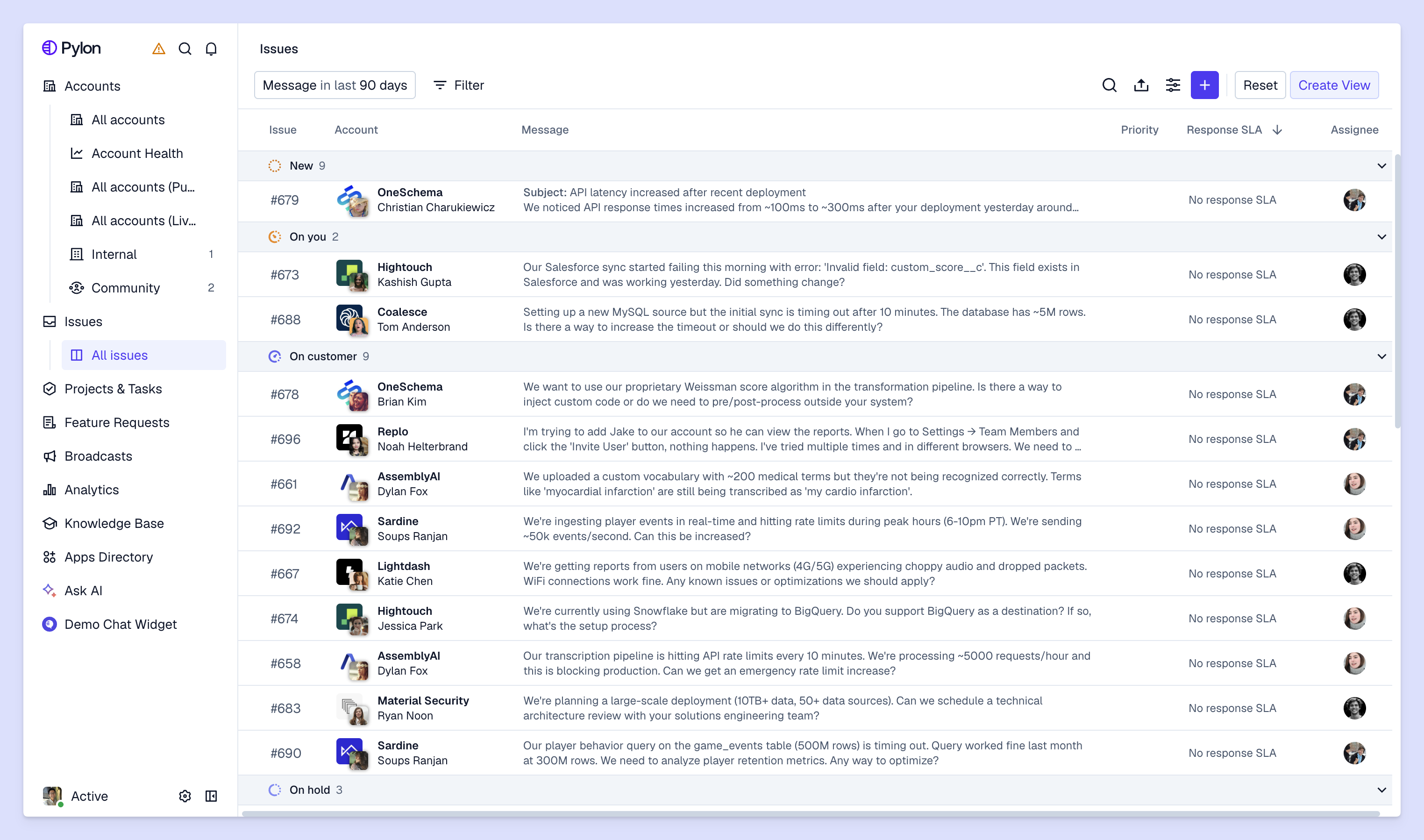
Most teams can switch from Zendesk within four to eight weeks. Zendesk lets you export tickets, customer records, and knowledge base articles through their API or admin interface. And modern support platforms like Pylon offer migration tools or services to handle the technical transfer.
You don't have to migrate everything. Many teams transfer the last 12-24 months of active tickets and customer records while archiving older data. Plan for one to two weeks of training where team members learn the new interface and workflows.
Running both platforms in parallel for a short period lets your team get comfortable with the new tool while maintaining support quality during the switch.
The Zendesk alternatives we covered offer better value, B2B-specific features, and unified post-sales intelligence. Your choice depends on your existing tech stack, team size, and whether you want native collaboration tool support.
For B2B teams, the biggest opportunity is finding a platform that unifies your entire post-sales organization. When support tickets inform customer success strategy and account intelligence makes support more personalized, you stop treating support and customer success as separate functions.
Pylon is the modern B2B support platform that offers true omnichannel support across Slack, Teams, email, chat, ticket forms, and more. Our AI Agents & Assistants automate busywork and reduce response times. Plus, with Account Intelligence that unifies scattered customer signals to calculate health scores and identify churn risk, we're built for customer success at scale.
Most modern Zendesk competitors offer knowledge base migration tools or services that transfer your articles, formatting, and structure to their platform.
Cost savings vary based on team size and feature needs, but many alternatives offer comparable functionality at lower per-seat pricing without expensive add-ons.
Many Zendesk alternatives provide dedicated onboarding and implementation support for enterprise customers, with faster setup times than Zendesk's complex configuration process.
Pylon Workforce Management is available now. See it in action with a live demo.