
When support volumes are high and customers want instant answers, your team can find themselves drowning in repeat work. AI changes that dynamic: It automates simple and manual tasks, so your team can focus on the parts of customer experience (CX) that require creativity and strategy.
In this guide, you’ll learn about the benefits of AI for customer experience. We’ll explain how to use AI to increase customer satisfaction and boost business growth.
To improve CX, AI tools use machine learning, natural language processing, and predictive analytics to automate repeat tasks and help your team work faster. With AI, you can lower response times, increase resolution rates, prevent churn, and free up support to focus on high-value work.
Using AI for customer experience usually includes three layers:
There are lots of ways to use AI, but these are central for most customer success teams.
If your team spends too much time on manual and repetitive work, AI can likely handle most of it. You can automate routine support tasks like login troubleshooting, assignment routing, status updates, and support metrics tracking.
Let’s say a customer submits a ticket about setting up an integration. AI can understand the request, find the right knowledge base article, summarize setup steps, send these to the customer, and confirm that they successfully connected the integration. With smart triggers, you can set up workflows like this once, then let them run automatically.
AI agents are often a first point of contact for customers, so they need to be flexible enough to handle different types of chats. The best AI virtual agents:
AI can uncover insights that help your team make better decisions and personalize support. Predictive analytics is the key to building customer success at scale, and it can answer questions like:
With those answers, you can send outreach and follow-ups tailored for specific customer needs and pain points.
To offer great B2B support, you need to build strong relationships and keep customers engaged with your brand. Here’s how AI can help you do both.
When customers reach out, they want to feel understood and valued. Even if you fix a customer’s problem, the interaction can hurt the relationship if it feels robotic. Personalized messages show the customer they’re important and engage them in conversation.
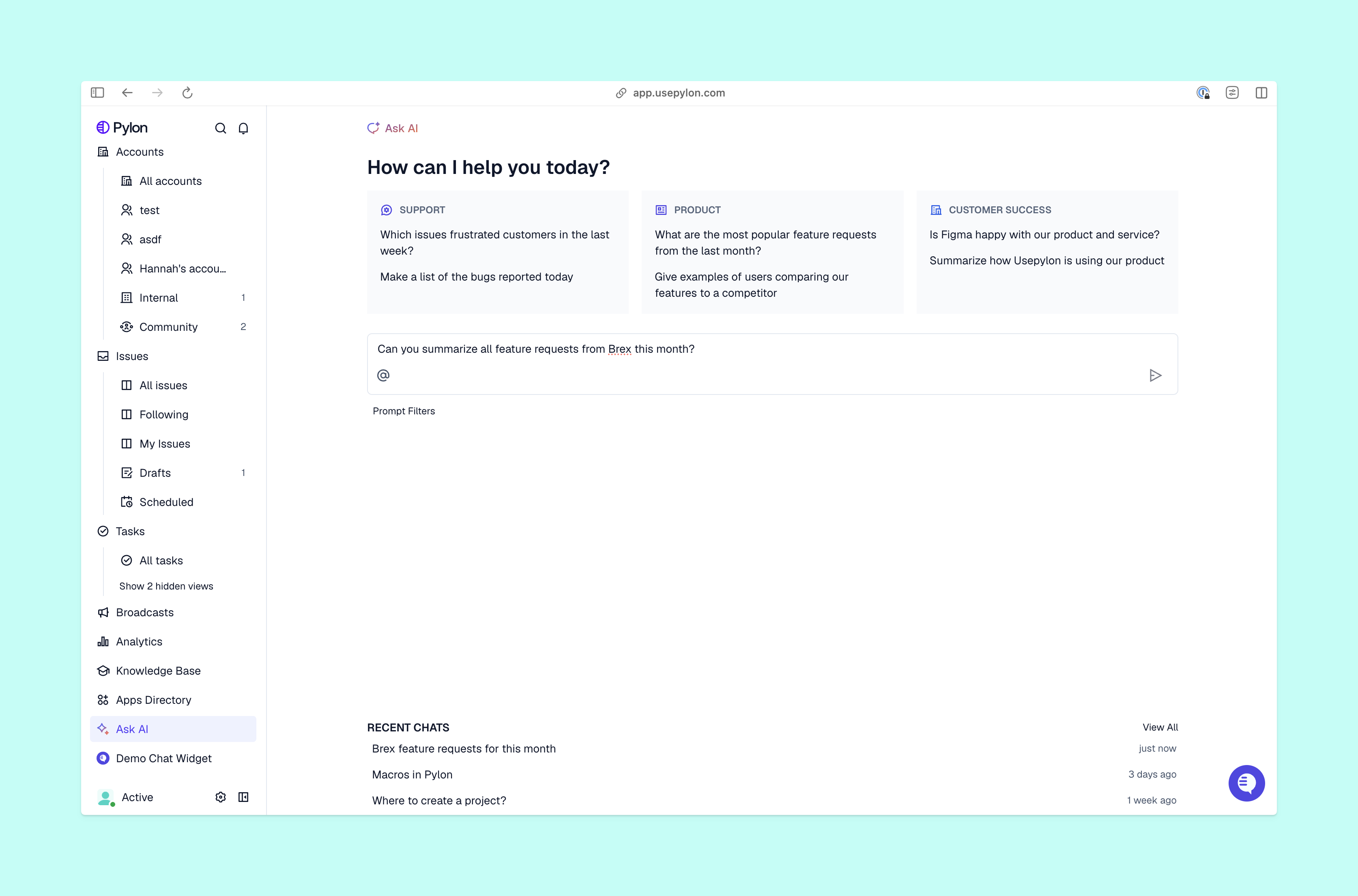
If your support team has real-time access to context, they can treat each customer like an individual and use historical info to guide replies. An AI omnichannel support tool brings data together from all your support platforms, so your team can always see the full picture. And if you have AI assistants too, your team can ask questions about the customer so they don’t have to waste time searching.
Predictive analytics shows patterns in customer behavior that could signal risk or opportunity. For example, if a long-term customer’s usage dropped 40% in the last month, that can suggest they'll fail to renew, while usage that rises could mean it’s time to upsell.
Your team can act on those signals to reach out to customers before they churn and help expansion-ready customers get the most from the product. Both groups will learn they can trust your brand to care about their needs and go the extra mile.
Every support ticket, chat conversation, call recording, and email holds customer interaction data. With conversational AI analytics, you can find meaning in all that history and feedback. Conversational AI can go through thousands of conversations quickly to find common themes and repeat problems.
Plus, this analysis only gets better with time. Each new piece of data trains the AI system about your customers and brand, so your support team can get to work and turn insights into action.
.png)
Follow these three steps to make a CX artificial intelligence system that works for your team.
First, take a close look at your success playbooks and workflows, and ask questions like:
The answers should guide you to the most important AI features. A company drowning in routine tickets should prioritize automation and AI agents to lighten the workload, while a company losing customers could focus on predictive intelligence and proactive support.
If AI tools don’t work well with your other systems, they can’t get much done. AI agents need access to customer data to give context, and automation needs to fit with your ticketing system so messages get to the right places.
You can avoid integration problems if you invest in omnichannel support. With Pylon, customers can reach out through email, chat, Slack, or Teams — no matter the channel, your AI agents and support team get the same data. When all your tools connect to a centralized support platform, it’s easier to increase response times and resolution rates, which in turn affects customer satisfaction and retention.
To know if your AI strategy works, track metrics like:
McKinsey research shows that AI-powered CX can increase customer satisfaction by 20%, improve revenue by 8%, and reduce cost to serve by 30%. You can use these benchmarks or create your own targets, then check on your progress quarterly. Companies that see the best results from AI tend to be the ones that treat it as an ongoing process, not a one-time project.
AI is changing customer support and success, because it can find specific lessons in huge amounts of data and turn those insights into real changes. Plus, it can take a lot of work off your team’s plate, and help them while they look for fixes and draft messages.
Pylon is the modern B2B support platform that offers true omnichannel support across Slack, Teams, email, chat, ticket forms, and more. Our AI Agents and Assistants automate busywork and reduce response times. Plus, with Account Intelligence that unifies scattered customer signals to calculate health scores and identify churn risk, we're built for customer success at scale.
AI scales support by automating routine issue responses, intelligently routing tickets, and surfacing relevant customer context for teams. This reduces response times and frees your team to focus on complex, high-value customer issues.
AI agents act as an intelligent first line of defense, instantly resolving routine but technical inquiries such as specific product questions or API troubleshooting. By handling these common issues without human intervention, they significantly reduce ticket volume and ensure that customers receive immediate, high-quality assistance for their technical needs without waiting in a queue.
AI-driven support ensures 24/7 availability without increasing headcount. It eliminates off-hour wait times by providing instant answers, meeting customer expectations for round-the-clock support.
Sentiment analysis detects frustration or urgency in messages, automatically prioritizing them. This allows teams to intervene early, preventing churn and maintaining strong customer relationships.
Pylon Workforce Management is available now. See it in action with a live demo.