
Customer support can seem straightforward — a customer has a question or problem, your team replies and fixes the issue. But those questions aren’t always simple, and teams have to do admin work like updating account data or documenting issue resolutions. All of this gets more complicated as support volume grows.
Customer support tools help your team resolve issues faster and handle increasingly complex workflows, while still giving customers high-quality support experiences. In this guide, we’ll explain how modern software for customer support works and show you how to find a tool that fits your company and team.
Customer support tools — sometimes called customer engagement solutions — organize customer conversations and support data. Instead of handling each support channel separately, you’ll manage issues in a single view that also shows you account ownership, status, history, and context.
This kind of tool makes a big difference especially in B2B support, where lots of team members support the same accounts and issues often span more than one conversation. Everyone can easily see what customers ask for, who’s replied, what actions have been taken so far, and what the next steps are — and collaborate to resolve the problem.
Here’s what to look for when you pick out customer support software, and how these features make your team’s work better.
Omnichannel support brings customer conversations from email, chat, forms, Slack, and other channels into one interface. This means your team doesn’t have to constantly switch between platforms, so they can help more customers faster.
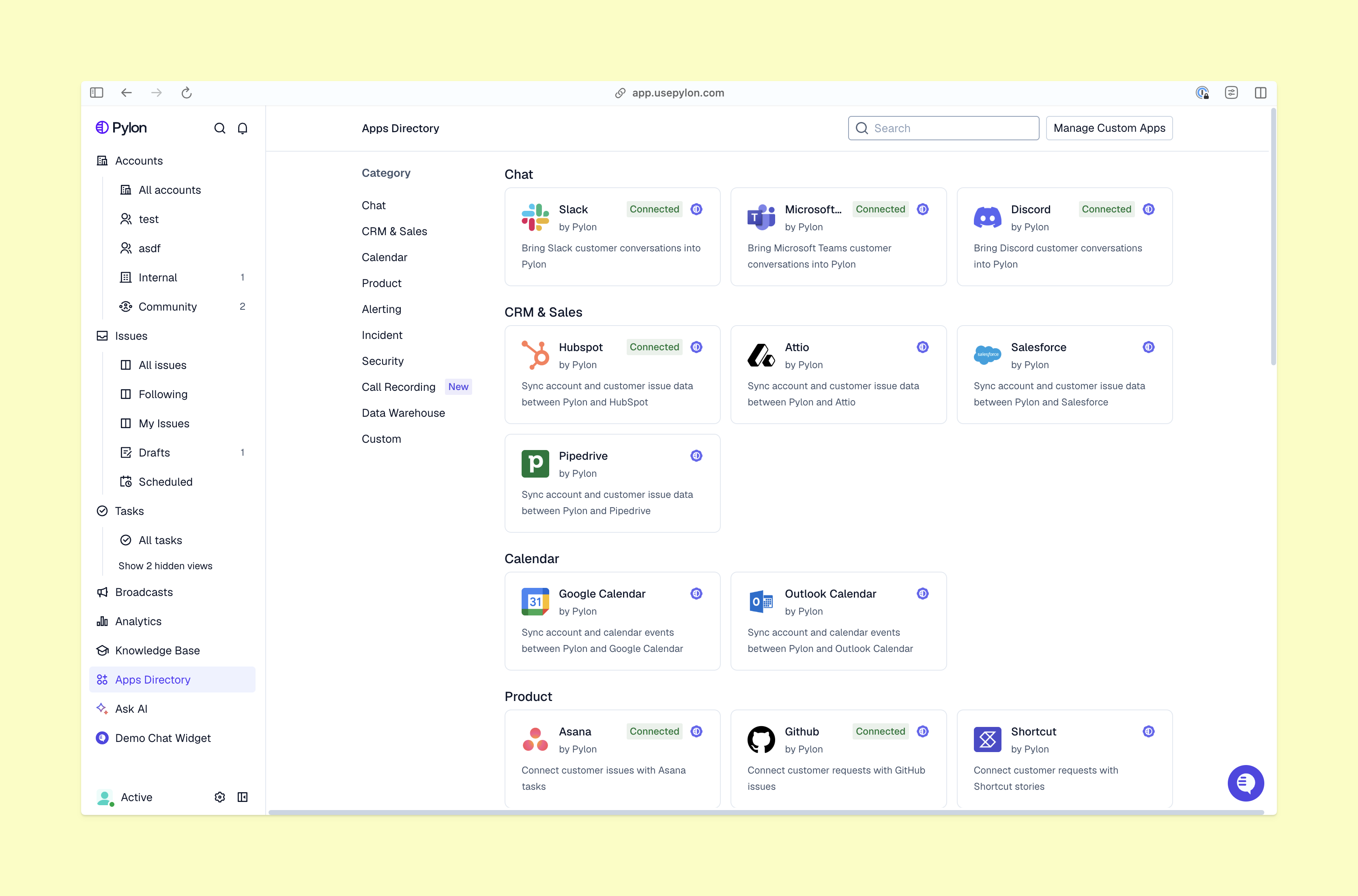
It also helps if your support platform offers integrations with other tools you use for customer operations, like calendars and relationship management software. This helps you track and manage all your customer data in one place.
.png)
Automation lets your team deal with a higher volume of requests by offloading routine tasks or eliminating manual workflows. With custom rules and triggers, support software can automatically assign conversations to the right people, organize tickets, send status updates, and flag issues.
AI assistants go a step further —- they help your team with high-priority work by gathering key account context and automatically drafting responses. And AI agents can solve some customer problems on their own, which frees up your team to handle the rest under less pressure.
Support issues often need input from more than one person or team. The best support software helps your teams communicate right within the platform, so they can share details quickly and work together on complex problems.
Look for platforms that let your team start internal threads within an issue, or comment on each other’s tasks. You can also use a tool that helps you build an internal knowledge base, so you can keep important resources and playbooks for everyone to reference.
Analytics and reporting features let you track key performance indicators like satisfaction scores, response times, resolution times, and issue volumes. You’ll also want direct customer feedback tools like customizable surveys. When all these features are built into your support tool, you can keep tabs on important metrics so you know what works and what to change.
Support teams all operate a little differently, so customization options — like the ability to create custom fields or branded surveys — let you shape a platform to fit your team’s needs. When your support software is also scalable, you can make sure the workflows you build continue to run smoothly as your team and customer base grow.
Here are the most common types of customer care platforms:
Some platforms do all these things and more. With Pylon, you can move beyond traditional ticketing systems and help desks, configuring advanced AI agents or AI assistants that triage requests and automatically surface customer context.
Customer support tools can help your team:
Before you choose a customer support tool, think about:
Customer support tools help teams handle conversations smoothly and offer quality experiences. To pick the best software, consider your support channels, workflows, team size, and long-term needs, so you can find a solution that adapts as your company evolves.
Pylon is the modern B2B support platform that offers true omnichannel support across Slack, Teams, email, chat, ticket forms, and more. Our AI Agents and Assistants automate busywork and reduce response times. Plus, with Account Intelligence that unifies scattered customer signals to calculate health scores and identify churn risk, we're built for customer success at scale.
Common tools include help desks for ticketing, live chat for instant messaging, and AI-powered chatbots. Depending on the customers and industries they support, teams may also use CRM systems, knowledge bases, and social media management platforms.
It centralizes all customer requests into a single interface, so it’s easier to manage issues and conversations. It also automates routing, tracks team performance, and ensures accountability through clear audit logs and SLAs.
This software boosts efficiency by automating repetitive tasks, shortening response times, and providing a 360-degree view of customer context for more personalized, high-quality interactions.
Key factors include scalability, integration with other systems you use for customer operations, omnichannel capabilities, how user-friendly it is for support teams, and robust reporting tools to track satisfaction metrics.
Pylon Workforce Management is available now. See it in action with a live demo.