Register for our upcoming webinar → How Haus Analytics rebuilt its support automation



A customer satisfaction score (CSAT) measures how products or services meet or exceed expectations. Although it’s often viewed as a soft metric, it has direct business impact. Strong CSAT scores align with lower churn rates, higher lifetime value, and stronger customer relationships.
This article shows how to boost customer satisfaction using practical strategies like better support, personalization, and feedback loops.
When you look for ways to increase customer satisfaction, don’t focus on abstract ideas like “delight customers.” Focus on technical improvements to your support workflows so people get fast, reliable answers with each interaction.
Find ways to reduce response and resolution times. Streamline workflows and use AI-powered customer support platforms that help teams collaborate efficiently through automated processes. Customers expect prompt responses and quick issue resolution, so when you meet those expectations, you improve customer satisfaction.
Today’s B2B customers expect to reach you through a variety of channels, from Slack and email to live chat and other communication methods. When you offer efficient omnichannel support with consistent messaging and response times, you reduce friction for customers. This builds trust and supports higher CSAT scores.
Research shows 81% of customers want companies to provide more self-service options that let them find answers on their own. But they also want efficient processes. Additional research shows 77% say a poor self-service experience is worse than no self-service at all. To boost satisfaction, give people what they want: useful knowledge bases and AI agents that guide them to quick, accurate answers.
To ensure customer satisfaction, shift away from transactional support that views every ticket in isolation. Use customer data and past interactions to provide responses with relevant context. Avoid generic scripts and make every interaction feel personal, even when automation supports the workflow.

The best ideas for improving customer satisfaction come from the people who use your products or services. When you actively listen to what’s shared in satisfaction surveys and support conversations, you gain insights that improve the customer experience.
The first step is to use automated surveys to consistently collect CSAT and Net Promoter Score (NPS) data. Analyze the scores and written comments to spot changes in customer satisfaction and the reasons behind them.
For example, if customers regularly give low CSAT scores after they visit your knowledge base, work to improve the quality of the articles and implement easy alternatives to help customers find the information they need. If customer feedback reveals frequent complaints about onboarding delays, streamline the process to improve service quality.
Use support signals to find where people get stuck in the customer journey. If ticket volume spikes when customers try to integrate third-party tools, your pre-sales team needs to improve those workflows to reduce friction.
Finally, monitor customer sentiment across support conversations and in public forums like social media. Pylon’s Account Intelligence uses AI to analyze customer conversations and provide automated insights to help address their concerns and improve customer satisfaction.
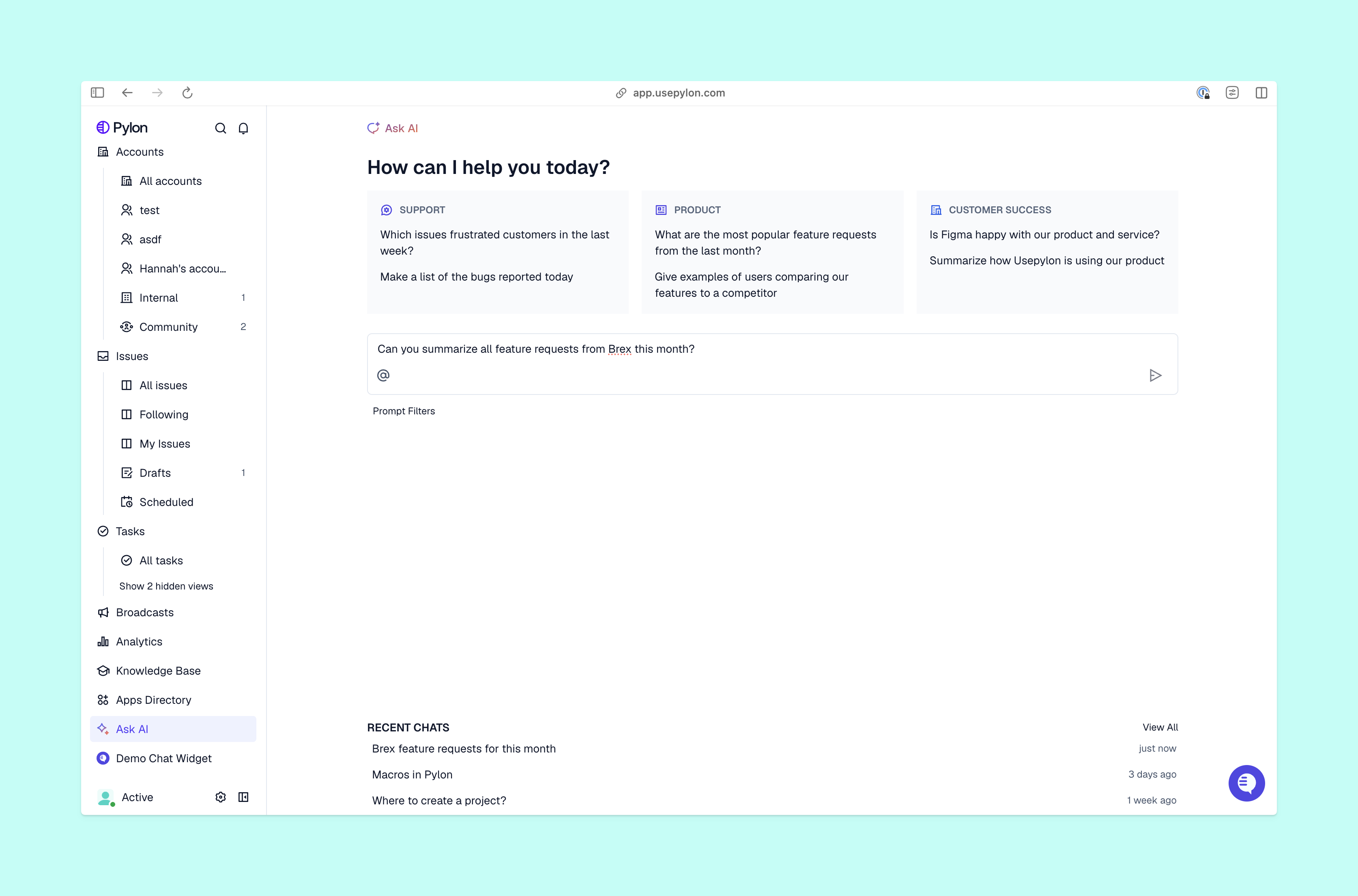
Here’s how to ensure client satisfaction across every touchpoint:
You know you have a customer-centric culture when information flows freely, when teams collaborate to solve complex problems, and responsibility for customer satisfaction is shared. You create that culture when incentives are aligned with customer satisfaction and using tools and workflows that support simple and consistent cross-team coordination.
The following key performance indicators help you track the impact of your customer satisfaction initiatives:
When you know how to satisfy customers with outstanding support, you drive company growth with higher retention and contract renewals. You also build trust with customers, which makes them more likely to advocate for your brand and recommend you to others. The right support platform helps you deliver that operational excellence consistently as your company scales.
Pylon is the modern B2B support platform that offers true omnichannel support across Slack, Teams, email, chat, ticket forms, and more. Our AI Agents and Assistants automate busywork and reduce response times. Plus, with Account Intelligence that unifies scattered customer signals to calculate health scores and identify churn risk, we're built for customer success at scale.
While various factors contribute, consistent and clear communication remains the foundation. Customers are generally more forgiving of delays or errors if they’re kept informed and feel their time is valued.
It should be an ongoing process. Transactional surveys should follow specific interactions, while broader relationship surveys like NPS are typically conducted quarterly or bi-annually to track long-term sentiment.
Yes, when you optimize existing workflows, you improve internal communication and focus on employee training. When you reduce the effort a customer has to exert, you can boost scores significantly without new spending.
AI offers instant answers to routine questions. It also provides instant feedback at scale, and ensures your team has the context they need to handle complex issues more empathetically.
Pylon Workforce Management is available now. See it in action with a live demo.