
All Articles
Guides

The modern guide to scaling B2B support with customer self-service

Boost support efficiency with customer self-service. Explore top channels like AI agents and portals, and learn best practices for B2B support teams.

Advith Chelikani
February 10, 2026

For B2B companies, customer self-service is a win-win — when you offer useful FAQs and knowledge bases, you save everyone time. Customers can easily find the info they need, and you get a support channel that’s low-cost and scalable. In turn, this has a positive impact on customer satisfaction and the volume your team can handle.

In this guide, you’ll learn what self-service customer support is, the benefits it offers, and best practices for making it happen.
What’s customer self-service?

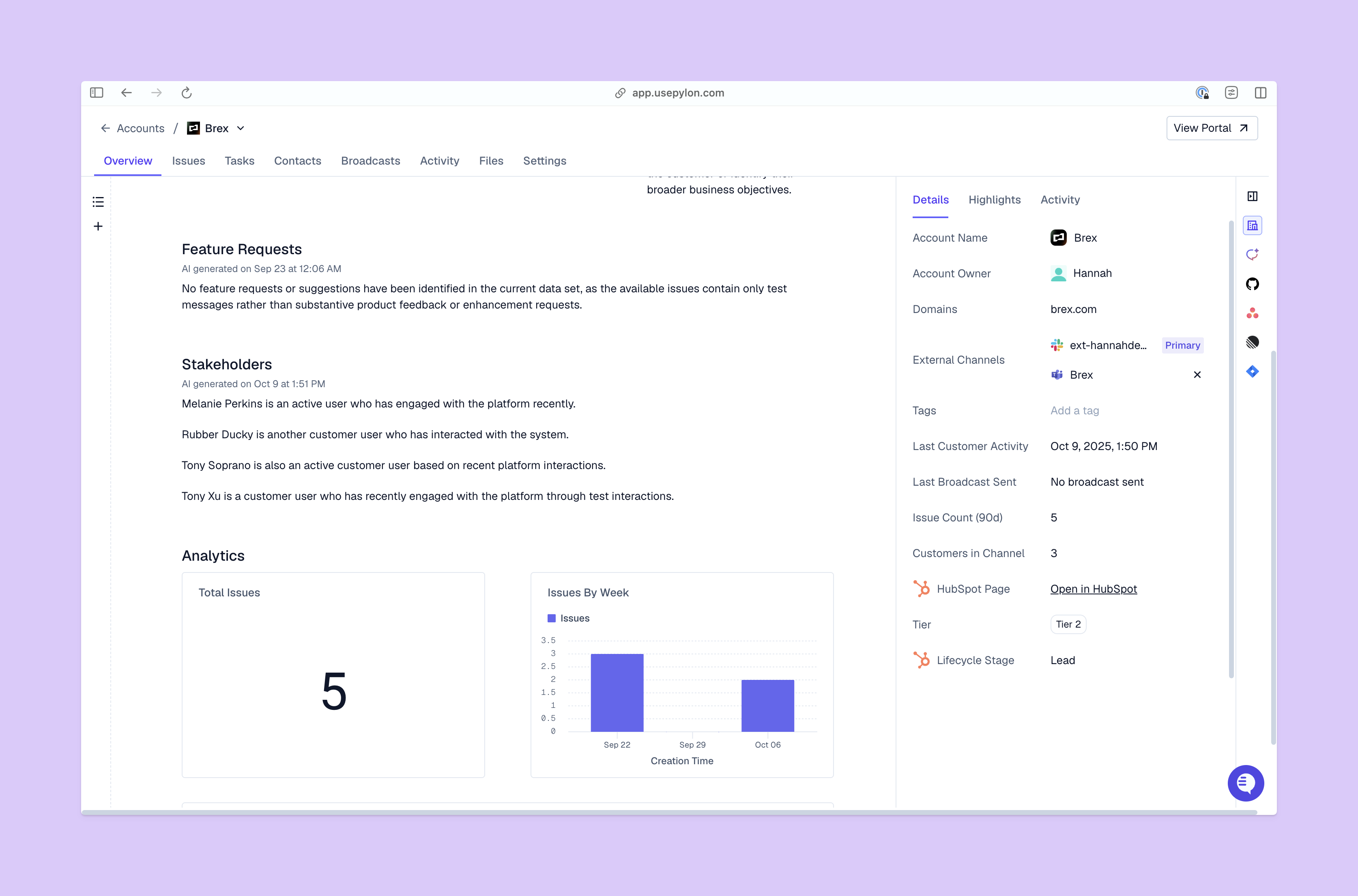
Accounts notebook on Pylon

Self-help customer service is all about empowering customers to solve their own problems. You create tools like knowledge bases and FAQs for customers to find answers before reaching out to your team. 

For example, if a customer needs help setting up single sign-on for their account, they could search your knowledge base and read an article that walks them through the process. Or they can ask your AI agent how to use a feature and get instructions instantly.

Key customer self-service channels

Here are some examples of customer self-service options:

  • Customer portals and mobile apps. Give customers personal dashboards or a user-friendly app where they can access support info and message you for help.
  • FAQ pages. Collect common questions and answers in a single document or web page that’s easy to search.
  • AI agents. Offer instant answers with AI customer self-service. Customers can ask questions via a chat widget, and AI agents give answers, fix simple issues, and escalate complex problems to your team.
  • Knowledge bases. Create a knowledge base full of tutorials and articles that share important details and walk through common tasks.
  • Community forums. Offer customers a way to connect with each other and ask questions. Forums are also useful storehouses full of past questions and answers customers can reference.
  • Video tutorials. Show customers how to use your product with simple how-to videos. You can host the videos on your site, add them to your knowledge base, or upload them to a platform like YouTube.

Benefits of self-service customer support

These are the benefits you and your customers can expect when you offer quality self-service:
  • Higher customer satisfaction. Surveys show that almost two-thirds of customers prefer to fix simple issues on their own with customer self-service software. Give them what they want, and you’re likely to see higher satisfaction scores.
  • Fast issue resolution. Self-service options are usually the quickest way for customers to solve routine problems. They don’t need to contact you and then wait for a response — they can instantly find the answer and move on.
  • Ability to handle high volumes. As your company grows, self-service helps you support more customers without investing in a huge team. FAQs and knowledge bases are very scalable — after you set them up, they’re easy to expand and can support lots of customers at once.
  • 24/7 customer support. Self-service resources are largely automated customer support tools, and they’re available around the clock. This means you can offer instant support at any time, without making your team work night shifts.
  • More product adoption. When you give your customers useful tutorials and FAQs, it’s easier for them to learn about your product and use it to reach their goals. This leads to more successful product adoption, which in turn improves retention.
  • Better use of customer support time. Self-service means your support team spends less time on routine questions. That lowers costs and frees up space so they can offer proactive support and solve issues that rely on customer context.

6 best practices for great customer self-service

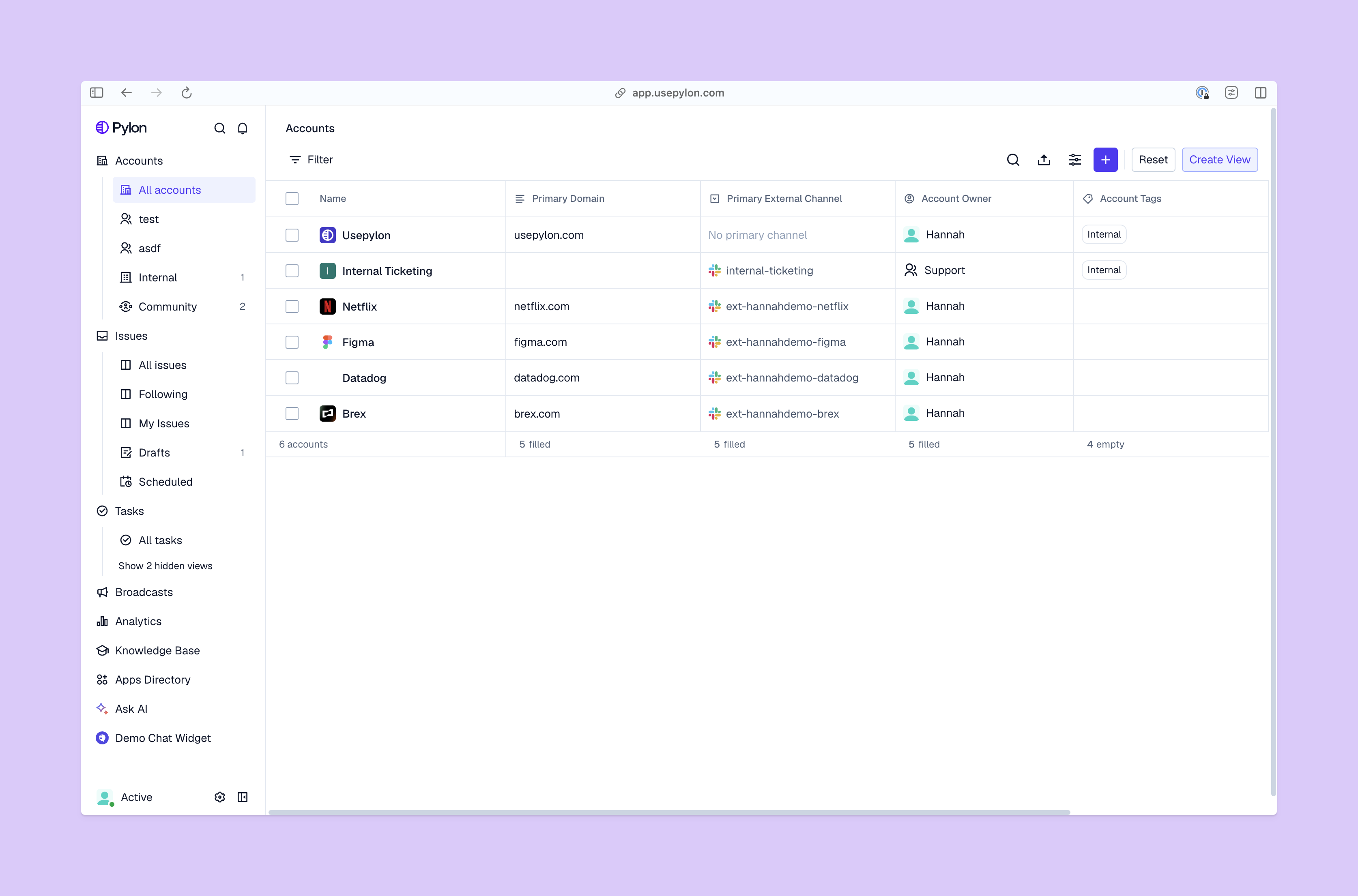
Keep track of all accounts with Pylon

Follow these tips and best practices to create a positive self-service experience for your customers.

1. Build self-service content fast with AI

One of the biggest customer self-service trends is using AI and automation to create resources quickly. For example, Pylon’s AI knowledge management automatically finds gaps in your knowledge base, then generates high-quality articles that answer customer questions.

2. Use AI agents

AI agents can detect customer sentiment, communicate in natural language, help with troubleshooting, and fix some issues without involving your support team. Customers get instant answers in a way that feels natural and authentic, and you get lower-cost, more scalable support.

3. Keep your content fresh 

Keep your knowledge base and FAQs fully updated with the latest info about your product/service. You can also review support tickets to find common issues, then create self-service content that answers those questions.

4. Make it easy to escalate requests

View self-service as a complement to your support team, not a replacement. Encourage customers to use your knowledge base and FAQ pages, but also give them easy ways to contact your support team with any questions those resources don’t answer.

5. Use images and videos

Add visual media to your self-service content to cater to various learning styles. Screenshots and diagrams show exactly how to fix an issue, and short videos are a great way to walk customers through a complicated process. 

6. Measure your progress

Track customer support metrics to see if your self-service options do their job. Look at which resources customers use and how often they still have to reach out. You can also survey customers to see how they feel about these resources.

Just be sure to act on any feedback you get, and keep watching those metrics. After you add or improve a self-service feature, look for a decrease in ticket volumes or increase in satisfaction scores.

Empower customers with Pylon’s knowledge management

Self-service is a great way to offer top-notch support and improve customer satisfaction. And with the right knowledge management tools, it’s easy to get your FAQs and knowledge base off the ground.

Pylon is the modern B2B support platform that offers true omnichannel support across Slack, Teams, email, chat, ticket forms, and more. Our AI Agents and Assistants automate busywork and reduce response times. Plus, with Account Intelligence that unifies scattered customer signals to calculate health scores and identify churn risk, we're built for customer success at scale.

Book a demo

FAQ

What’s customer self-service software? 

Customer self-service software is a digital tool that helps users resolve issues and access information independently through resources like AI agents, chatbots, portals, and knowledge bases. 

Why do customers prefer self-service? 

Customers prefer self-service because it provides instant, 24/7 assistance without wait times, empowering them to resolve issues quickly and on their own terms.

What does self-service allow customers to do? 

Self-service allows customers to manage accounts, set up integrations, troubleshoot technical issues, and find answers to common questions at any time without waiting for your support team. 

What are some best practices for implementing customer self-service? 

Key practices include maintaining updated content, building a robust search function, optimizing for mobile, and providing a clear path to human support when needed. 

Explore more

No items found.

Explore more

Team

Matthew Nagy, Product Support Engineer

Advith Chelikani
February 3, 2025
Blog post
Industry

What is Customer Support Automation Software?

Pylon Team
December 6, 2025
Blog post
Releases

Product Launch: Triggers

Advith Chelikani
January 9, 2024
Blog post
Spotlights

Spotlight: Marc-Olivier Meunier @ Bonne idée

Marty Kausas
March 11, 2025
Blog post
Industry

How to get started with customer support automation

Pylon Team
January 2, 2026
Blog post
Industry

AI Agents for Customer Support: Best Practices and Real Results

Pylon Team
November 27, 2025
Blog post
Spotlights

Spotlight: Maranda Dziekonski @ Id.me

Marty Kausas
December 17, 2024
Blog post
Spotlights

Spotlight: Ramona Aubry @ Expert.ai

Yoona Kim
August 18, 2025
Blog post
Guides

Customer experience KPIs: Metrics to measure and improve CX

Dan Guo
January 28, 2026
Blog post