When a senior support rep leaves your organization, they take years of experience and knowledge with them. They might be the only person who understands the quirks of a high-priority customer or why a recurring issue requires a unique workaround. Much of that institutional knowledge never gets written down and passed to other team members.
As B2B support teams scale, those gaps can become difficult to manage. More customers, support tickets, and team members mean more know-how to share and more chances for valuable context to get lost.
This guide covers a few bad habits that lead to institutional knowledge loss and explores support strategies that improve organizational knowledge transfer.
What is institutional knowledge?
The definition of institutional knowledge is broad, covering the collective know-how an organization builds and accumulates over time. On an individual level, institutional knowledge might include the judgment an employee develops from solving unusual problems or working with a challenging account. At an organizational level, it includes shared processes, documented decisions, and lessons learned that help customer support teams collaborate consistently.
Institutional knowledge generally falls into one of three categories:
- Explicit knowledge. This type of easy-to-share, documented knowledge includes standard operating procedures, internal wikis, and troubleshooting guides.
- Implicit knowledge. Practical and experience-based know-how comes naturally to employees in their daily work, but the knowledge hasn’t been formally documented or shared. It can often be captured by explaining the steps behind a familiar process, like how a support rep prioritizes diagnostic checks when investigating a recurring technical issue.
- Tacit knowledge. Deeper practical insights and judgment developed through personal experience make up tacit knowledge, which is difficult to articulate or transfer directly to others. An experienced support rep might recognize that a customer’s seemingly routine complaint signals underlying frustration or a more significant problem, for example.
In B2B support, institutional knowledge may include workarounds for known integration issues or which engineer to contact when a particular feature breaks. This accumulated knowledge forms a team’s institutional memory.
How support teams lose institutional knowledge
Imagine a support rep who spends hours investigating a challenging customer issue before finding the right workaround. Their solution could save fellow team members valuable time if the problem pops up again. Without a clear knowledge transfer strategy, proven solutions are more likely to get buried across internal threads, call recordings, or personal notes.
When that kind of information is difficult to find, employees often turn to their more experienced colleagues for answers. That might work on a small team, but as customer support scales, those colleagues can become exhausted from troubleshooting other team members’ tickets. Meanwhile, new hires might receive conflicting instructions for the same task depending on who they ask. Over time, the added workload can frustrate valuable employees and contribute to support team turnover.
Pylon experienced this firsthand with its early AI Skills. Updates went through a few technical teammates, so if they left, the knowledge to maintain those Skills would leave too. It was a clear example of how relying on a few subject-matter experts can create a single point of failure.
5 tips for capturing and reusing institutional knowledge
Knowledge sharing should be part of how your support team operates on a daily basis instead of something you rush through when an experienced employee gives their notice.
These five tips can help you preserve valuable expertise.
1. ,Identify where knowledge is concentrated
Review handoffs across your tiered support structure to identify issues that repeatedly go to the same specialist. Look for recurring workarounds, troubleshooting steps, or account-specific details that only one or two team members know. Document those processes and the context behind them so other support staff can handle similar situations without relying on the same experts.
2. Turn resolved issues into knowledge base articles
Encourage support reps to document useful solutions as soon as they resolve an issue. This follows the principles of Knowledge-Centered Service, which makes your knowledge base part of the overall customer support strategy instead of a separate administrative task.
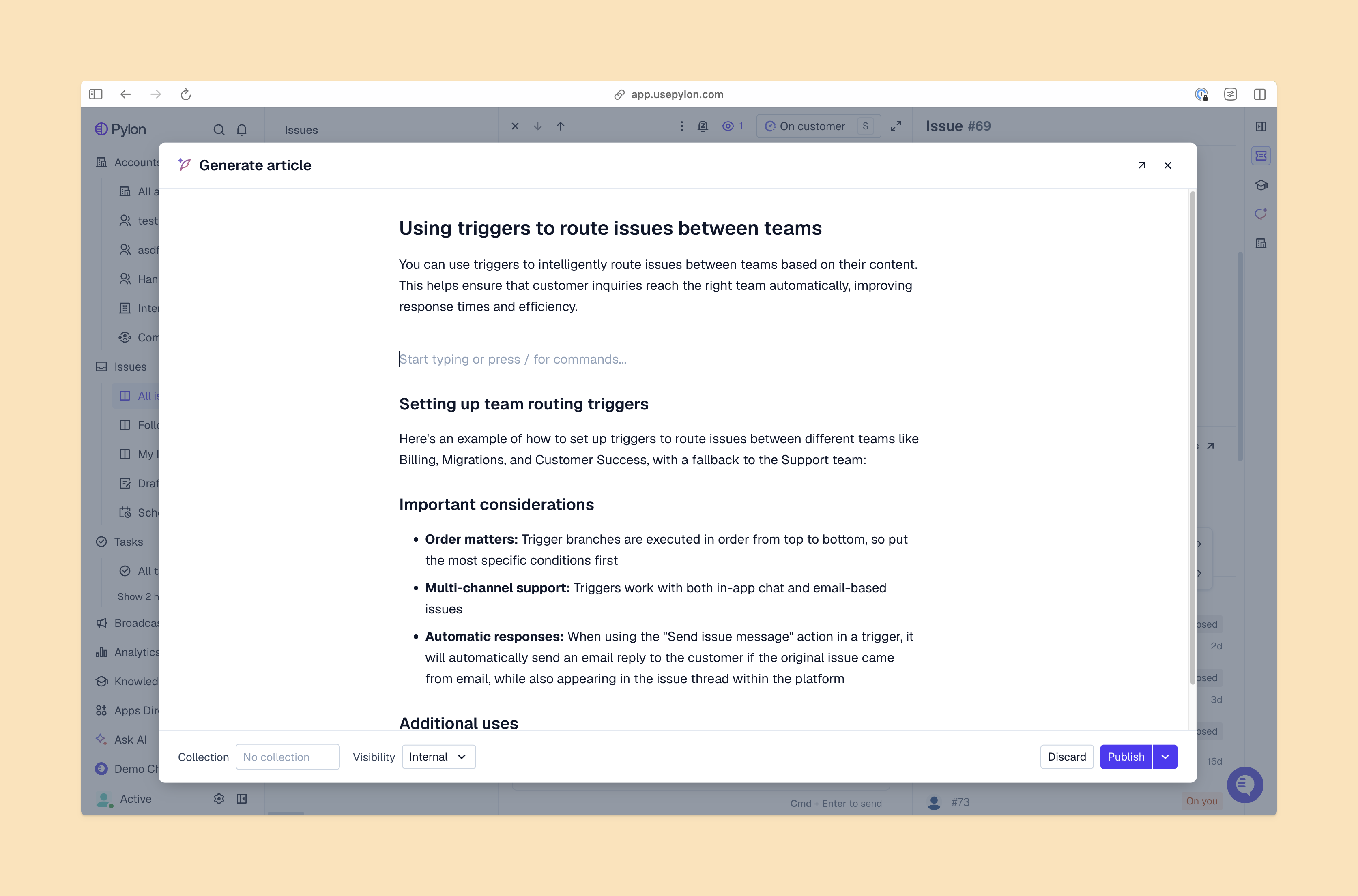
Pylon can draft knowledge base articles directly from resolved issues. Teammates can also ask Pylon’s Slack Agent for assistance with creating or updating articles based on internal Slack conversations.
3. Document the judgment, not only the answer
Knowing how to resolve an issue is useful, but understanding why someone chose a particular solution is just as valuable. For example, an experienced support rep might discourage a prior go-to troubleshooting step after discovering that it interrupts a customer’s automated workflows. Instead, they can escalate the issue directly to an engineer familiar with the integration.
Documenting the context around a decision gives the entire team the benefit of past experience, helping everyone avoid costly mistakes and unnecessary trial and error.
4. Turn proven workflows into Skills
With Pylon, teams can turn an experienced support rep’s approach into a reusable Skill. New hires and AI support agents can follow the same troubleshooting process, and any updates to the Skill become available anywhere it’s used. This keeps valuable expertise accessible to the entire team, even if the original employee leaves the organization.
5. Keep knowledge current
Outdated documentation often causes just as much confusion as missing information. Schedule regular reviews of knowledge base articles, wikis, and Skills to keep them accurate and useful. Product releases and integration changes generally require immediate updates, but everyday support work can also reveal outdated instructions or opportunities to improve existing procedures.
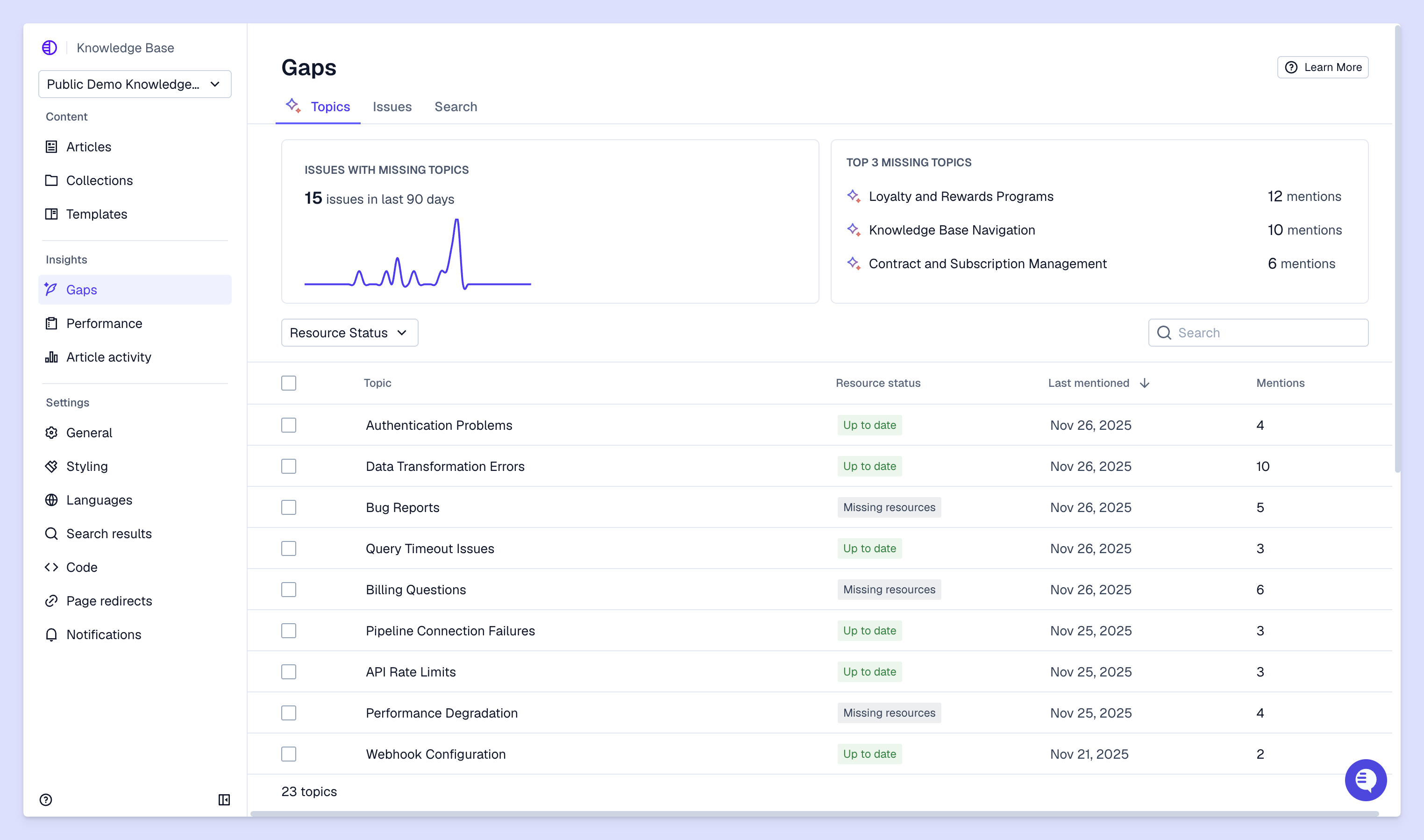
Pylon’s Missing Content page identifies common questions your documentation doesn’t answer. Teammates can also flag issues manually when they spot gaps, and automated topics are available on Advanced and Enterprise plans once a workspace logs 300 issues.
Pylon also suggests Skills improvements based on their performance, which teams can review before applying. Pylon records each agent run, and Improvements proposes guidance or changes to Pylon’s Skills from resolved escalations.
Make institutional knowledge part of everyday support with Pylon
After your most experienced employees spend years figuring out the ins and outs of supporting complex customer accounts, the rest of the team shouldn’t have to start from square one to learn the same lessons. Capturing team members’ institutional knowledge as part of everyday support work makes it easier to onboard new hires and deliver consistent customer support as your team grows.
Pylon is the agentic support platform purpose-built for B2B support teams and trusted by 1,800+ B2B customers. It brings conversations across Slack, Teams, email, chat, and other channels into one place, giving AI the context to help resolve customer issues and continuously improve your knowledge base. Pylon can identify missing or outdated documentation, generate new content from real support conversations, and help your team keep knowledge accurate as your product evolves.
FAQ
Why is institutional knowledge important?
Institutional knowledge helps support teams resolve issues faster and more consistently. Preserving institutional knowledge improves onboarding and prevents valuable expertise from disappearing when employees leave the organization.
What is tribal knowledge?
Tribal knowledge is informal, often undocumented know-how employees develop with experience and share with colleagues. It can include troubleshooting shortcuts or how to manage a particularly difficult account, for example.
What is another term for institutional knowledge?
Institutional knowledge is also known as organizational knowledge or institutional know-how. One related term is institutional memory, which includes accumulated institutional knowledge that teams share across the organization.
What is a knowledge transfer plan?
A knowledge transfer plan outlines how an organization captures and shares employee expertise. It typically includes documentation procedures, mentoring programs, and cross-training efforts.
How does Pylon help preserve institutional knowledge?
Pylon helps support teams capture institutional knowledge directly from customer conversations and proven troubleshooting workflows. Teams can turn that experience into knowledge base articles and reusable Skills that both employees and agents can follow, keeping valuable expertise accessible as the team grows or experienced employees leave.