
B2B support teams handle multi-channel, multi-stakeholder conversations regularly. A customer asks for help with an integration issue via live chat, and then follows up with more details by email. A different stakeholder on the account then asks for a progress update on Slack a few days later.
If the team uses fragmented systems or siloed inboxes, they’ll waste time searching for context and have to ask customers to repeat themselves, which gets frustrating quickly.
An omnichannel customer service strategy is meant to keep all those conversations connected and preserve context so that support teams can resolve issues efficiently, even as volume increases. This article defines what omnichannel support is and outlines six steps to help you build a connected strategy.
Omnichannel customer service (or customer support) connects all your communication channels to create a unified, consistent customer experience.
As conversations move between a large number of channels (like email, live chat, SMS, social media, Slack, and Microsoft Teams), an omnichannel approach helps the support team manage them all from a centralized workspace. Instead of constantly having to switch channels or start from scratch with every ticket, they have access to every part of a customer’s context for faster, more accurate responses.
Omnichannel customer support is different from multichannel customer support. Multichannel support simply involves offering several separate channels, while omnichannel support connects them into a unified customer journey.
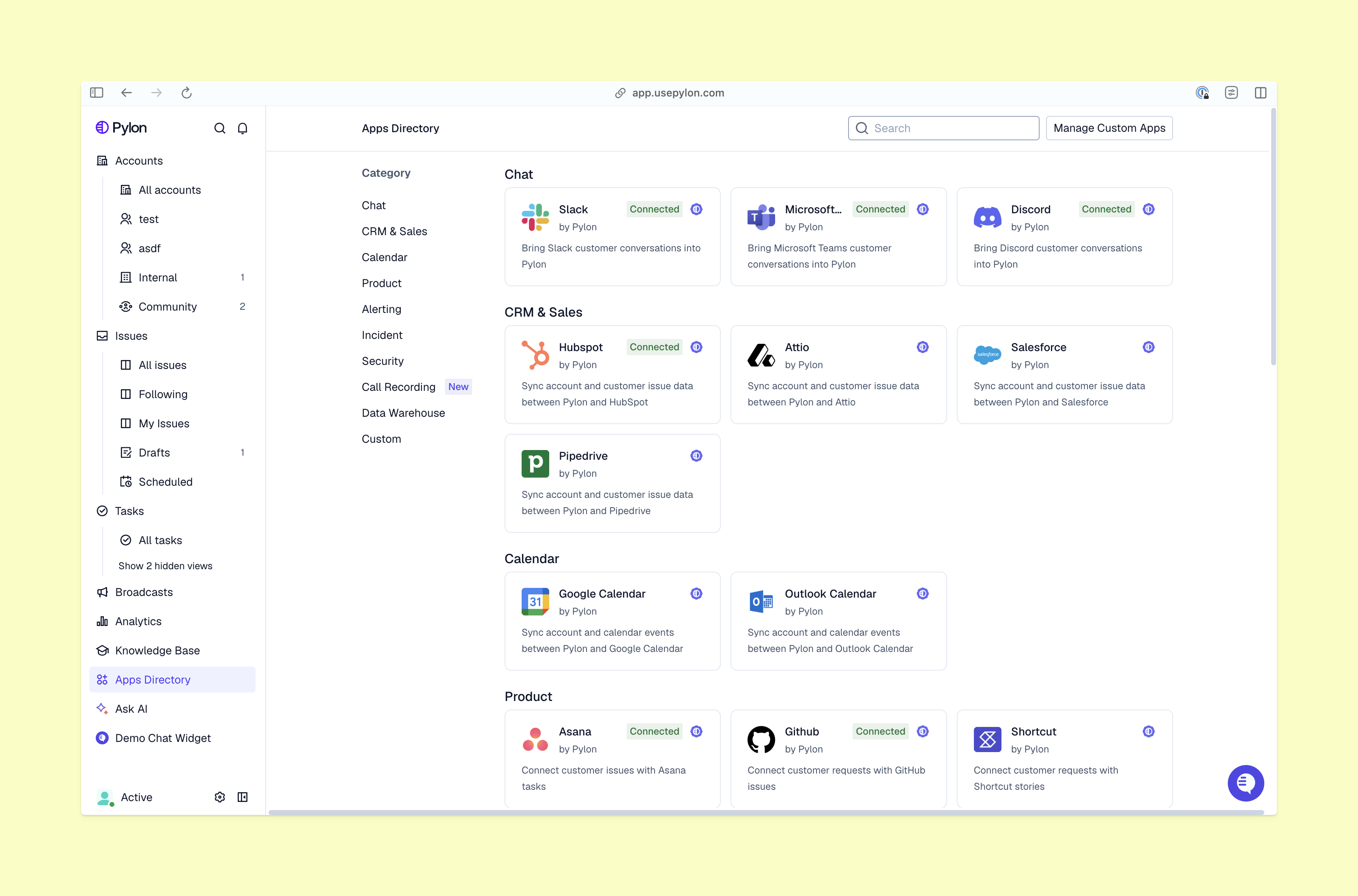
When a company is just starting out and only has a few customers, it’s easy to stay on top of messages in an email inbox and mentally keep track of that context when the conversation picks up on Slack or live chat.
As a company grows, fragmented channels become hard to manage, particularly for B2B teams who work with accounts that have multiple stakeholders. According to a 2026 McKinsey & Company study, B2B customers use an average of 10 different channels throughout their customer journey, and 73% expect consistent experiences across every touchpoint.
It can be very difficult to efficiently manage that many channels without a dedicated omnichannel customer service strategy. When your communication strategy isn’t working, issues fall through the cracks as volume and complexity grow. Work is duplicated, team members spend more time looking for information, and handoffs are fraught, which all mean tickets take longer to resolve.
Here are the main benefits of omnichannel support for B2B companies:
Follow these six steps for an omnichannel customer service strategy that gives customers a more connected, consistent experience across channels:
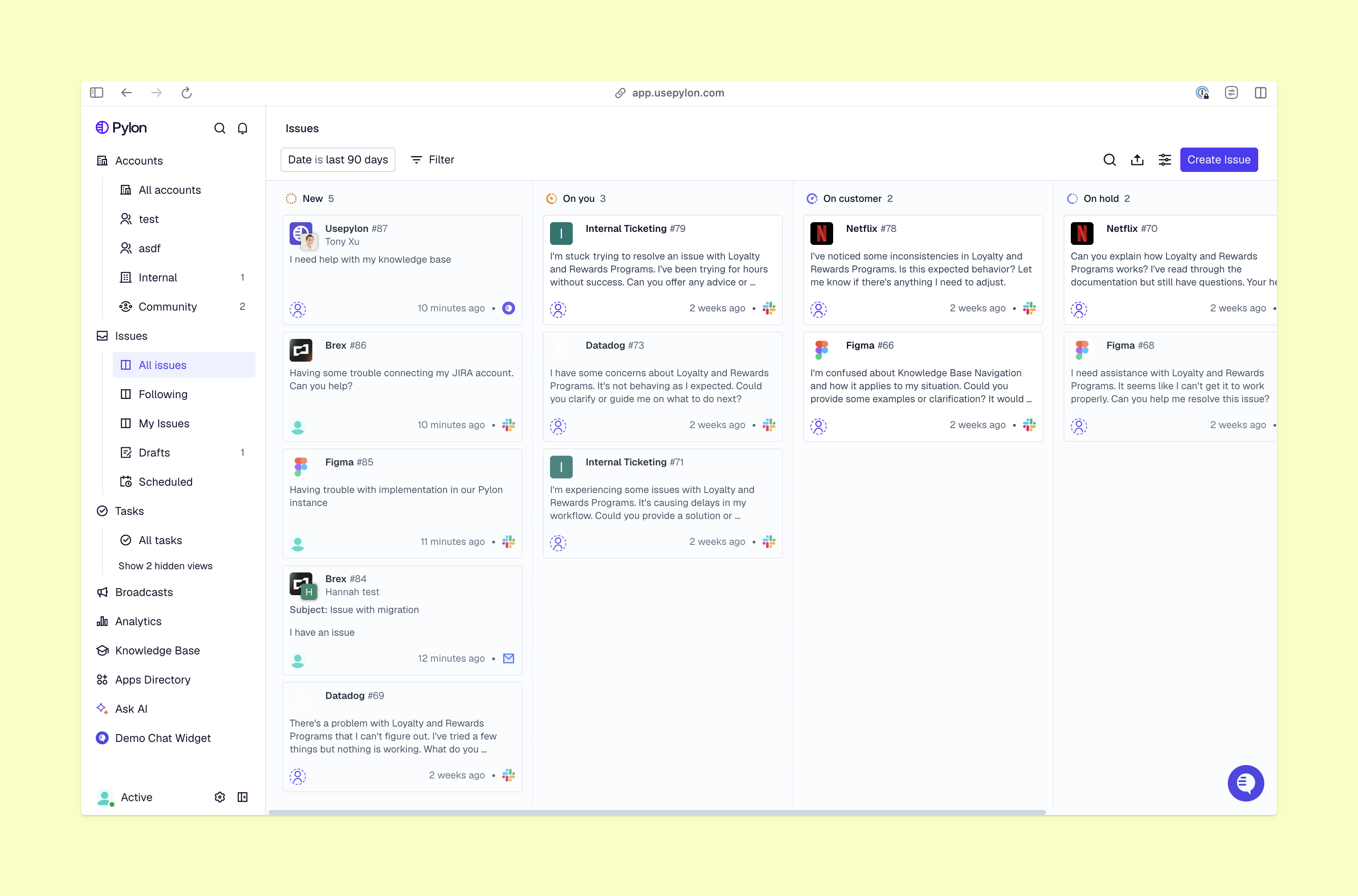
Here are a couple of real-world examples to show what omnichannel communication is like in practice.
B2B tech startup Vellum used hundreds of Slack channels to communicate with customers, but problems mounted as the company grew. Vellum’s customer support team had no way to assign issues to specific team members or track resolution and response times, and giving customers a product update meant pasting the same message in every channel individually.
Vellum solved these problems by centralizing its Slack and live chat conversations into Pylon’s centralized platform. The team can now assign and track issues through to completion while getting detailed metrics and automated alerts about service-level agreement (SLA) breaches.
Meanwhile, Lightdash was using separate apps to manage conversations via email, in-app chat, Slack Connect, and Slack Community. Adopting Pylon’s omnichannel support platform meant the team can now coordinate conversations on all four channels from one place. Team members use assignment and private notes to collaborate, and can view context from their CRM to give more accurate, relevant responses.
Fragmented customer communication makes it more likely that your team will struggle to find relevant context and waste time switching between multiple channels and systems. It can create a disconnected, inconsistent customer experience with SLA breaches and slow response times.
Your team can work more efficiently with an omnichannel customer service strategy, regardless of how many channels your customers use. Pylon’s unified ticketing system centralizes conversations with robust SLA management and intelligent routing to assign work to the right person or team automatically, so your customers can experience smooth support as one continuous conversation.
Pylon is the Agentic Support Platform built for B2B support teams. It brings conversations across Slack, Teams, email, chat, and other channels into one place, giving AI the context to help resolve customer issues and continuously improve your knowledge base. Pylon can identify missing or outdated documentation, generate new content from real support conversations, and help your team keep knowledge accurate as your product evolves.
No. Mid-sized and small teams can also create an omnichannel experience for their customers when they communicate across several channels. You don’t have to adopt a full-scale solution at once; scope and technology can scale with the support operation’s complexity.
It depends. Timelines vary based on the number of channels, integrations, existing systems, and workflow complexity. A phased rollout can help teams introduce omnichannel support gradually.
A more consistent and convenient support experience can reduce friction or negative sentiments and strengthen satisfaction and loyalty, which can support long-term retention efforts.
An omnichannel customer support approach can help teams operate more efficiently by reducing duplicate work and improving agent productivity, so you can simplify headcount without sacrificing quality.
It comes down to the integrations and ways you connect each channel and platform to the main omnichannel tool. Teams should use appropriate access controls, data governance, and security policies within a compliant system to protect customer information.
Pylon Workforce Management is available now. See it in action with a live demo.