Register for our upcoming webinar → How Haus Analytics rebuilt its support automation



In modern B2B, customer conversations are often fragmented. A conversation might start in an email thread with an account POC asking for a quote. Then, quick questions and feature updates might happen in Slack. And support tickets could come in via in-app chat with an AI agent.
Without a unified view, context can easily get lost between teams. Customers have to repeat themselves, and your team wastes time piecing the story together.
Omnichannel CX answers this call, weaving every conversation together so you can notice and solve issues before they escalate. Read on to learn more about how to build an omnichannel customer experience strategy that works.
An omnichannel customer experience is one where all customer conversations are centralized in a single view. Unlike a multichannel approach — where data is typically scattered — omnichannel CX makes sure that context travels with the customer, no matter how they choose to interact with you. This creates a more unified customer experience.
For a B2B support team, this means a customer can send a DM in a shared Slack channel, follow up via email, and then open a formal ticket, with your team seeing the entire account’s context in one place. No more asking, “Can you forward me the email thread?” or digging through Slack archives; your conversations are continuous.
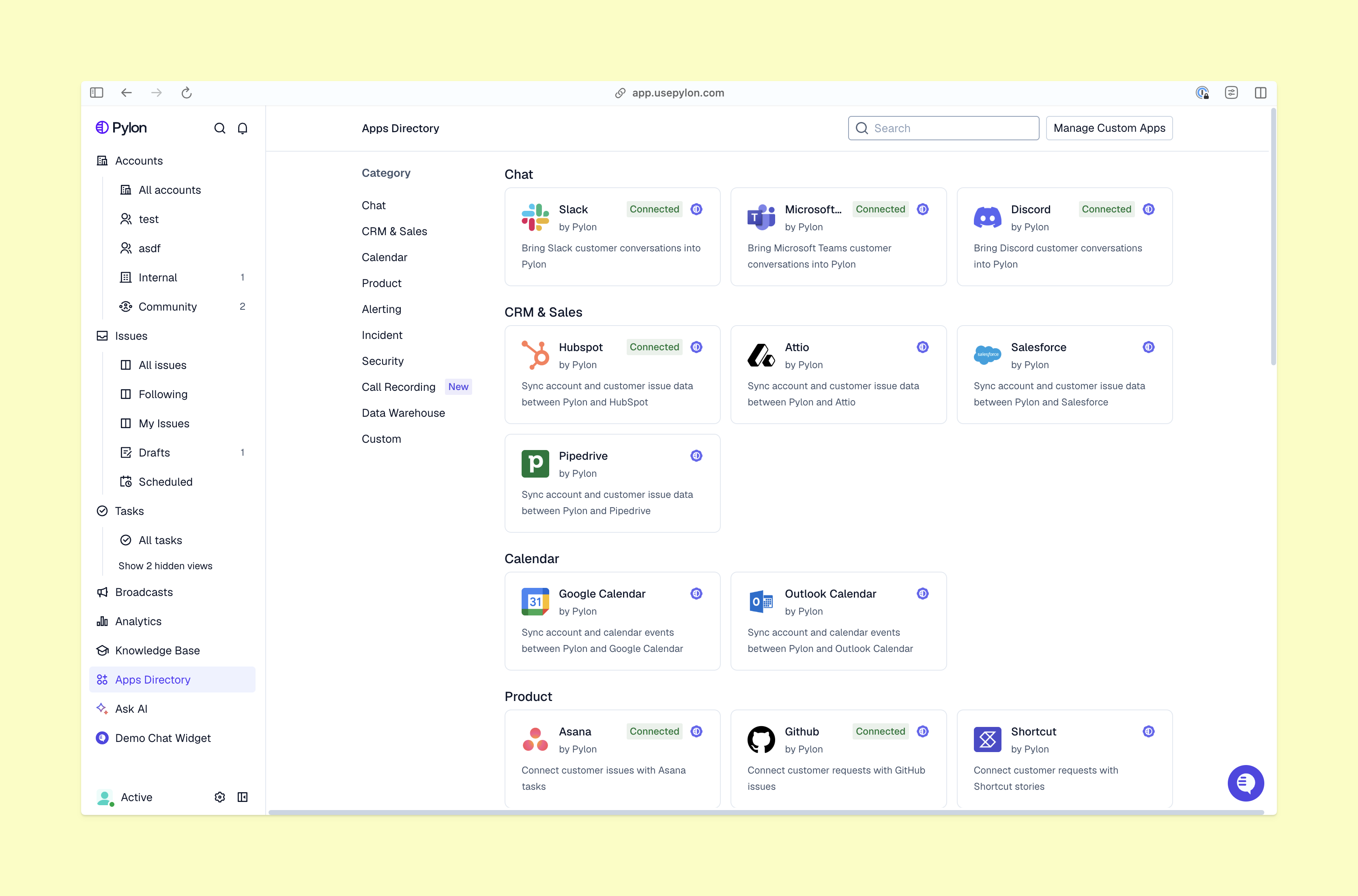
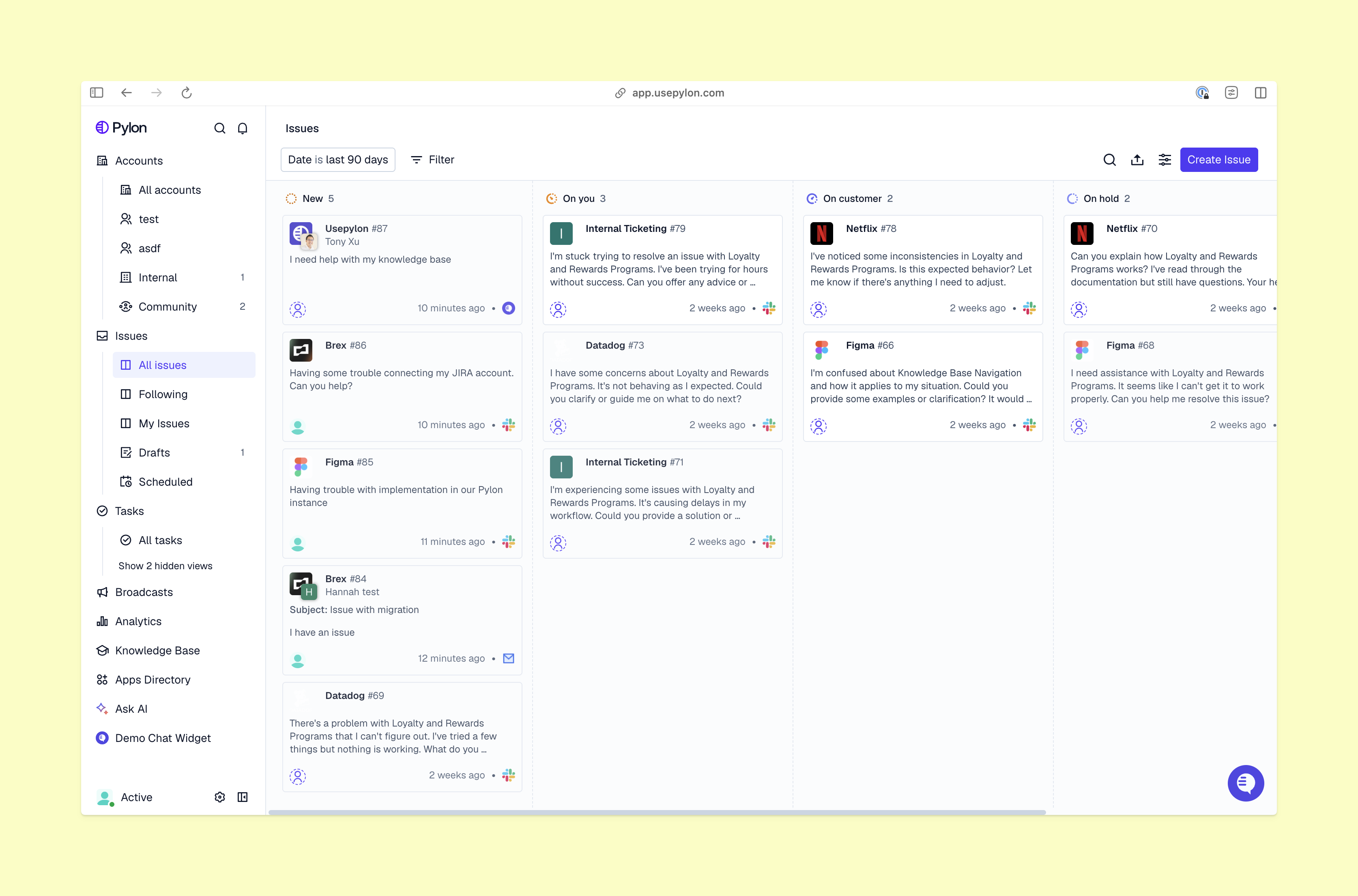
Omnichannel support platforms make this sort of CX possible. For example, Pylon brings conversations from Slack, Teams, Discord, email, chat widgets, and ticket forms together so you get the whole picture in one spot. This makes it easier for everyone to respond to customers knowing the full context of their issues. And you can also track metrics and spot patterns more easily across all interactions, like an account that keeps repeating themselves or is getting slow response times across Slack and email, for instance. Plus, you can configure automations like Pylon’s NPS surveys to go out via Slack, email, or an in-app pop-up, meeting the user where they’re most active.
An omnichannel strategy delivers real, tangible results for both you and your customers. Here are the core benefits.
When customers don’t have to repeat themselves, and your team has the full context to solve their problem quickly, satisfaction naturally goes up. A connected experience shows you value their time. And tracking customer experience KPIs becomes much more meaningful when the data is clean and connected.
For example, you can see how a customer’s sentiment is shifting across all their interactions, instead of from a single ticket. This data allows you to proactively help accounts that might churn before getting a flag from customer success.
With a single view of customer health, your team spends less time hunting for information and more time solving problems. Automation can handle the busywork of tagging and routing, while your team focuses on high-value interactions.
This is especially true for teams who use AI agents. Imagine an AI agent that can automatically identify an urgent issue in a Slack message, create a ticket, and assign it to the right person. Or better yet, run a set workflow and solve the problem autonomously. With the right omnichannel support platform, that’s possible.
When you have a complete picture of a customer’s interactions, you can spot opportunities that would otherwise go unnoticed. For example, a support conversation might reveal a need for a premium feature or an additional service. With omnichannel analytics, you can identify these trends across your entire customer base and all conversations.
You might notice that customers who ask about a certain integration are prime candidates for your enterprise plan. Or that accounts using three or more channels tend to have higher lifetime value. All of these indicators tell your CS team exactly where to focus expansion efforts.
An integrated system is a goldmine of data. By analyzing customer sentiment across all channels, you get a richer understanding of your customers’ needs and pain points. And that's how you can improve your product and service.
You can see which features cause confusion, which bugs are having the biggest impact on satisfaction, and which documentation gaps are generating the most tickets. Those signals are near-impossible to notice when your channels are disconnected.
A great experience improves trust and retention. When you make it easy for customers to get help and feel understood, you’re building a relationship that goes well beyond a single ticket.
You can also more easily track relationship health with an omnichannel software, sending surveys for NPS and CSAT scores to accounts where they’re most likely to fill them out.
A great far-reaching CX strategy requires a thoughtful approach to people, processes, and technology. Here’s how to get started.
Identify every touchpoint where customers interact with your team, like live chat, ticket forms, Slack, Teams, and conversational AI agents.
Create the technical foundation of an omnichannel experience by unifying your data. This usually involves connecting your CRM, support platform, and any other tools into a single system like Pylon. Every interaction, regardless of channel, should feed into one customer record.
Not every channel needs the same level of coverage, and trying to treat them equally is a fast way to burn out your team. Be intentional:
There are two goals to this: You want to meet customers where they’re at, and offer communication accommodations that match their SLAs so expectations are clear.
Train your team on this new omnichannel support strategy. This will likely include:
Track performance across channels, monitoring metrics like first response time by channel, resolution rate, and CSAT scores broken down by touchpoint.
You might discover your Slack response time is great while your email queue needs some work. Or that customers who start on chat and get escalated to email have significantly lower satisfaction ratings. Use this information to pivot and improve — that’s what turns your good strategy into a great one.
An omnichannel approach is no longer optional for B2B support teams. It’s how you deliver the fast, connected, and personalized experience that customers expect. And Pylon makes the switch to omnichannel support simple.
Pylon is the modern B2B support platform that offers true omnichannel support across Slack, Teams, email, chat, ticket forms, and more. Our AI Agents and Assistants automate busywork and reduce response times. Plus, with Account Intelligence that unifies scattered customer signals to calculate health scores and identify churn risk, we're built for customer success at scale.
Omnichannel customer support connects all channels into one system, giving teams full context and consistent responses across every interaction.
Multichannel offers separate channels. Omnichannel integrates them, sharing data and context so customers don’t repeat information.
Yes. Customers expect seamless support across channels and get frustrated when they have to repeat information.
Centralize channels, unify customer data, add automation, and track performance across touchpoints to deliver consistent support.
Pylon Workforce Management is available now. See it in action with a live demo.