
B2B customer experience covers every interaction customers have with your company — from early interactions via email to renewal calls with customer success. When this goes well, customers feel good about investing in you long-term.
Read on to explore how to build a consistent B2B customer experience strategy for every stage of your customer’s lifecycle.
B2B customer experience (CX) is the sum of every interaction an account has with your team — from the first “Hey, does your product fit my use case?” email through to the final handoff, if they ever move on.
In B2B, your customer usually isn’t just one person. It’s a whole group of people who research, evaluate, roll out, and actually use your product day-to-day. Good CX keeps all those different stakeholders in mind and makes sure each of them gets what they need along the way.
When the experience works for everyone, it shapes how the entire company feels about working with you. Strong B2B CX keeps teams aligned and reinforces the value you’re delivering.
A positive B2B customer experience creates momentum, builds trust, and keeps communication steady from the start. When users know what to expect and feel supported at every stage of their journey with you, engagement naturally improves. They’re more connected to the process, more aware of how your product supports their goals, and more likely to see consistent value over time.
That kind of B2B customer engagement adds real stability to your partnership. This, in turn, lowers the risk of customer churn and opens the doors to increased revenue via renewals, expansions, and referrals.
B2B and B2C customer experiences both aim to meet customer needs, but the key external stakeholder is often quite different. In B2C, one person makes all the decisions. Users tend to browse, buy, use the product, and quickly decide whether it meets their expectations. It tends to be a faster experience, with fewer steps to reach a long-term commitment.
In B2B, the customer journey is usually more complex. While a sales rep might chat with one key stakeholder at a prospect account, that key stakeholder is likely chatting to many other teams internally to decide whether your product is the right fit for their company’s needs. So decisions tend to take longer, since every stakeholder needs specific information to decide how well a product or service fits into existing workflows. And because B2B customer relationships typically last longer, customers expect consistent support and communication — the bread and butter of B2B customer satisfaction.
Even with those differences, the expectations underneath B2B and B2C customer experiences are similar. Clear expectations, personalized solutions, and an experience that feels tailored to them all play a role in long-term customer loyalty.
B2B customer experience used to focus on transactional exchanges — basically, you close the deal and react to issues as they arise.
Today, the customer experience is a more core part of the overall business strategy. Users expect personalized support throughout the entire customer journey (from discovery and implementation to daily use and renewal) and successful organizations respond with stronger, more connected customer experiences.
Support and customer success platforms have sped up that shift. B2B customer experience research shows that 80% of CX leaders saw increases in customer lifetime value after investing in structured CX programs. Technology that anticipates needs, automates routine tasks, and supports consistency led to this boost in customer success.
Great post-sales teams typically incorporate these elements into their CX:
Here’s how to develop/improve your B2B customer experience in 5 steps.
A health benchmark helps you understand where each customer stands today and how their relationship could improve. Look at patterns like tenure, product adoption, and upgrade history to spot accounts with strong customer engagement and others that need an extra push.
You can build out these insights by monitoring various metrics, like:
Most B2B customer journeys follow the same arc — awareness (I have a problem), active consideration (this is the problem and possible solutions), and final decision (this is the right solution). Look at how customers engage at every stage to spot pain points and create CX systems that encourage accounts to move forward.
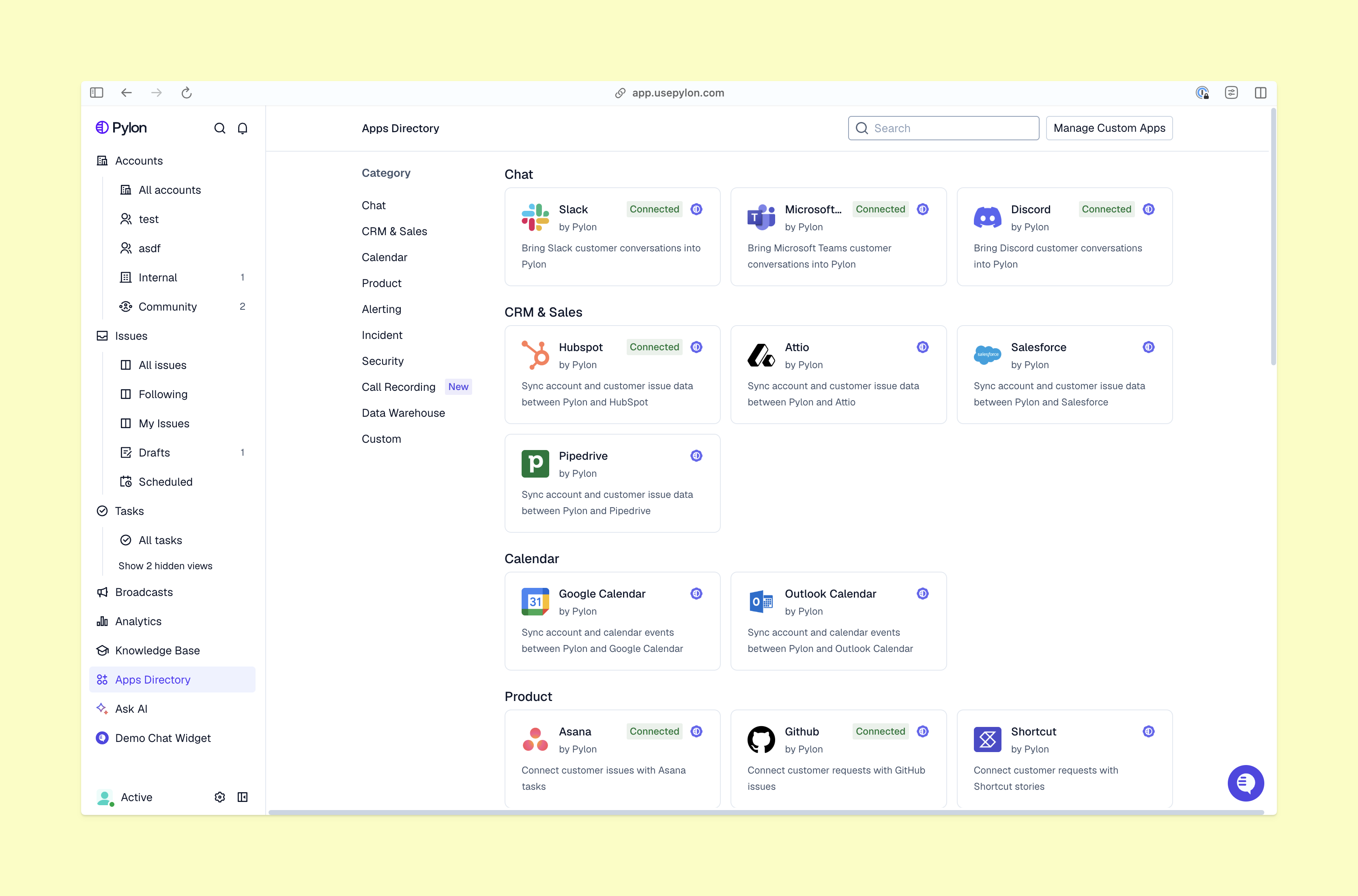
Customers often switch between email, chat, and one-on-one conversations, and your CX needs to keep information consistent across all these touchpoints. An omnichannel customer support platform brings all this together, making sure customers get consistent communication no matter where they message you.
On top of offering a unified customer communication experience, you can help your team out by also adopting an all-in-one B2B platform that unites all your data, communication, and account history in a single space. Unified systems help you spot churn signals, avoid duplicate work, and keep every teammate on the same page.
Here are a few best practices to improve customer success:
A great B2B CX journey starts and ends with clear, consistent communication. And Pylon makes this easier by bringing everything your post-sales team needs to communicate thoughtfully into one place.
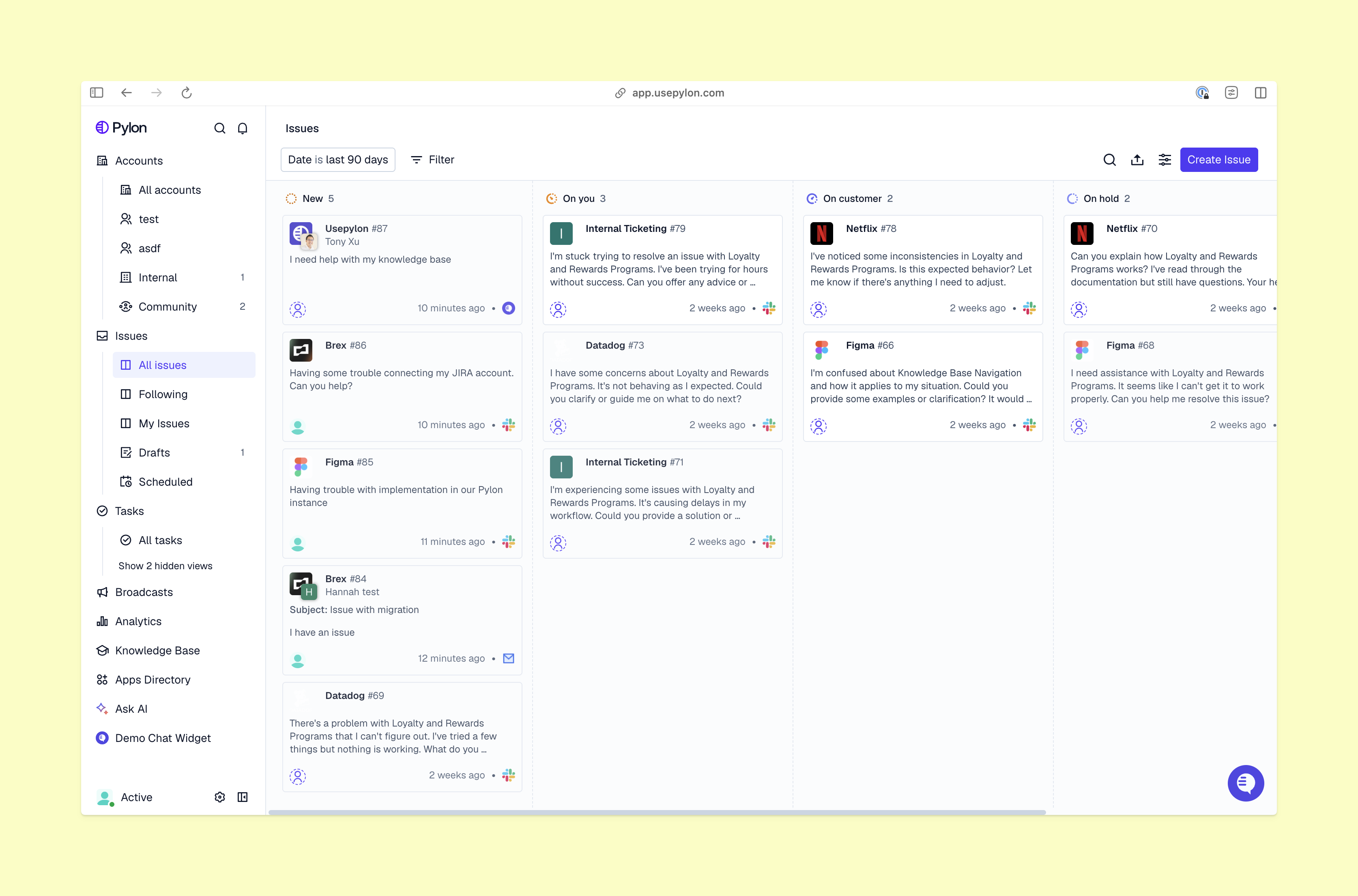
Pylon is the modern B2B support platform that offers true omnichannel support across Slack, Teams, email, chat, ticket forms, and more. Our AI Agents and Assistants automate busywork and reduce response times. Plus, with Account Intelligence that unifies scattered customer signals to calculate health scores and identify churn risk, we're built for customer success at scale.
Pylon Workforce Management is available now. See it in action with a live demo.