
Your support team needs a way to keep issues and tickets organized, so when customers ask for help, you can respond quickly. To do that, teams can create a clear ticketing system, where every problem is logged as a support ticket and tracked until it’s fixed.
In this post, we’ll talk about what support tickets are, cover their benefits, and look at some best practices to help your team deliver great customer experiences.
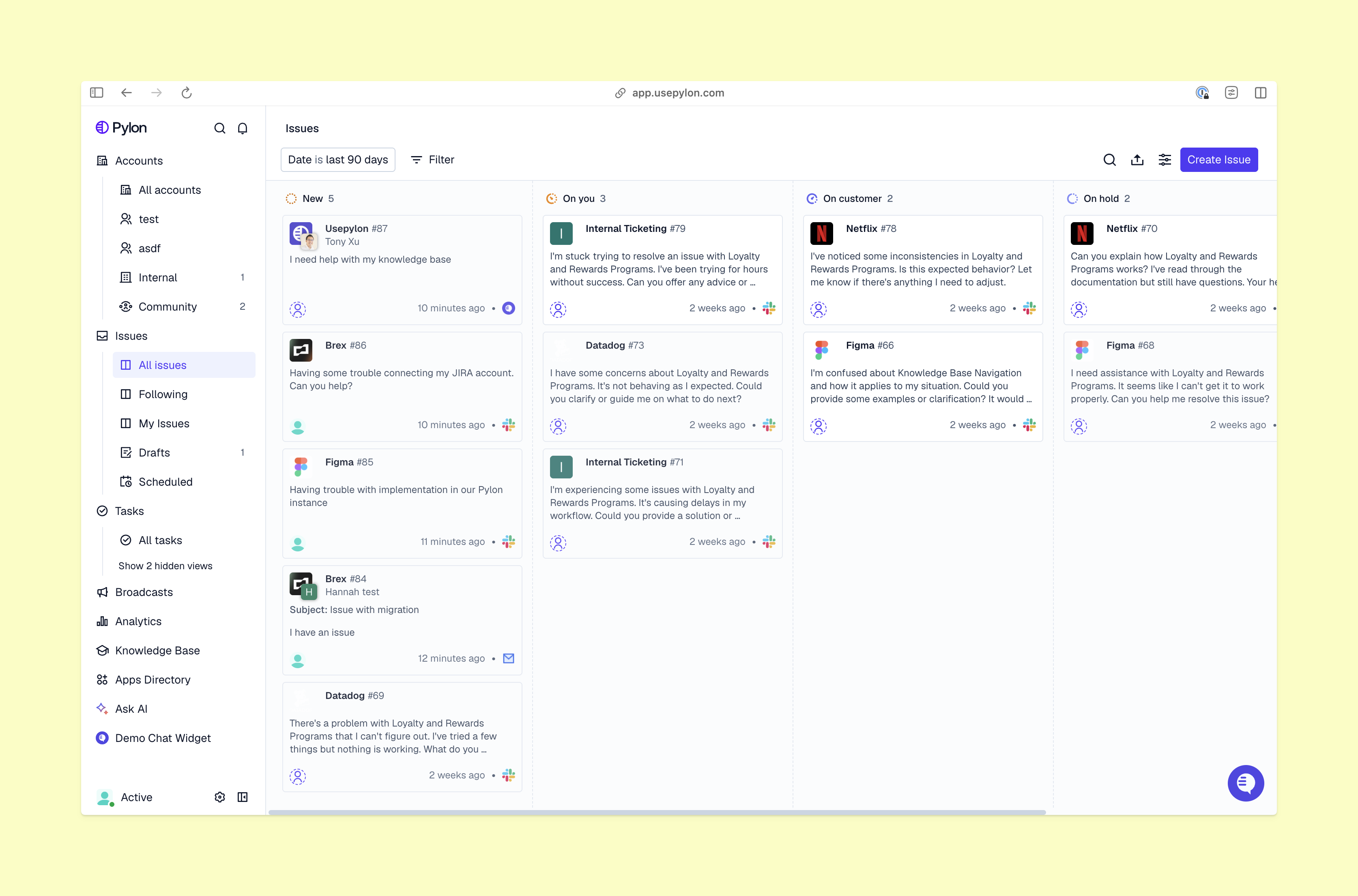
Here’s what a support ticketing system usually looks like:
Each help ticket will record important details like:
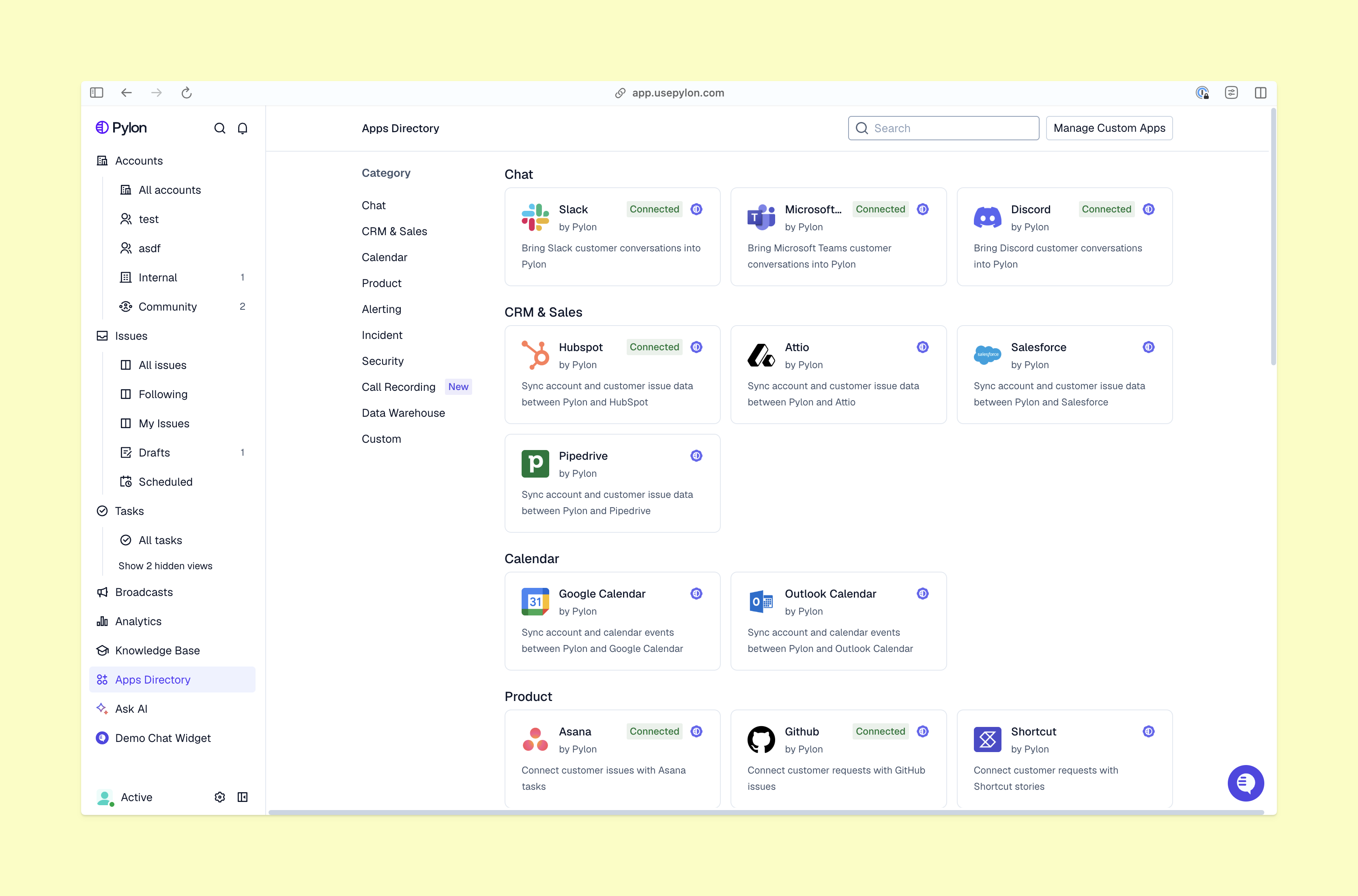
These are common ticket types for B2B teams:
When you build a great customer support ticket system, you get:
These ticket management strategies help your team give high-quality customer support and solve issues quickly.
Scaling teams can use AI and automation to handle large ticket volumes without making customers wait. AI customer support tools let you set up automated workflows and custom triggers, so your team doesn't have to worry about repeat tasks like status updates, routing, and ticket escalation.
Instead, they can spend time on more valuable work and better meet customer needs. Plus, automation and AI can make the rest of the best practices we’ll look at easier.
Don’t force customers to sign up to new systems or portals just to get their problems solved. It’s better to let them chat with you on their preferred platforms, whether that’s email, Slack, Teams, or Discord. Support desk software can bring all these channels together and create tickets that all go through the same workflows.
When a ticket comes in, you need to categorize it right away and prioritize it based on urgency. This way, your team can work on critical issues first, and save general questions or simple feedback for slower moments. They can also answer similar messages in a single batch, which lets them work more efficiently and reuse replies.
It can take time to fix a complex issue, so let customers know what’s happening and when they can expect an answer. When they don’t hear from you, customers often assume you’ve ignored their tickets. Updates are a perfect use for automation, since you can set rules to send simple status messages automatically.
The quickest way for a customer to solve a problem is to find the answer on their own. When you give them self-service options, like a knowledge base and frequently asked questions, some customers won’t need to send tickets at all. AI agents also fix simple problems fast and route more complex issues to your team.
Once a ticket closes, get feedback from the customer. Send satisfaction surveys that ask if they got what they needed and were happy with the response times and update quality. You can use this feedback to improve your system and offer even better support in the future. Plus, it tells you which customers are unhappy and need more attention.
Make sure your ticket system tracks your key performance indicators, like first response times, ticket volumes, average resolution times, and customer satisfaction scores. This shows whether you’re meeting SLAs, and it gives your customer success team data they can use to nurture long-lasting relationships.
Support tickets help you offer an outstanding customer experience, because they keep your team organized and accountable. And the best systems give you powerful AI and automation tools so you can handle high ticket volumes efficiently.
Pylon is the modern B2B support platform that offers true omnichannel support across Slack, Teams, email, chat, ticket forms, and more. Our AI Agents and Assistants automate busywork and reduce response times. Plus, with Account Intelligence that unifies scattered customer signals to calculate health scores and identify churn risk, we're built for customer success at scale.
A support ticket tracks and manages an issue, while a conversation refers to the ongoing communication within or outside the ticket.
No. Support tickets are widely used in customer service, SaaS, healthcare, retail, education, and government services.
Yes. AI can assist with routing, prioritization, automation, and response suggestions, helping teams resolve tickets faster.
Pylon Workforce Management is available now. See it in action with a live demo.