Register for our upcoming webinar → How Haus Analytics rebuilt its support automation



Customer enablement is all about your customers getting the most out of your product or service. When you give customers the right resources to understand your offering, they’re more likely to adopt, renew, and have a better experience overall.
In this guide, we’ll walk through the benefits of customer enablement and ways to achieve it. We’ll also cover best practices so your customers can have a smooth experience with your company and stay with you long-term.
Customer enablement is the process of helping customers learn how to use your products independently. Having the right tools, resources, and support through every stage of the customer journey builds strong, lasting relationships.
The most important parts of customer enablement are:
Customer success enablement is important for B2B and SaaS companies, where growth depends on reducing customer churn and creating long-term partnerships. When customers enjoy using your product and understand all its features, they’re more likely to renew their contracts and recommend you to others.

Here’s a closer look at what strong customer enablement strategies can do for your company:
There are several ways to set up strong customer enablement:
You can think of customer enablement as teaching someone how to drive a car, and customer success as helping them reach their destination.
Customer enablement’s focus is on education and support. Your team offers tools and resources to help customers get the most out of your offering.
On the other hand, customer success is a broad term that covers the entire customer relationship. Success teams track account health, help customers set short-and long-term product use goals, and work with customer support teams to share insights for a smoother experience. Their main goal is to boost customer satisfaction and retention.
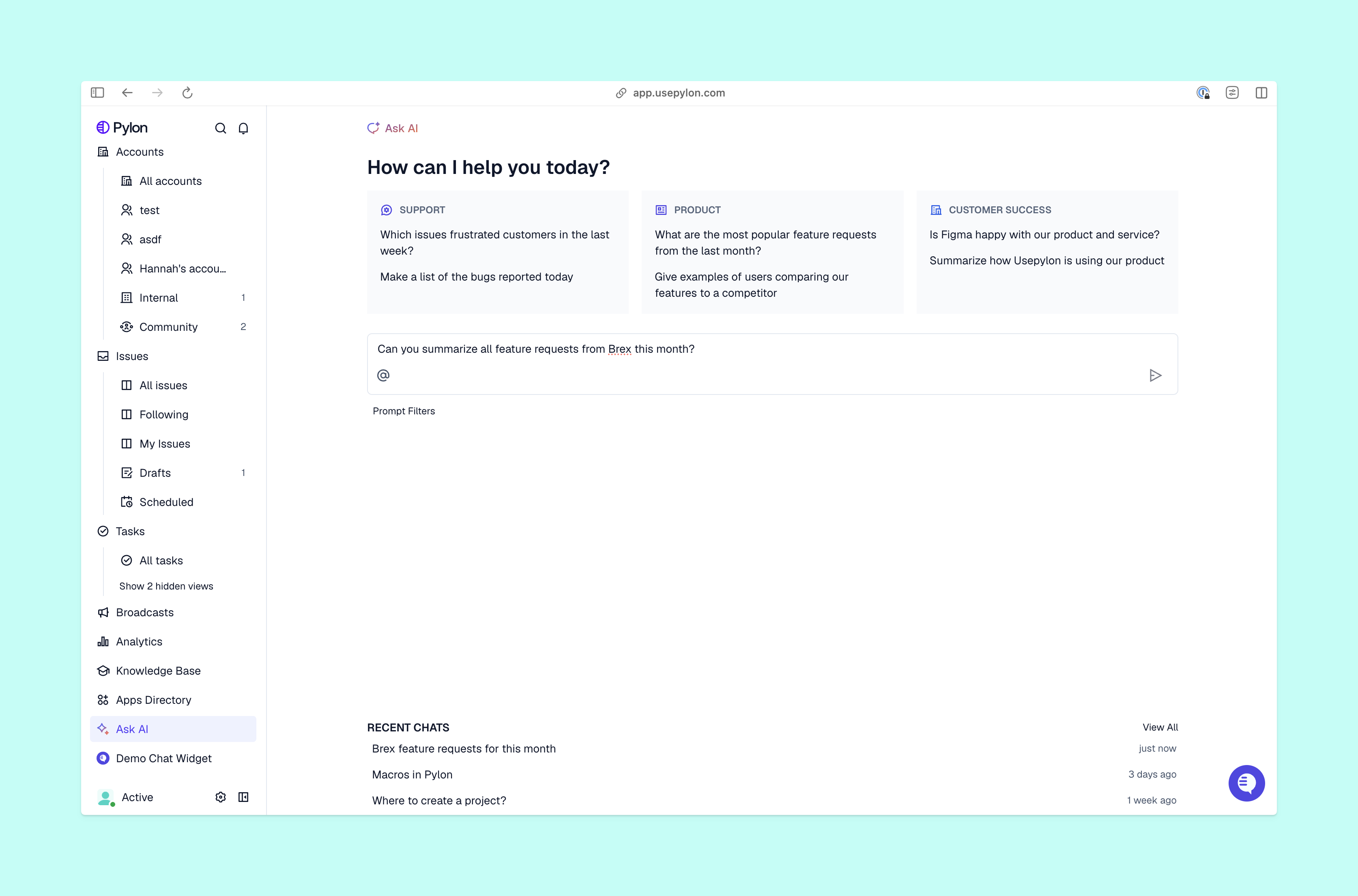
Use these 10 best practices to help accounts have a smooth experience with your product or service.
The onboarding process is the best place to start with customer enablement. This is when customers have the most questions and the most to learn about your offering. To help them get started, give tailored customer support, share playbooks segmented for particular types of customers, and introduce them to self-service options like knowledge bases and AI ticketing systems.
For B2B companies, it’s easier to scale well with the help of automation. The best customer enablement software automates account health monitoring, answering simple customer questions, and identifying the next steps after a customer interaction. Pylon’s Account Intelligence and AI Agents do all of this so you can keep track of each customer relationship and build playbooks faster.
The way an operations manager uses your product will differ from how someone in a customer-facing role uses it. Instead of providing one set of educational materials, offer a curated list of resources that’s relevant to major roles in your customer’s company.
Design your training materials around customer needs, not just your product features. Building customer support content that directly helps customers reach their goals can make accounts feel like you have their best interests in mind.
No matter how many resources and self-service options you offer, customers may still have problems or obstacles that only come up in a conversation. Regular check-ins are an important tool your customer success managers can use to make sure you’re meeting customer needs and answering any remaining questions.
Customer support enablement involves encouraging your team (or an automated software) to collect feedback, and then acting on it. Listening to what went well and where your current resources fell short means you can give better help in the long term, and implementing those changes makes current accounts feel heard and respected.
Customers often have similar experiences and can help each other solve problems without needing to go through your customer support team or a knowledge base. Set up customer-facing Slack channels or use social media platforms to connect with customers and help them connect with each other.
Real examples of how other customers use your product are a great learning tool. Companies often use these testimonials as pre-sales material, but they’re also useful for customer enablement and post-sales teams. Include plenty of detail so customers can see exactly how to use your product to meet their needs.
Metrics are useful to help you see what strategies are working, but look deeper than view count. For example, has your new training materials changed adoption rate, feature usage, or support ticket volume? Compare what you’ve changed with success metrics like customer effort scores (CESs) and customer satisfaction scores (CSATs) and adjust your strategy accordingly.
Customer enablement is a long-term process, not a one-off task. SaaS companies and those with frequent product updates need to refresh support materials often so your support materials match what customers are seeing. Outdated instructions can create unnecessary frustration and hurt customer relationships.
The feedback you collect from customers can help you improve your knowledge base and other educational content. Revise questions and add new content based on common obstacles and reports from support tickets.
When you help your customers get the most out of your product, you’re more likely to build lasting relationships that lead to renewals and long-term retention. Pylon’s Account Intelligence can help you understand your customer’s needs better so you know where to focus your efforts.
Pylon is the modern B2B support platform that offers true omnichannel support across Slack, Teams, email, chat, ticket forms, and more. Our AI Agents and Assistants automate busywork and reduce response times. Plus, with Account Intelligence that unifies scattered customer signals to calculate health scores and identify churn risk, we're built for customer success at scale.
Pylon Workforce Management is available now. See it in action with a live demo.