Updated February 20, 2026 | 16 min read
Your customer success team is drowning in manual spreadsheets and scattered context, switching between five different tools to figure out which accounts are at risk. By the time you piece together the signals, the customer has already decided not to renew.
Customer success management tools centralize customer data across support tickets, product usage, and call recordings into one platform that predicts churn, automates workflows, and helps your post-sales team drive retention at scale. This guide covers what CSM platforms do, which features matter most, and how to evaluate different options for your team.
Customer success management tools are AI-enabled SaaS platforms that help B2B teams boost retention, increase product adoption, and monitor customer health. They centralize data from fragmented sources like support tickets, product usage, billing systems, call recordings, and CRMs into one place. This helps your post-sales team see the complete 360 on every customer relationship.
But instead of just helping you respond to customer problems after they happen, CSM platforms use predictive analytics to spot at-risk customers before they churn or surface expansion opportunities before they slip away. Your customer success managers, account managers, and support teams can all work from the same system instead of piecing together scattered signals across five different tools.
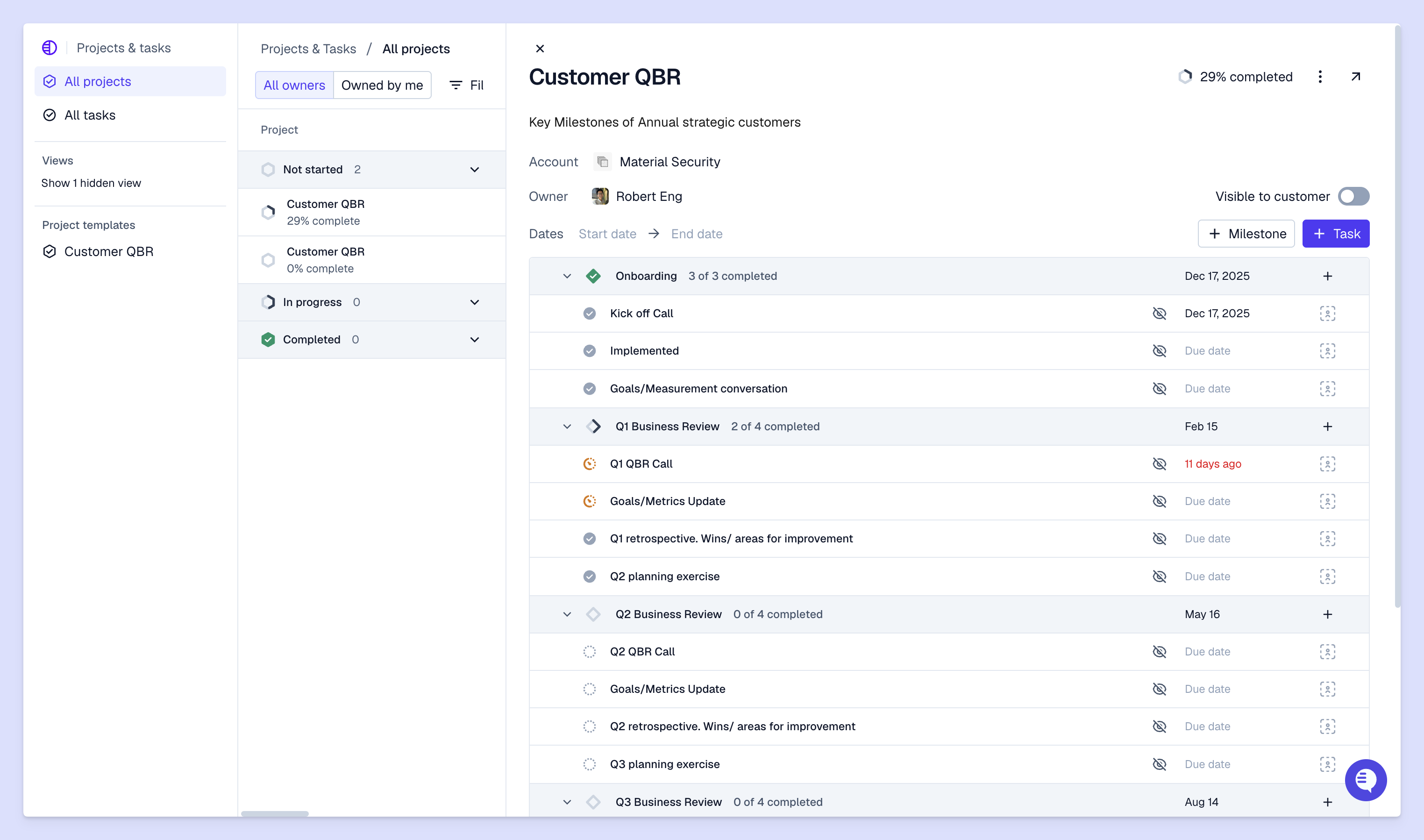
People often confuse CRM systems with customer success platforms, even though they solve different problems.
Your CRM tracks deals, manages sales pipelines, and forecasts revenue. It's built for pre-sale activities. Once a customer signs the contract, the CRM's job is mostly done.
Customer success platforms pick up where CRMs leave off. They monitor post-sale customer health, automate retention workflows, and flag churn risk. CSM tools typically sync data from your CRM but have extra capabilities that CRMs don't — including health scoring, automated playbooks, product adoption tracking, and other tools to help your team manage customer relationships.
One the main values of a CSM platform is turning scattered customer data into clear next steps for your post-sales team to act on. Here's a breakdown of some of the key benefits.
Custom health scores and AI churn risk tracking tell you which customers need attention before they actually cancel their contracts. When an account's engagement drops or support ticket volume spikes, you can use CSM platforms to build playbook or automatically trigger outreach to get things back on track. For a lot of teams, AI can help flag warning signs weeks or months before you would manually piece together the customer signals.
On the flip side of churn, CSM platforms also help teams identify upsell, cross-sell, or other expansion opportunities. These systems track product adoption patterns and account growth signals — with platforms like Pylon, you can even deploy AI to research customer milestones from web sources. When a customer hits certain usage thresholds, grows their team, or raises another round of funding, your account managers get notified to start expansion conversations.
AI workflows automatically handle onboarding sequences, renewal reminders, and check-in emails without your team having to manually manage them. Your customer success managers focus on strategic work and high-value conversations, not back-office tasks like scheduling quarterly business reviews or hunting down usage data.
CSM platforms unify customer signals across your support tickets, product analytics, billing data, and CRM records. Your entire post-sales team works from the same context, which means you can leverage support data to inform customer success strategy and how you build account relationships.
Especially in B2B, support and customer success teams are working with complex accounts. This often means juggling multiple stakeholders, unique environments, and specialized workflows for each customer.
To help you manage those account relationships, here are the key features to look for in a CSM platform.
Health scores combine engagement metrics, product usage data, support ticket volume, and sentiment analysis into one predictive number. This tells you how much value a customer is getting out of your product, and it helps you prioritize accounts that aren't leveraging your platform as much as they could be.
With platforms like Pylon, you can actually customize the formulas for account health scores. For example, you might choose to include or exclude certain usage metrics, depending on what makes sense in your product or what typically indicates churn risk across your customer base.
AI-powered churn detection automatically flags at-risk accounts based on factors like sentiment in support conversations or declining usage. These early warning systems give your team time to intervene with targeted outreach before renewal conversations become more difficult.
Look for platforms where you can actually see why AI flagged an account as a risk. If you can dig into the exact sources AI referenced to determine churn risk, you'll have concrete insights to act on.
With CSM platforms, you can create automated playbooks that trigger actions based on customer milestones. For example you might have workflows to send onboarding materials to new customers, remind you about upcoming renewals, or kick off account check-ins based on usage thresholds. You could also set up sequences that send personalized emails, configure AI to automatically create tasks for account managers based on meeting notes, or escalate certain issues to leadership.
Dashboards help you track retention metrics, expansion revenue, time-to-value, customer feedback, and team performance in real time. This way you can prove the ROI of different customer success strategies to leadership and identify which ones are actually producing results. Look for platforms that let you segment data by customer tier, industry, or custom fields relevant to your business.
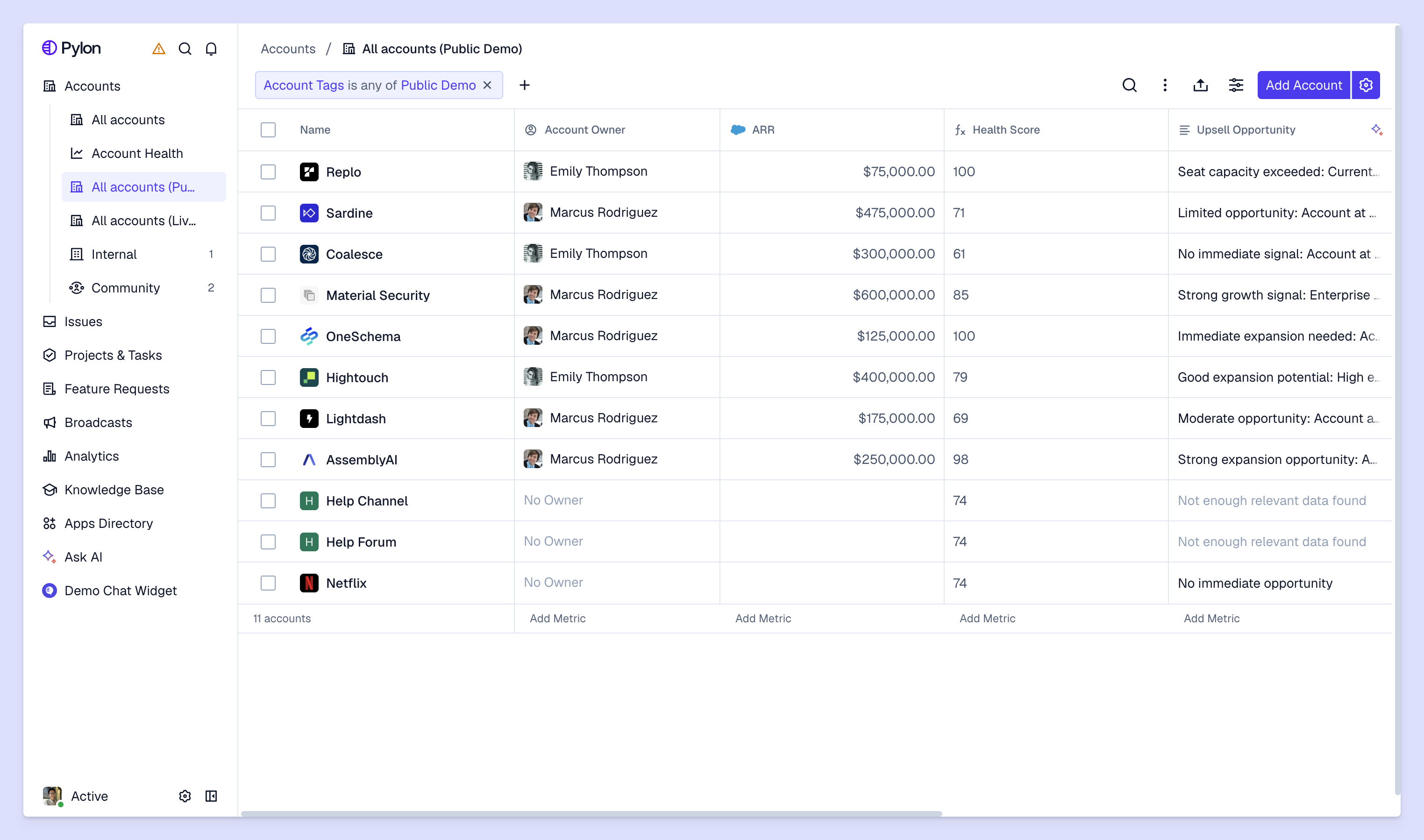
Some customer success platforms are directly built on top of a core support platform, whereas others are standalone tools that you'll need to integrate with your support system. Here's a quick comparison of the best options for B2B teams:
Once you've evaluated different customer success platforms, you'll need a plan to implement the right product across your team — and you'll want to avoid the most common pitfalls for B2B teams:
Customer success management tools enable proactive retention and expansion work that's impossible to do manually at scale. The best platforms unify support and customer success data so your entire post-sales team works from shared context instead of separate systems.
Pylon is the modern B2B support platform that offers true omnichannel support across Slack, Teams, email, chat, ticket forms, and more. Our AI Agents & Assistants automate busywork and reduce response times. Plus, with Account Intelligence that unifies scattered customer signals to calculate health scores and identify churn risk, we're built for customer success at scale.
Implementation timelines vary from two to four weeks for simpler platforms to three to six months for enterprise deployments with complex integrations and custom workflows. Your timeline depends on data migration needs, integration complexity, and team training requirements. Plan for at least one month even with the most straightforward platforms.
Modern CSM platforms integrate with support systems like Zendesk, Intercom, and Freshdesk to pull ticket data into customer health scores. Some platforms like Pylon combine both support and customer success capabilities in one system instead of requiring separate integrations — so you don't have to worry about data syncs at all.
Small teams benefit from CSM tools when managing more than 20 to 30 accounts becomes too difficult to track manually. Early adoption helps establish scalable processes before your customer base grows too large to manage without automation. You can start with simpler platforms and upgrade as complexity increases.
Track improvements in churn rate reduction, expansion revenue growth, and team efficiency gains after implementing your CSM platform. Compare outcomes against your software investment and implementation costs to calculate ROI. Most teams see positive ROI within six months if they achieve even modest retention improvements.
Pylon Workforce Management is available now. See it in action with a live demo.