
Customer-centric culture is important in B2B, because your company’s success depends on strong, long-term customer relationships. But support teams aren’t always on the same page about what customer centricity means and how it influences your support operations.
Taking a customer-focused approach matters in just about every part of day-to-day support work, like initial onboarding, troubleshooting chats, renewals, and account changes. These moments can feel routine, but each one is a chance for the customer to feel understood and more connected to your brand.
This guide explains what a customer-centric culture means and how you can use it to improve company growth.
Customer centricity means your team sets goals and prioritizes work based on how customers use your product and where they run into problems. In B2B, a customer centricity-based approach is important for the whole relationship, since people rely on your product to grow their own companies.
Since B2B revenue depends on retention and expansion, customer centricity is a core customer experience strategy. When customers feel supported, engagement tends to improve and issues show up sooner, which gives you more time to respond before those problems become churn.
Good customer-centric teams are proactive — they help people beyond just answering support tickets. These teams improve workflows, prioritize fixes, follow up with accounts often, and use customer context and data to make better decisions.
Customer-focused teams get benefits like:
To create a strategy based on customer centricity, begin with these steps:
Choose a small set of support key performance indicators that reflect customer actions and feelings, so you can track how well your team centers the customer experience.
Your churn rate is how many accounts stop using your product in a given period. When churn rises, it often signals a gap in customer support or onboarding. Review churn alongside other account context and survey feedback to find out where customers are struggling — so you can make changes that increase retention.
NPS measures how likely customers are to recommend your product. Watch NPS trends over time to get a feel for how much customers trust your brand. Along with the score, you can ask follow-up questions to get context about why customers picked their scores, then use that feedback to improve support playbooks and communication.
CLV is the total revenue an account creates during their whole relationship with your company. Changes in CLV usually line up with retention and expansion trends, so look at all three together for a more complete picture. When people stay longer and use your product more over time, those signals suggest that your team delivers great, customer-focused value.

When your team knows how to center customer needs in support operations, they help users get more value from your product and build trust with your brand. Teach your team about customer needs, and give them clear playbooks that show how to center the customer in everyday interactions. Make sure they have a tool where they can find all the details about a customer, so they can handle questions and issues with the right context.
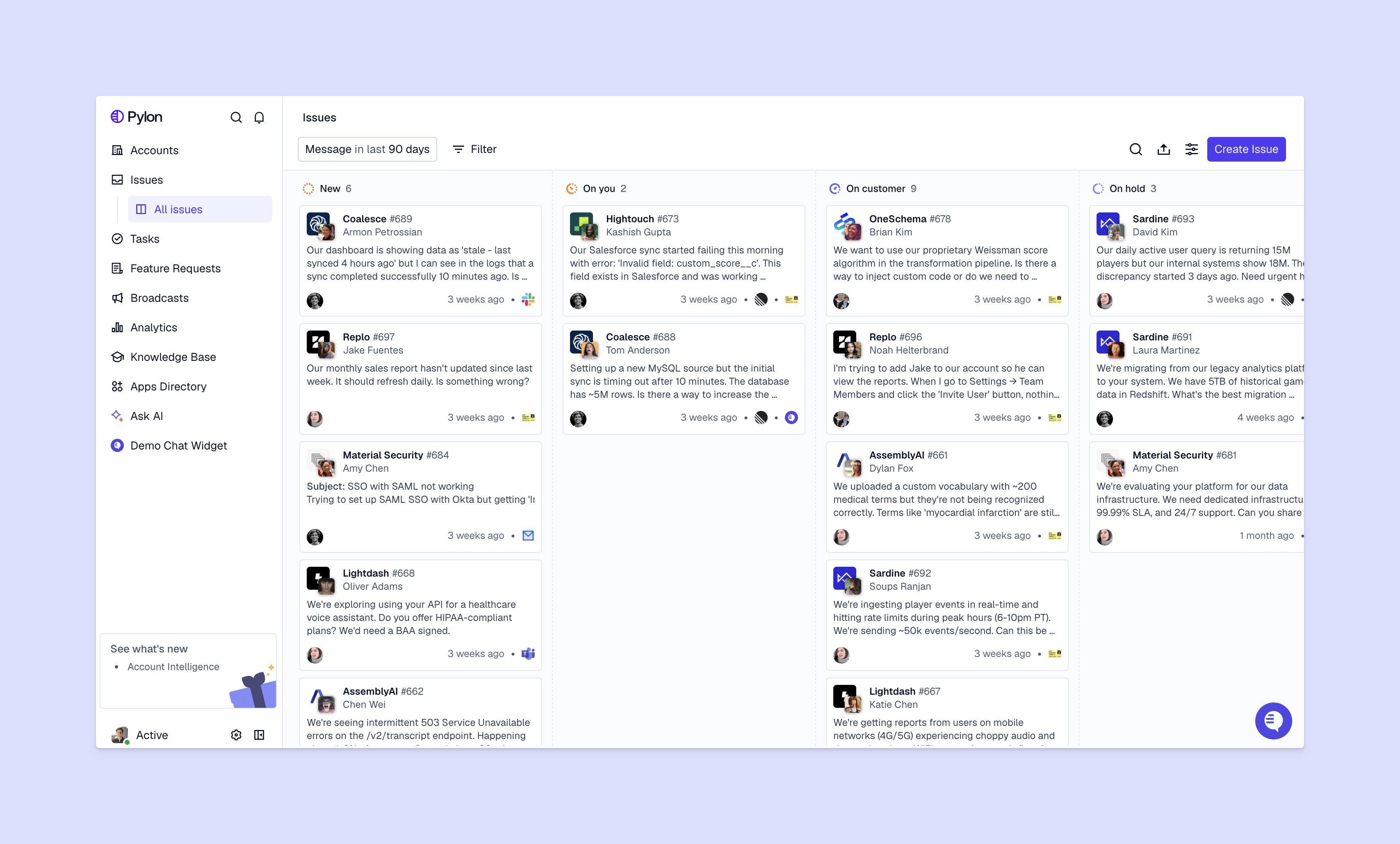
Pylon is the modern B2B support platform that offers true omnichannel support across Slack, Teams, email, chat, ticket forms, and more. Our AI Agents and Assistants automate busywork and reduce response times. Plus, with Account Intelligence that unifies scattered customer signals to calculate health scores and identify churn risk, we're built for customer success at scale.
Customer centricity is a business strategy that prioritizes the customer's needs and experiences in every decision, aiming to build long-term loyalty and satisfaction.
It drives profitability by increasing customer retention and lifetime value. Happy customers become brand advocates, reducing acquisition costs and ensuring competitive growth.
Organizations need to break down data silos, foster a culture of empathy, and align employee incentives with customer success metrics rather than just short-term sales.
They use data-driven insights to personalize services, maintain transparent communication, and encourage teams to solve customer problems proactively and creatively.
Pylon Workforce Management is available now. See it in action with a live demo.