
B2B customer experience (CX) is made up of all the interactions customers have with your company, from major renewal discussions to everyday support interactions. When customers leave the conversation satisfied with your team and product, you build trust and lay strong foundations for long-term partnerships.
The idea of an effortless customer experience came from CX expert Matthew Dixon in his 2013 book The Effortless Experience: Conquering the New Battleground for Customer Loyalty. Dixon’s main insight was that, even though a lot of companies aim to surprise and delight their customers, what really drives relationships is consistent and seamless support.
In this post, we’ll cover what an effortless customer experience looks like and how you can make it happen.
CX is effortless when it’s easy for customers to use your service and get help when they need it. Here’s what that looks like:
These principles are a good foundation for a strong customer experience strategy.
Customer experience improvement starts with smooth onboarding. This is the stage when customers often have the most questions and run into the most problems. When you offer quality support that makes onboarding as easy as possible, you get the CX off to a great start.
Instead of the conventional customer support approach — waiting for people to contact you with problems — be proactive. Anticipate customer needs and work to solve problems before they come up. Although it helps to answer questions quickly, it’s even better for customers when they don’t need to contact you at all.
When customers reach out, try to fix as many issues as possible in the first call or message. To do that, give your support team all the information and tools they need to deal with a range of problems, and empower them to make decisions on the spot. Some complex issues rely on input from other teams, but it’s easier for the customer if they don’t have to wait for follow-ups.
Let customers contact you on their preferred tools, and give them reliable support wherever they reach out. Pylon’s omnichannel support platform makes it easy to work with customers through several different channels (Slack, Teams, WhatsApp, email, and more) and still create a consistent CX.
When you create a personalized CX, you help customers easily use your product and meet their goals. Use AI to give targeted, usage-based recommendations or send messages specific to where customers are at in their journeys. This personalized support shows customers you care about their needs and gets them the right kind of help fast.
To create an effortless CX, start with customer journey mapping. You can use the following tips to minimize customer effort in each important phase.
At the beginning of the customer journey, help people find all the details they need to convert and feel confident about that decision. Make your website and knowledge base intuitive, share FAQs, and give easy access to team members who can answer questions.
It’s also important that the purchase process is as frictionless as possible. Post transparent pricing information and feature details on your website, and create a simple sign-up process customers can follow without needing your team’s help.
After a customer signs up, they’ll need smooth and clear onboarding. Reach out right away to share tips for using the product, helpful resources like documentation, and support details.
Then offer proactive post-sales support that anticipates and meets customer needs. While customers often need less help as they stay with your brand and get to know your product, try to foresee possible pain points and offer personalized suggestions to keep customer satisfaction high.
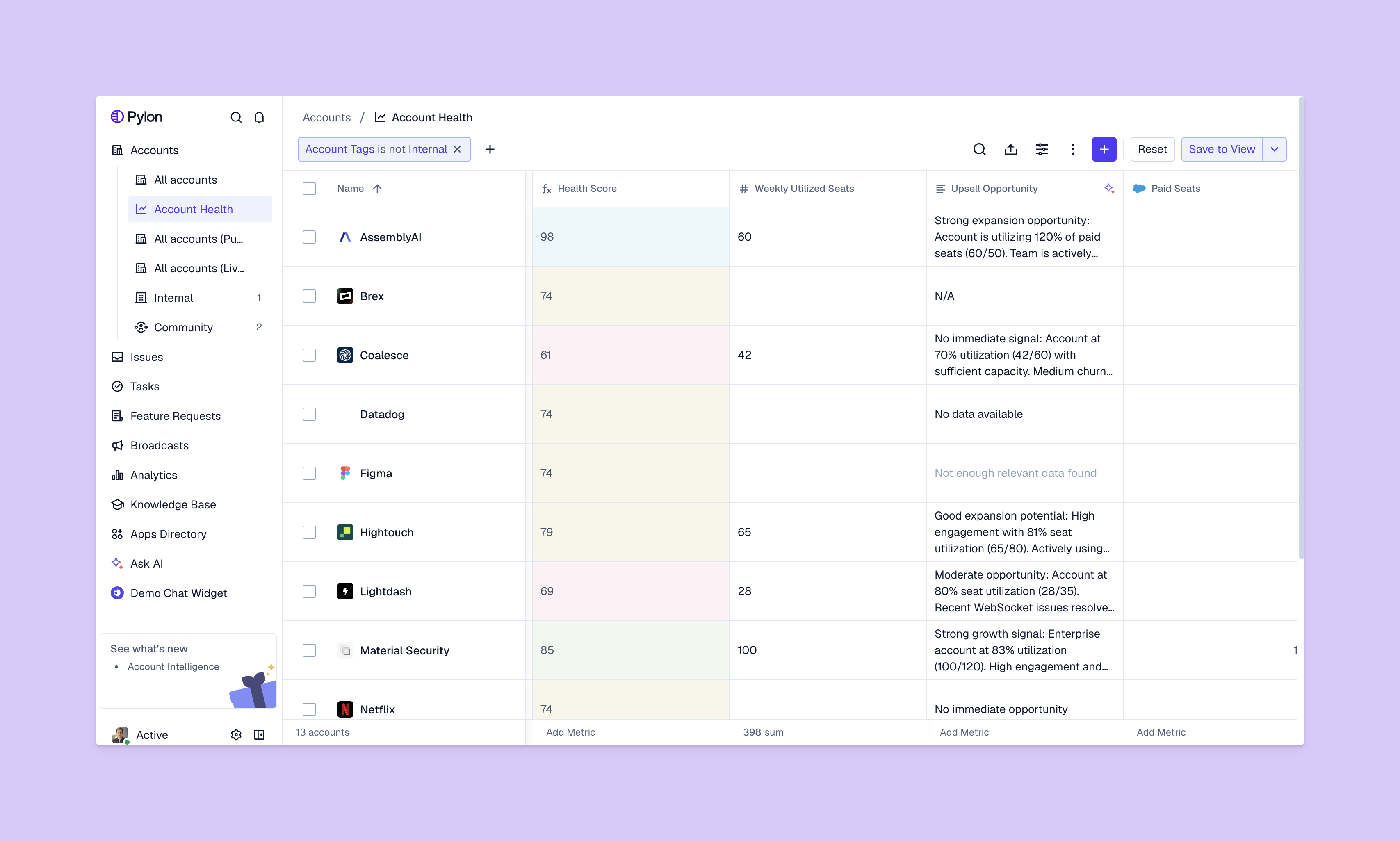
In a positive feedback loop, your team learns from each customer interaction and uses feedback to improve both the product and support. For example, you can use sentiment analysis to find out how customers feel about the current CX and plan improvements that make a real difference. Pylon’s Account Intelligence helps you understand what customers want, find accounts at risk of churn, and create automated workflows that respond to good and bad signals.

An effortless CX strategy supports long-term customer success, which has plenty of positive impacts like:
When you make it easy for customers to work with your company, you build trust and stand out from the competition. To make CX effortless, your support team needs to be prompt, helpful, proactive, and consistent in every interaction. That can be challenging, but a powerful customer support platform can help you deliver that experience day to day.
Pylon is the modern B2B support platform that offers true omnichannel support across Slack, Teams, email, chat, ticket forms, and more. Our AI Agents and Assistants automate busywork and reduce response times. Plus, with Account Intelligence that unifies scattered customer signals to calculate health scores and identify churn risk, we're built for customer success at scale.
An effortless customer experience minimizes friction, making interactions simple and quick. It prioritizes self-service and proactive support to reduce the work customers have to do to solve problems.
Frictionless CX removes obstacles that cause "drag" in the user journey, such as slow onboarding, complex implementation, or redundant steps like repeating information across departments. By streamlining these specific bottlenecks, businesses ensure customers transition seamlessly from discovery to purchase and support, without the interruptions that typically lead to frustration or churn.
Pylon Workforce Management is available now. See it in action with a live demo.