
In B2B, customer retention means making sure existing accounts are active and keep renewing.
But that outcome depends on the work customer success teams do every day. How you handle support issues and respond to changing needs determines whether customers renew.
The following guide offers clear examples of customer retention, practical strategies you can run with your team, and metrics that help you spot risk before it shows up at renewal time.
Customer retention measures how many customers continue to use your product or service. This includes contract renewals and buying new add-ons and upgrades, but also includes inactive accounts who haven’t switched to a competitor. For customer success leaders, account retention provides an early look into whether onboarding, support, and product adoption are working.
In B2B, retaining existing accounts costs less than acquiring new ones. When relationships last and customers renew, you spend fewer resources trying to replace lost revenue and more time improving the product and customer experience for everyone’s benefit. In small companies, high customer retention means steadier revenue, while larger companies build more trust and a stronger reputation with low churn rates.
Increasing customer retention also gives you the opportunity to collect higher-quality feedback since the accounts have spent enough time with your offering to understand what actually works and what doesn’t.
Metrics help you define customer retention in measurable terms. Use a small, tailored set of metrics, like the ones below, that give your team enough insight to make informed decisions.
Formula: [(customers at end of period - new customers during the period) ÷ customers at start of period] x 100
Best use: Tracking overall account retention by quarter or year and comparing retention by segment.
Formula: (customers lost during the period ÷ customers at start of period) x 100
Best use: Identifying customer support trends and which customer groups leave more often.
Formula: average revenue per account x average account lifespan
Best use: Deciding where to invest time and resources, and identifying high-value accounts.
Formula: (customers who renew or return ÷ total customers) x 100
Best use: Understanding how often accounts continue their relationship with your product.
Formula: total number of purchases ÷ total number of customers
Best use: Calculating repeat product use instead of one-off purchases in B2B settings.
The best strategies for customer retention build a system that helps you understand customer needs and quickly respond when problems come up. Here are some actions your team can take to keep customers happy and engaged.
Clear procedures and fast responses keep customers calm. When an account flags an issue, they want to know who can fix it and what happens next. Start by restating the problem in plain language so the customer knows you understand the situation. Then explain what you’re doing to resolve it and when they should expect an update.
AI assistants can draft the first reply and help with issue routing while your team problem-solves. Once you solve the problem, explain what changed and share any follow-up steps. Clear ownership and managing response times shrink customer uncertainty, which typically leads to customer churn more than the issue itself.
Respond to account questions based on each customer’s setup and prior conversations instead of offering generic guidance. This is easier when customer support and customer success teams share the same account information. When accounts don’t have to repeat themselves, support feels more relevant and trustworthy over time.
B2B customers don’t want to change their workflow just to ask for help. Some prefer email, while others work primarily in Slack or Teams. Omnichannel support, usually paired with AI ticketing systems, lets customers reach you from their preferred platform while your team keeps all conversations in the same place.
With omnichannel support, everyone who needs to can view account history. When an account follows up weeks later, anyone on your team can pick up where the last conversation ended — even if it’s the first time they’re talking to the customer.
When your product or service fits customers’ needs, they’re more likely to recommend it to their network. Formal referral programs can motivate them to make those recommendations, and rewarding them for doing so reinforces the process.
A well-designed referral program makes it clear who could benefit from your product or service and makes it easy for accounts to introduce you to others. Offering something like a $10 discount for both accounts or a free month of your service can be enough to strengthen your customers’ dedication to your company.
Retention improves when feedback leads to action. You can collect feedback through short surveys, regular check-ins, or follow-up questions after an issue is resolved, but the important part is what happens next.
After getting feedback, tag common themes and share them with the right teams. Let customers know when their input leads to changes, so they feel listened to and see their feedback makes a difference.
An employee’s experience affects customer retention more than you might expect. Accounts notice when internal teams stay aligned. Fewer handoffs (with lower team turnover) and more consistent follow-ups come from team members that have the same information and necessary customer success tools to complete their tasks.
Customer communities give accounts another way to learn and problem-solve that doesn’t rely on your team. User groups and spaces for discussion like Slack channels let customers share ideas and tips with peers. Having a community also supports long-term account retention by keeping accounts engaged between renewals.

Strong retention programs reduce friction and help customers succeed. In B2B, that usually appears in the ways companies support learning, share context, and respond when something goes wrong.
Salesforce’s Trailblazer ecosystem shows how community education can support long-term customer engagement. By partnering with organizations like the United States Department of Veterans Affairs, Salesforce uses their Trailhead and Trailblazer programs to help veterans build career skills through fellowships and peer learning. These communities keep participants engaged with Salesforce after their initial training by tying their product to something personally impactful.
On the other hand, Slack illustrates how structured support helps customers stay active. Instead of only using formal training, accounts can learn more about the platform through helpful text and clear walk-throughs as they use channels and integrations related to their work. A recent analysis shows that organizations using Slack report faster issue resolution and shorter onboarding time for new hires.
Companies can also make getting help easier by keeping conversation history and account context accessible. For example, Pylon helped Sardine consolidate their support operations into a single workspace while scaling to support 600% company growth. In five days, Sardine was able to centralize over 400 customer channels into Pylon’s all-in-one support platform. This shift also meant Sardine’s B2B and B2C workflows across seven teams were all visible, offering stronger collaboration and more predictable support over time.
Customer retention depends on post-sales teams. When they share account information and respond warmly and consistently, customers can keep getting value out of the product and develop more trust in your team.
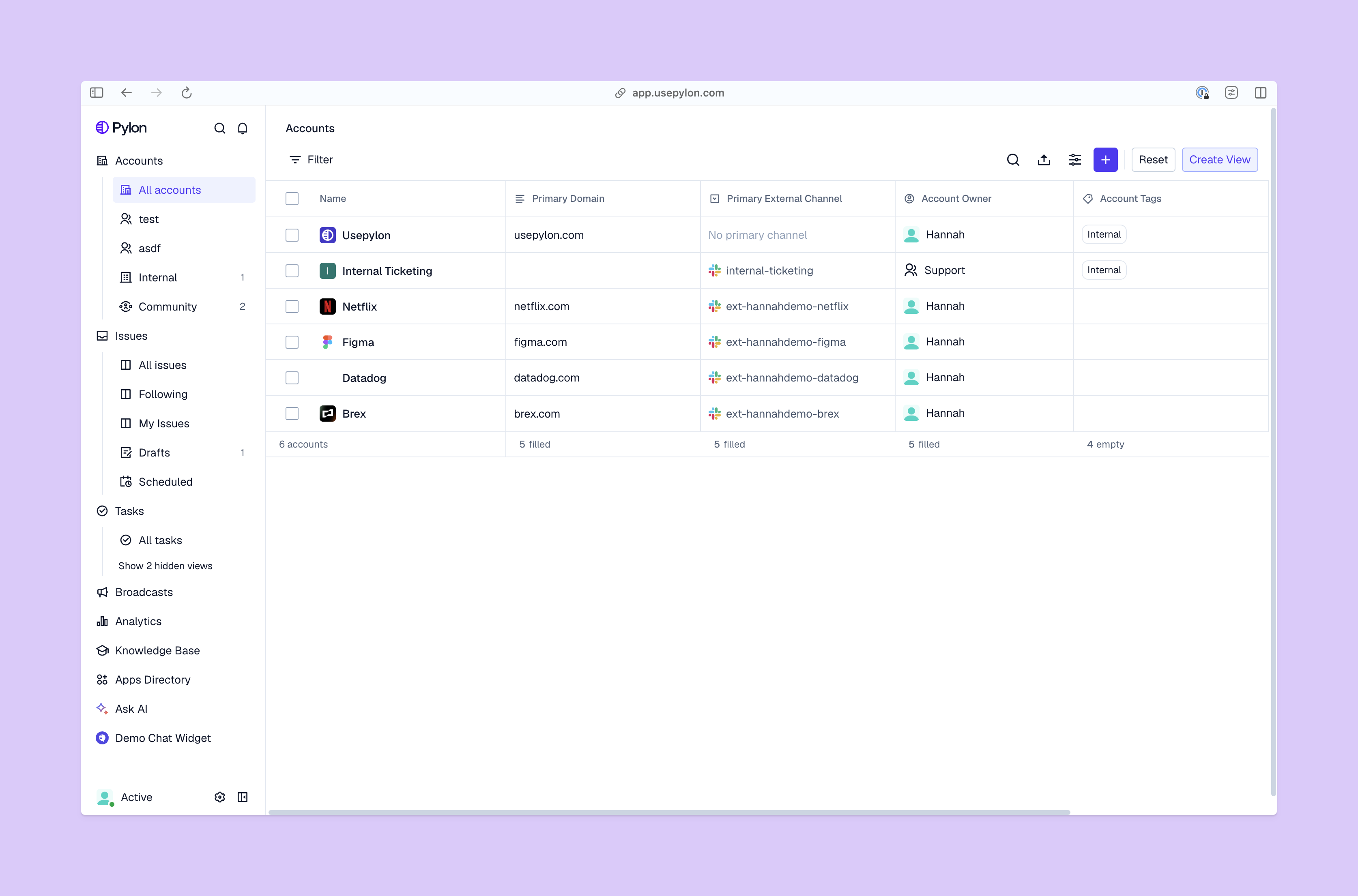
Pylon is the modern B2B support platform that offers true omnichannel support across Slack, Teams, email, chat, ticket forms, and more. Our AI Agents and Assistants automate busywork and reduce response times. Plus, with Account Intelligence that unifies scattered customer signals to calculate health scores and identify churn risk, we're built for customer success at scale.
Customer retention is a company’s ability to keep its existing customers over time, so they return or stay engaged instead of leaving.
You measure customer retention by using the retention rate: [(customers at end of period - new customers during that period) ÷ customers at start] x 100%
B2B companies build trust by delivering great customer interactions, personalizing support interactions, and maintaining consistent support across touchpoints.
Common mistakes include neglecting retention efforts in favor of acquisition, failing to track customer behavior, and providing poor or inconsistent customer support.
Pylon Workforce Management is available now. See it in action with a live demo.