
When support requests drop into a single, unorganized queue, it becomes a massive bottleneck to manually assign them. This hands-on method breaks service level agreements (SLA), burns out your support teams, and slows down response times. Your team spends the first hour of the day just figuring out what to work on.
Customer support triage is the system that brings order to your queue. This structure ensures the right issues reach the right people and turns a chaotic inbox into a predictable workflow.
In this guide, learn how to organize customer support workflows and which support automation tools let you triage tickets at scale.
Customer support triage is a process that structures how to review support requests, categorize them by type and urgency, and route them to the appropriate team member. For most modern teams, automatic support software handles this work.
Teams address the most serious problems first in triage support, meaning routine requests move through a standard queue at a normal pace. This practice prioritizes tickets at intake, which eliminates guesswork and lets teams solve critical issues first.
Quality and speed are difficult to balance, but they’re critical to continued success. According to Salesforce, 88% of customers say good service makes them more likely to purchase from the same company again, and 76% of service organizations expect case volumes to increase in the year ahead.
In B2B support, the stakes are even higher than in consumer support. A misrouted ticket from a $500,000 ARR account is an immediate, large-scale churn risk. When B2B teams operate without a formal triage process, the entire operation suffers.
Here are five reasons why triage is essential:
An effective triage process is a series of automations that happen the moment someone creates a ticket. Here’s how the process breaks down.
First, the software labels each request by type at intake. Common categories include bug reports, feature requests, and account access issues. Accurate organization ensures the ticket routes to the right team without tedious back-and-forth.
Teams don’t have to treat every ticket as a fire to extinguish. When software scores by urgency, it assigns the ticket a level based on specific factors like customer tier and number of affected users. A triage platform flags critical issues instantly, so they never sit unnoticed in a general queue.
Once a ticket has a priority score, it needs a deadline. SLA assignment maps each ticket’s priority to a target. This ensures both your support team and managers know exactly when a response is due, so immediate needs don’t slip through the cracks.
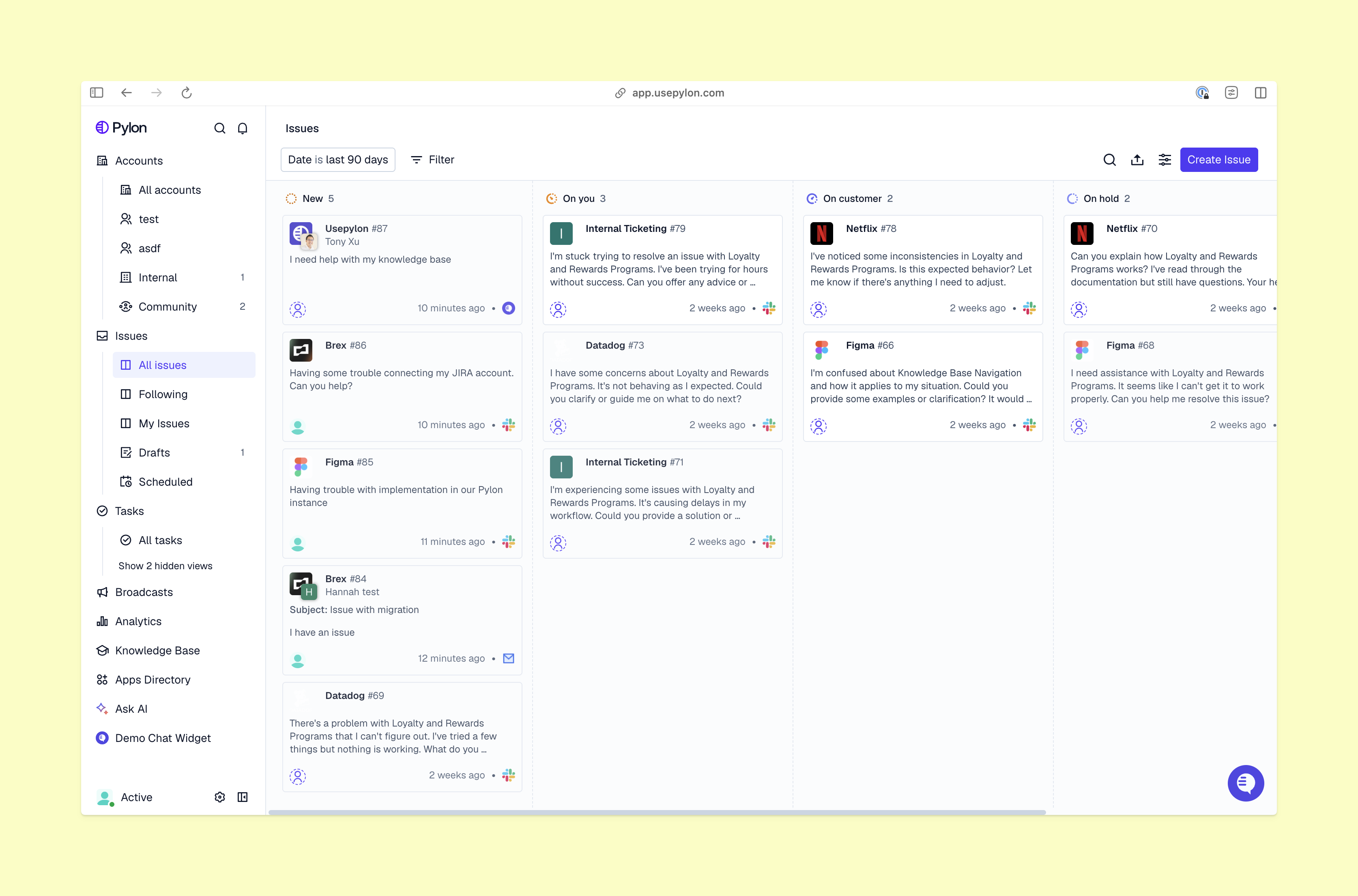
This directs tickets to the right queue or team based on the category, priority, and required skills. A smart system handles this automatically via pre-approved routes — it can escalate VIP tickets directly to senior team members and bypass the frontline queue entirely. For teams with omnichannel processes, tools like Pylon route tickets across every company channel. For example, a ticket may start in a support portal, and the system moves it to Slack after it confirms type and priority.
Your support team needs access to the right information as soon as a ticket lands in their inbox. Teammates may need account details, customer context, and product guides. Triage systems add relevant details automatically. This lets teams act immediately, so they don’t have to investigate the customer’s background before they troubleshoot.
.png)
Triage connects to the tiered support structures commonly used in B2B environments. Tiered support organizes operations by complexity, and triage automatically routes tickets to the correct tier from the start. Here are the most common support tiers triage uses:
When triage works correctly, it prevents costly reassignments and escalation delays. For instance, it ensures a basic password reset never reaches a Tier 2 teammate and a critical API failure never gets stuck in a Tier 1 queue.
Because most issues are basic, a well-structured triage process should keep the majority of tickets at Tier 1 and Tier 0. This ensures generalists and AI agents handle most of the legwork, which reduces resolution time and costs.
Companies need a structured approach to build a reliable, scalable system. Follow these steps to create or improve a triage system.
Map every channel where tickets arrive, like Slack channels and web forms. Identify where requests currently get stuck, misrouted, or lost. You can’t fix the system until you know where the leaks are.
Establish a standard taxonomy for ticket types that reflects your specific product or customer base. Keep the list concise — if you have fifty categories, your team may confuse them. Make sure everyone understands the definitions and uses the same labels consistently. Your ticket categories set the foundation for prioritization.
This framework determines the order your team and AI agents answer tickets. Tie priority directly to business impact, not just glitch severity or submission order. Define what constitutes a P0 (critical outage) versus a P3 (minor feature request). Document these definitions so the entire team evaluates urgency with the same standard.
Configure the route logic that sends each category to the right queue or team member. Consider the account tier, issue type, and necessary expertise. For instance, if a ticket comes from an enterprise client, the rules should route it to their dedicated success manager.
Manual triage is only possible with small teams and ticket volumes. As a customer base grows, you’ll need AI ticketing systems to categorize, score, and route efficiently. Modern customer support automation platforms like Pylon read the intent of a message and route it instantly, without human input. That way, your support team won’t pass messages back and forth. They can focus their energy on high-quality ticket resolution and rapport.
Your triage ticket process needs regular performance audits — about once a month as a general recommendation. Sometimes the rules misfire, and product changes and company growth make old categories obsolete. Track misrouted tickets, SLA breaches, and reassignment rates to identify where your system needs adjustment.
A structured triage process doesn’t waste time. This organization ensures every ticket reaches the right resource, prevents customer friction, and eases your team’s burden. If you need a platform capable of complex, efficient triage workflows, give Pylon a try.
Pylon is the modern B2B support platform that offers true omnichannel support across Slack, Teams, email, chat, ticket forms, and more. Our AI Agents and Assistants automate busywork and reduce response times. Plus, with Account Intelligence that unifies scattered customer signals to calculate health scores and identify churn risk, we're built for customer success at scale.
Triage is the full intake process. It categorizes, scores, and prioritizes a ticket before it goes anywhere. Routing is one step within triage: software or teammates send a ticket to the right agent or queue based on those decisions.
B2B teams should prioritize based on business impact, account tier, number of affected users, and downtime risk, not just submission order. If people assign P0–P3 priority levels with clear SLA targets, it ensures urgent issues are never buried in the general queue.
AI automates the most time-intensive parts of triage. It reads ticket content, identifies intent and urgency, and tags by category. Then it scores priority before it routes this issue to the right team.
Tiered support organizes agents into levels (tier 0–3) based on the complexity of issues they handle. Triage is the process that determines which tier should handle each ticket, and it makes tiered support work in practice.
Pylon Workforce Management is available now. See it in action with a live demo.