
All Articles
Industry

Empower your team with the best free knowledge base software

Discover the best free knowledge base software to streamline your support. Compare top-rated free tools and see how to scale your self-service with Pylon.

Robert Eng
May 8, 2026

Knowledge base software gives support teams a central hub to store, organize, and share information. It’s a useful way for both employees and customers to access documentation like policies and product manuals, which leads to faster response times and higher satisfaction.

A free or open-source knowledge base makes basic self-service options available to customers and lets them answer their own questions. For small companies and startups, this is a quick way to reduce ticket volume and support costs. However, as operations scale, company needs become more complex, and tickets multiply, organizations often move toward professional B2B solutions. Integrated software like Pylon unifies data across platforms, which opens the door to omnichannel connection and instant AI issue resolution.

In this article, we’ll explore the best free knowledge base software, common types, and top advantages. Plus, learn how advanced solutions like Pylon go beyond the basics to strengthen your support.
Key features to look for in free documentation tools

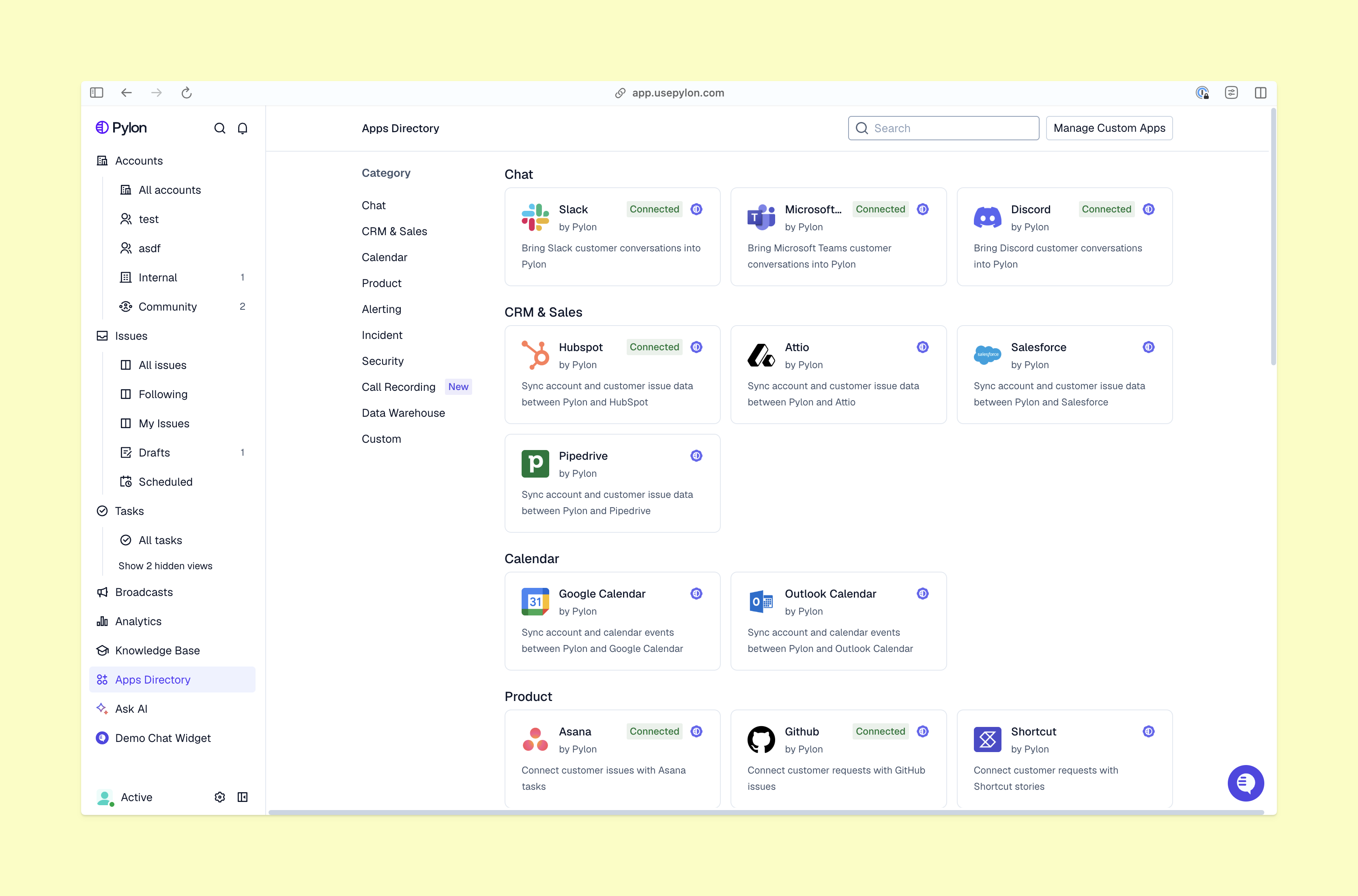
Chat integrations view from Pylon

Not all tools are created equally. Here are the main functions to look for in a free online knowledge base:

  • Search and indexing lets customers and team members quickly and efficiently find documentation. The best knowledge base tools should allow users to tag and categorize information, then query keywords to find relevant articles.
  • Content editor features let teams build and update documentation easily. Consider tools with simple templates and intuitive edit interfaces. If it’s difficult to add information, people will avoid the knowledge base, and it’ll quickly become stale.
  • Collaboration and version control allow multiple contributors to work on a single document and maintain a clear accountability trail. A full version history of each article lets you track changes and ensure people see accurate, up-to-date information.
  • AI functionality saves time and gives quicker answers to customers, which supports human teams. Look for a knowledge base that comes with AI features, like agents that route issues and draft messages.
  • Export capabilities let you migrate documentation to new systems. As your company scales, you may outgrow free knowledge base software, and quick exports transfer details so you don’t have to start from scratch.

Top-rated options for the free internal knowledge base software

Here’s a roundup of the best free knowledge base platforms for B2B teams, sorted by category.

Open-source solutions

Open-source platforms (often called wikis) are self-hostable solutions. Because of their public, customizable code, they offer plenty of flexibility and personalization versus managed tools. But because they’re self-hosted, your team is in charge of security and maintenance, which means you’ll need technical know-how and engineer expertise to get the most out of them.

Here are some top options in this category:

  • XWiki. This open-source knowledge base is intended for large businesses and enterprises. XWiki offers complex features like version history, RBAC controls, and over 900 extensions. While it provides self-hosted flexibility, it can be complex to customize and relies on developer resources.
  • DokuWiki. This simple wiki software isn’t specifically built for professional use, though some companies use it to build knowledge bases. DokuWiki provides a straightforward interface, security features, and access controls.
  • BookStack. This knowledge base tool features a simple Markdown editor, unlimited users, and search capabilities. BookStack also includes a WYSIWYG editor, which displays content in its final, presentable form as you write.
  • MediaWiki. This is the technology that powers Wikipedia, so it’s only natural that it offers security and scalability features. MediaWiki includes a WYSIWYG editor for simple creation and updates.

Freemium SaaS platforms

Many SaaS platforms offer limited-tier free plans with a straightforward path to upgrade. These are hosted knowledge bases, so you don’t have to worry about updates and maintenance. But they usually come with usage limits and can be costly if you exceed them.

Here are some freemium options to consider:

  • Flowlu. Although its free plan is limited to just two users, Flowlu does offer a freemium knowledge base. It provides simple automation, access controls, and team collaboration features.
  • Confluence. This software provides a free plan, though it’s limited to ten users and 2GB of storage. Confluence includes AI features and integrates natively with other Atlassian products.
  • Document360. This is another enterprise SaaS knowledge base that offers a free trial version. Document360 includes analytics, 30+ integrations, and API support.

All-in-one productivity suites

Here are a couple of platforms that include a knowledge base alongside project management capabilities:

  • Lark. This team collaboration platform integrates its knowledge base software with productivity and communication apps. It offers features like meeting minute recordings, media embeds, and AI-powered search. Lark is free for up to 20 users, with paid plans for larger teams.
  • Notion. With its block-based database structure, Notion lets you create a knowledge base via a simple UI. It offers a simple learning curve and templates for different hubs and pages. There are paid plans for businesses, but the free individual plan lets you try out its features before you commit.

The Pylon advantage

Although free tools are useful at the beginning, professional knowledge base solutions offer sophisticated features and seamless integrations that make it easy to scale. 

Pylon provides a robust, searchable knowledge base. Control permissions, sort content, and work collaboratively on content. Our intuitive interface and templates make it quick and easy to get your knowledge base off the ground.

Go beyond a standard database with Pylon’s AI Knowledge Management. AI automatically identifies knowledge gaps based on real customer conversations, and then generates relevant articles and translates them into 50+ languages. This lets teams create a functional, multilingual knowledge base with little effort. 

AI-powered tools save time and keep your knowledge base comprehensive and up-to-date. Documentation becomes more useful for customers, easier for your team to maintain, and a reliable source of truth for AI support agents.

Benefits of free knowledge bases

Here are the advantages to expect when you use a B2B knowledge base system:
  • Improved customer self-service. A knowledge base lets customers find answers at any time — no need to file a ticket and wait for office hours. This reduces ticket volume and support costs for your team, and it benefits customers, too — 61% of customers prefer to solve simple issues with self-service resources over live teammates.
  • Enhanced internal productivity. When you use internal knowledge base software, you reduce the time spent on documentation search. Team members have company policies, technical specs, and troubleshooting guides at their fingertips. This lets them efficiently answer customer questions and resolve issues. 
  • Standardized information across teams. Knowledge bases are a central repository for key documentation and help center articles. When everyone in the company works from the same source of truth, answers and processes maintain high-quality consistency.

How to choose the right free software for your specific needs

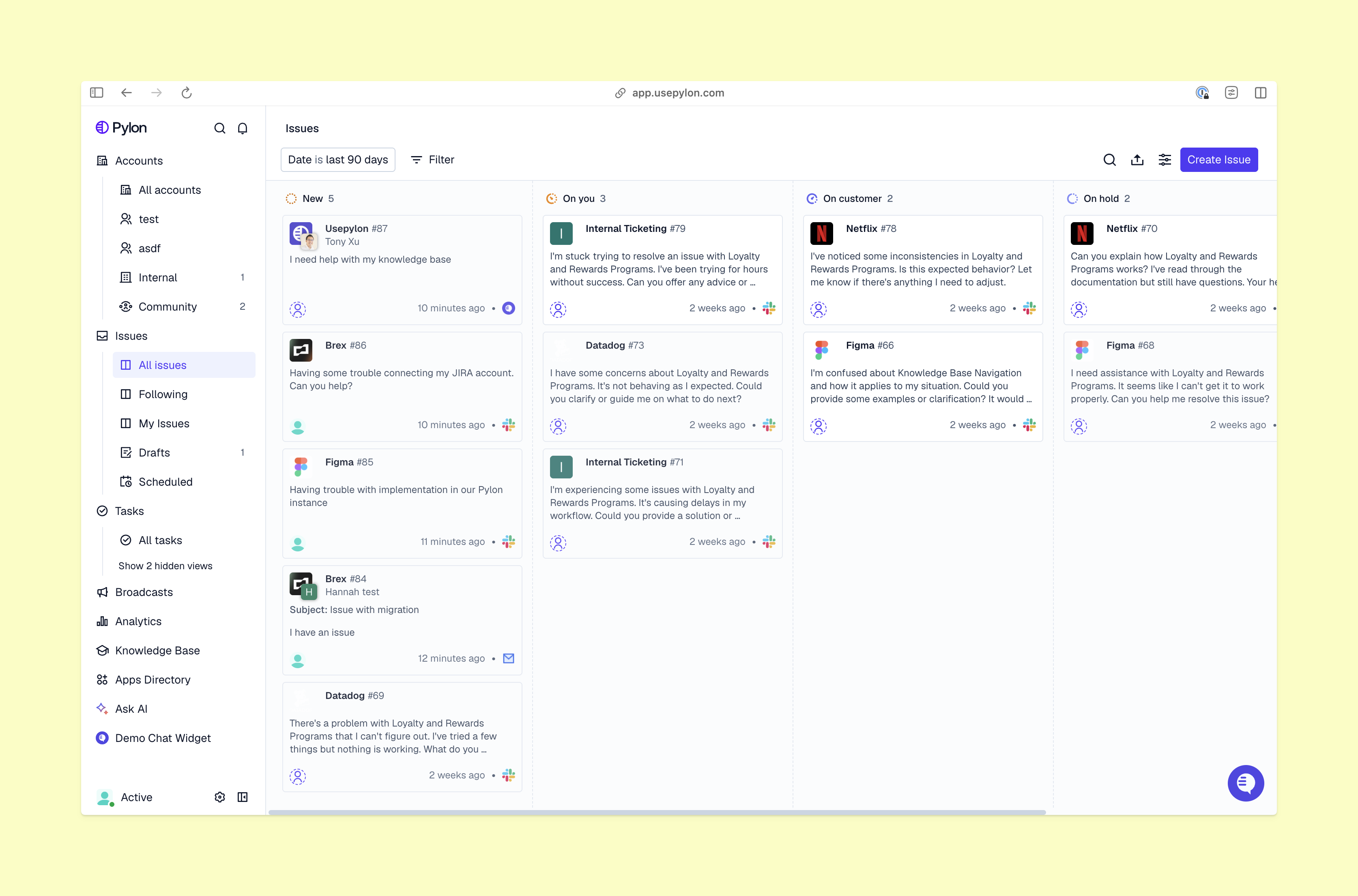
Issue view from Pylon

When you consider knowledge base software, think about which fits your team and its workflows.

Look for growth potential in any software you consider. For example, open-source tools sometimes have limitations that become clear at scale. A small team may not struggle to manage hands-on updates, but as operations grow, they might simply get too busy. Free versions of premium tools have challenges, too. When a company grows and surpasses user limits, they may face an expensive and complicated migration. 

Ease of adoption is another key consideration. Free or open-source tools may not have the intuitive interfaces and comprehensive guidance you get with professional software. If you have to spend extensive time and resources so your team can use the tool, it could diminish the cost savings from the free software.

Check integrations, too. You and your customers likely use apps like Slack and Teams to communicate, and connections to these platforms greatly reduce tool friction. If your knowledge base is just a standalone tool, users may struggle to use it or avoid it entirely. People should be able to search and retrieve information without an app switch.

Scale support beyond free documentation

Free knowledge base software is fine at the start, but it’s rarely the final choice for B2B support teams. Your goal is to create a seamless customer experience, and the right tools are a worthwhile investment toward it. Premium knowledge base solutions offer advanced features, more integrations, and AI functionality to make it easy to create and maintain a useful database.

Pylon is the modern B2B support platform that offers true omnichannel support across Slack, Teams, email, chat, ticket forms, and more. Our AI Agents and Assistants automate busywork and reduce response times. Plus, with Account Intelligence that unifies scattered customer signals to calculate health scores and identify churn risk, we're built for customer success at scale.

Book a demo

FAQ

Is open-source knowledge base software actually free? 

The software code itself is usually free to download and modify, but you will still need to pay for your own hosting, security, and the developer time required for maintenance. 

What are the typical limitations of freemium knowledge base plans? 

Most free tiers limit the number of “users” or contributors, cap the total number of articles you can publish, or prevent a custom domain.

Can I migrate my data if I outgrow my free software? 

Most professional tools allow for data exports (like CSV or HTML), but migration between different platforms can be complex. Always check the “Export” functionality before you commit to a tool.

Does a knowledge base help with SEO? 

Yes, public-facing knowledge bases help index your site for common long-tail search queries. This potentially brings in new traffic and answers current customer questions.

Explore more

No items found.

Explore more

Spotlights

Spotlight: Amber Monroe @ Paradigm Senior Services

Robert Eng
April 10, 2025
Blog post
Industry

Best knowledge base article templates for support teams

Pylon Team
January 30, 2026
Blog post
Industry

15 ways AI is reshaping customer experience in 2026

Pylon Team
February 6, 2026
Blog post
Releases

Product Launch: Conversational Ticketing

Advith Chelikani
December 3, 2023
Blog post
Guides

How to build a customer support team for SaaS startups

Dan Guo
February 23, 2026
Blog post
Spotlights

Spotlight: Petro Perselis @ HackTheBox

Advith Chelikani
April 22, 2025
Blog post
Releases

Product Launch: Triggers

Advith Chelikani
January 9, 2024
Blog post
Industry

What is a Shared Inbox? Compare Shared Inbox Software Tools

Franz Heller
July 2, 2025
Blog post
Team

Aashish Kapur, Software Engineer

Advith Chelikani
August 26, 2024
Blog post