
Every company wants strong relationships with happy customers. Each positive experience you have builds customer satisfaction and trust, but it can take weeks or months to establish that trust. With consistent effort, strong customer relationships can lead to long-term company success.
In this article, we’ll explain how to deliver amazing interactions with customers every time. We’ll show you examples of great interactions and how to deliver them consistently across channels.
According to Salesforce’s customer support surveys, most customers reaching out for support expect to instantly connect and interact with someone who understands their situation. They want to use digital tools to make everything they could do in person or on the phone easier to access. Self-serving small problems is important to them, too.
Speed and efficiency drive these interactions. Give customers a range of options, like knowledge bases and self-service tools for simple issues or an easy way to reach knowledgeable, empathetic team members for more in-depth support.
Customers often walk away from great interactions feeling confident, with either a solved problem or clear tools and next steps. Remind your team to approach these conversations with a positive, problem-solving attitude — and a little bit of personalization goes a long way.
It pays to put the customer first in every touchpoint, not just when they’re actively contacting you. Here are a few ways to prioritize what your customers want.
To figure out how to connect with customers, you first need to understand their needs and motivations. You can run a formal survey or schedule in-depth conversations with customers (ideally, you do both). Formal surveys can be more efficient, but nothing beats one-on-one conversations where customers feel heard.
No matter which method you choose, ask your customers what their biggest frustrations are, what they struggle with, and how you can help them solve their problems. Identify the tools they like and what gets in their way. Consider all the ways they interact with your team at different stages of the customer journey.
Once you understand what your customers want, your team needs to deliver it. To do that, you’ll have to create a customer-centric culture beyond the customer success and support teams.
Make sure everyone is aware of what good customer care is and the way you want them to interact with customers. Create incentives or recognition programs to reward team members for outstanding interactions. Excellent customer support needs different teams and departments to collaborate and resolve issues, so positive interactions are everyone’s responsibility — not just the person answering the call or writing the email.
Train other teams on what’s a good customer experience and how they can help build it.
No matter where or how customers choose to contact you, they should get helpful, prompt, and personalized responses. Here are a few ways to make your interactions consistent across channels.
Instead of making customers sign up for an unfamiliar ticketing system, let them communicate with you through their preferred channels. This expands your reach and means they’re more likely to actually get in touch when a problem comes up.
Start with a responsive AI ticketing system to keep track of everything. Your chosen internal platform should bring conversations from different channels together and allow you to easily manage them all in one place.
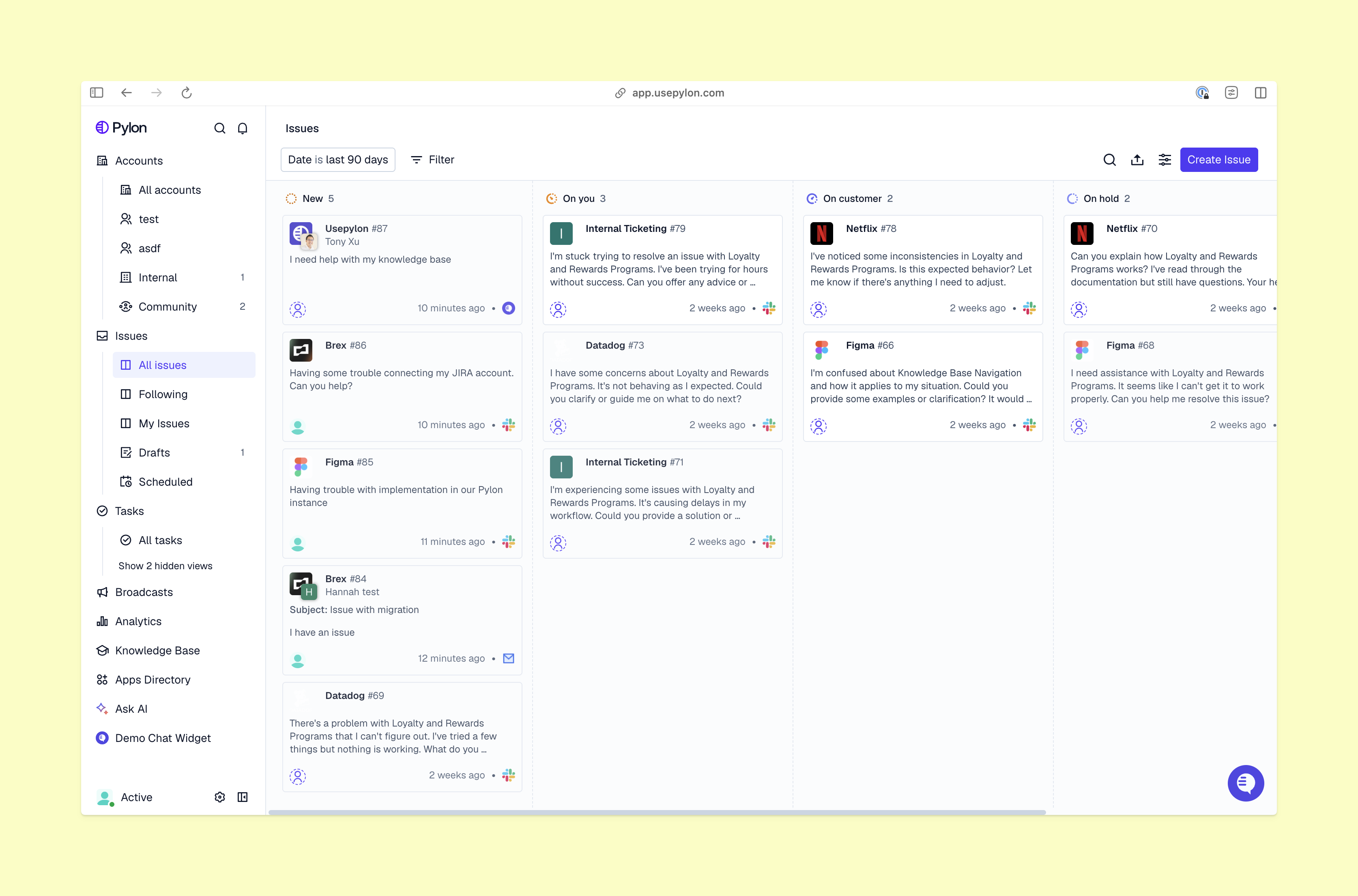
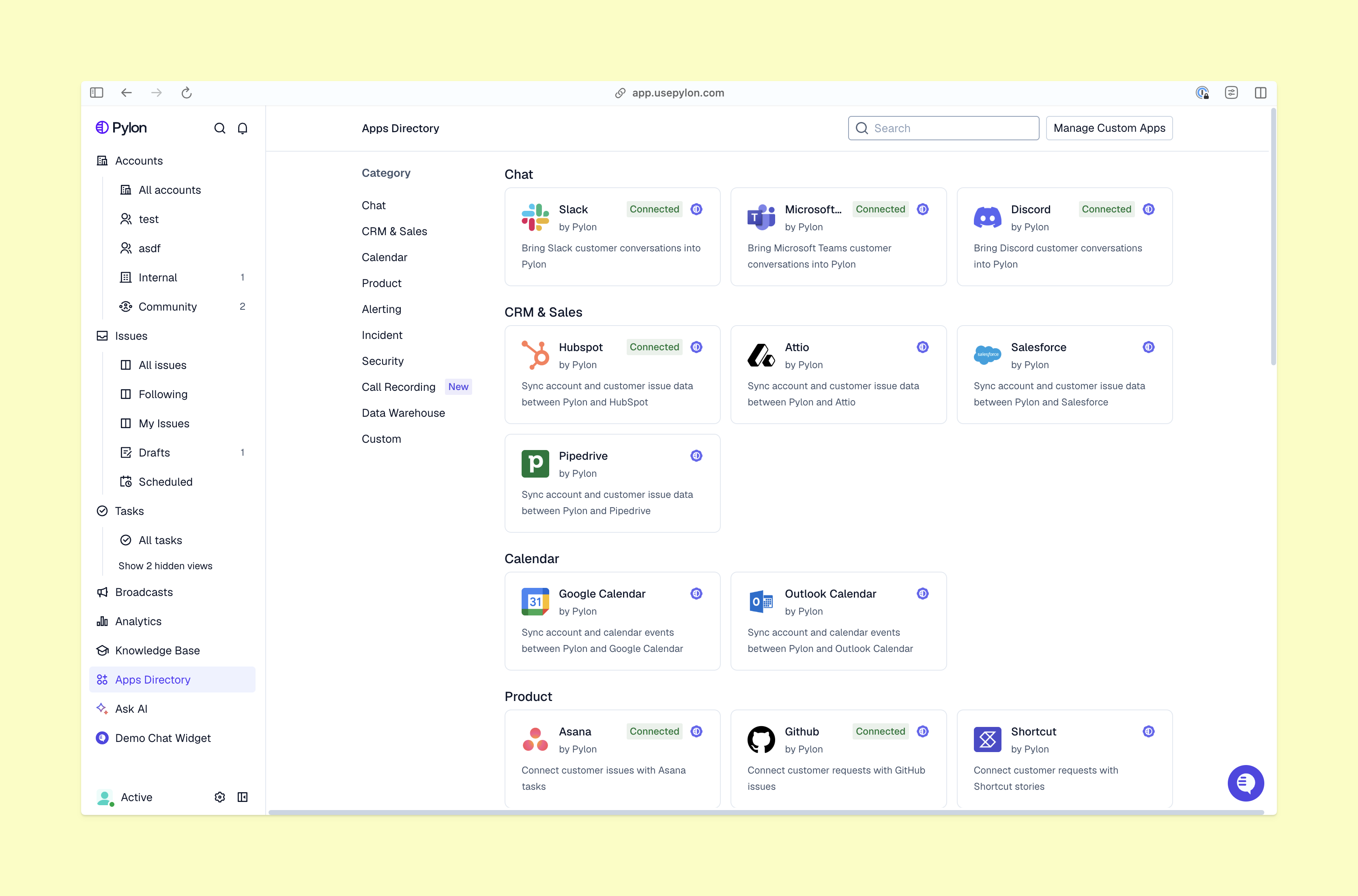
You can track all customer interactions from a single interface — whether they’re taking place in a Slack channel, email, a chat widget, or other online messaging systems — with Pylon’s omnichannel support. Your information stays organized, and the customer will enjoy a smooth experience on their favorite channel.
Customers expect personalized interactions, even when you’re handling large ticket volumes. Surveys show that 74% of customers expect stronger personalization when they give more data, so make smart use of that information to personalize at scale. Even if you’re sending mass communications, add more than just the name of each customer — try recommendations tailored to their previous interactions and preferences, for example.
Any good platform should give your team comprehensive information about each customer and their previous interactions, so they can make the interaction personal no matter who the customer’s talking to. AI agents draw on the same pool of information to deliver personalized answers beyond what traditional chatbots can do.
To help customers resolve issues and leave them with a great impression of your company, your team needs proper training.
Here are some tools and skills to share with your team for long-term success.
Your team members need to know how to listen carefully, show empathy, and respond in clear, non-technical language. They need to understand and respect the customer’s feelings while not letting stress or negative emotions cloud their ability to communicate clearly. And, above all, they need to know how to connect with customers and make the interaction feel truly personal.
A great customer experience makes problem-solving look effortless. This doesn’t just apply to the customer support team — every post-sales customer interaction is about solving some kind of problem.
To be helpful, your team will first need to know your products inside and out, and actively listen to customers to identify the problem or pain point. Customers may not always explicitly bring up the problem themselves, so teams need to accurately diagnose the root cause. Then, they need to be creative in resolving those issues and know how (and when) to reach out to other teams for more support.
Customer interactions won’t always go smoothly, no matter how prepared you are. Collect and use the following customer interaction analytics to see what’s working and adjust as needed.
The easiest way to find out if your customers are having great interactions with your team is just to ask. After every interaction, send a brief message asking the customer to rate their experience. You can also include a link to a more detailed survey if you’d like more feedback, but make sure it’s straightforward and simple to fill out.
Automations can also efficiently compile feedback. For example, Pylon’s Ask AI can summarize customer feedback from all your interactions to see how customers feel and what they’ve struggled with the most.
These customer success performance metrics are some of the best indicators that your interactions are going well:
Building a customer-centric mindset throughout your company makes for better customer interactions. And your team can really stand out from the rest by keeping track of each interaction across channels, then referring back to them in conversation — personalizing each support interaction.
Pylon is the modern B2B support platform that offers true omnichannel support across Slack, Teams, email, chat, ticket forms, and more. Our AI Agents and Assistants automate busywork and reduce response times. Plus, with Account Intelligence that unifies scattered customer signals to calculate health scores and identify churn risk, we're built for customer success at scale.
Improve responsiveness, listen actively, personalize messages, and resolve issues quickly to build trust and satisfaction.
A successful interaction meets customer needs, solves the problem, and leaves a positive lasting impression.
The most important thing is understanding customers’ actual needs by paying attention to what they tell you, showing empathy, asking helpful follow-ups, and communicating clear next steps.
Pylon Workforce Management is available now. See it in action with a live demo.