
Customer experience (CX) data shows how people feel after they interact with your product and team. You can collect this info directly through CX surveys and support conversations, and indirectly by monitoring metrics in your support software. Either way, you need to decide which CX metrics matter most — those are your key performance indicators (KPIs).
This guide explores the most common customer experience KPIs. We’ll also explain how to choose and track the right metrics, so you can catch issues early and make improvements.
CX KPIs are metrics that show how customers feel about your product and support. These measures help you understand customer satisfaction and trust, so you can find problems and predict which accounts are likely to renew or churn.
These KPIs differ from general business or support metrics, which tend to focus more on outcomes like growth, revenue, and usage volume. Instead, CX KPIs mainly measure how accounts feel about day-to-day interactions. Both are valuable — business metrics explain what happened from your company’s perspective, while CX KPIs show the customer’s side.
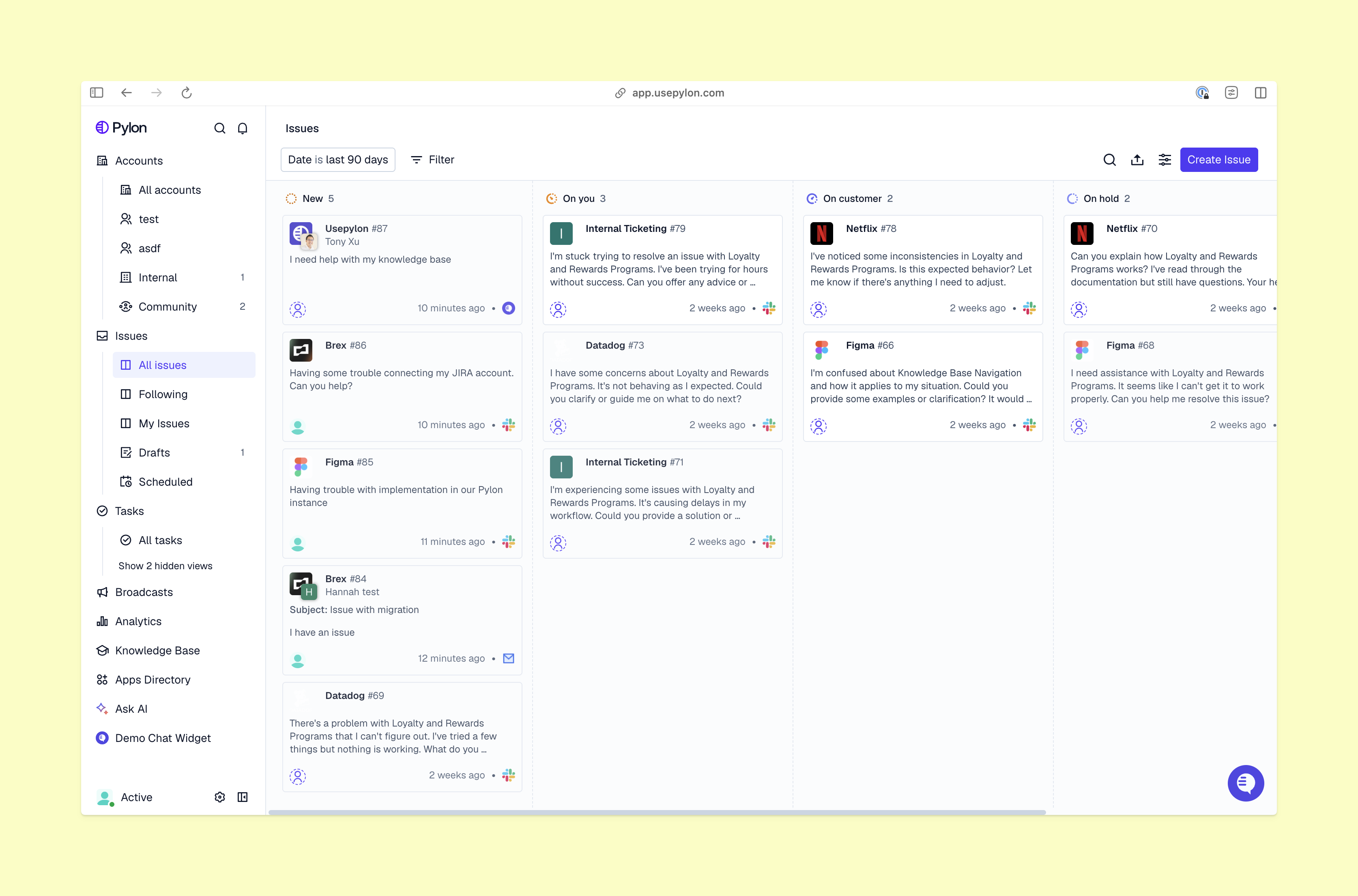
You don’t need a long list of customer experience measurements — start with a few that matter to your company. Here are eight metrics for support and success teams.
NPS measures how likely a customer is to recommend your product or company. Teams often use this KPI as a high-level trust signal. To collect this score, you’ll usually have customers answer the question “How likely are you to recommend our company?” on a 0–10 rating scale, then average the results.
You could also include an optional free response field, so customers can explain what drove their scores. On its own, NPS can miss nuances in customer feelings, which means the written feedback gives you important context.
CSAT shows how happy a customer is after a specific interaction, like a support conversation or resolved issue. Like with NPS, you’ll usually ask each customer for a short rating and let them add more context. But you need to send CSAT surveys right after interactions end, and make it clear that you’re asking about a specific moment, not the customer’s general feelings.
Customers’ written feedback here is especially important. There are lots of reasons a customer could be happy or unhappy with an exchange, so you’ll want to learn as much as you can about the motivations behind each score.
CES looks at how easy it was for a customer to get help or complete a task. Similar to CSAT, most teams collect this data with a single question right after a workflow or support interaction finishes.
Effort can have a big impact on customers — even when they get a helpful answer, the experience can still feel frustrating if the customer has to repeat their issue to multiple people or keep following up.
Your retention rate shows the percentage of customers that stay over a set period, while churn rate reflects the percentage that cancel or fail to renew. While these metrics are more outcome-focused than most CX KPIs, they matter a lot in B2B where the goal is to build strong, long-term relationships.
Tracking these metrics helps you connect CX to renewals. Retention and churn rates give you trends you can compare to other KPIs that could offer reasons, like CSAT and CES.
CLV estimates how much revenue an account creates over the course of a relationship. You can use this metric to see what type of customers bring the most value, so you can invest in the right relationships.
You’ll get the most from CLV when you track it consistently and compare trends between customer segments. If you find out what types of customers have low CLVs, you can explore feedback from those groups to see where you need to improve onboarding and support.
FRT measures how long it takes your team to send the first reply after a customer reaches out. While fast responses always matter, this first one is vital, because it tells the customer whether you got their message. Otherwise, they can get frustrated and give up or send more emails.
Just keep in mind that fast replies are only the first step. High FRT has the most impact when your messages set expectations, offer reassurance, explain what will happen next, and give customers time frames.
ART shows how long it takes to close customer issues. So it tends to reflect how well your team handles routing, escalation, communication, and information sharing.
When you review ARTs, it helps to look at resolution times based on issue type or severity. Averages can hide the longest and most frustrating cases or vary a lot for different customer segments.
Customer sentiment reflects the tone in customer replies and feedback. You can track this KPI through simple scoring and by tagging messages with tone keywords like “positive,” “neutral,” or “negative.” But you’ll learn the most from full conversation analysis using AI-powered customer support tools.
Sentiment can show problems before they appear on surveys or in dashboards, especially for fast-moving channels like Slack and Discord. Customer tone also shifts based on factors like urgency, so sentiment is best reviewed alongside context and results.
Most customer experience evaluations are based on information from these sources:
.png)
When you pick CX KPIs, focus on metrics you can review often and use to make practical decisions. Here’s how to pick your focus.
Work backward from what you want to improve. For example:
A smaller set of KPIs is simpler to review and act on. A lot of teams do well with one relationship metric like NPS, one interaction metric like CSAT or CES, a few operational guardrails like FRT and ART, and one metric tied to retention or churn. This mix covers experience quality and business outcomes without burying you in customer support statistics.
The right KPIs also depend on your team’s size and work style. For example, early-stage and smaller teams benefit from a narrow focus on basics like response time and satisfaction scores.
As teams grow, you can add more complex KPIs like customer effort and sentiment to find problems earlier. More mature teams can also segment KPIs by customer type or issue category to spot risk before it shows up in renewals.
CX KPIs add the most value when they inform everyday decisions. When you focus on a specific set of metrics consistently, you can connect customer feedback to real interactions, spot patterns that point to friction, and deliver better outcomes to customers. Just make sure you have tools that let you collect the data you need and organize it for easy review.
Pylon is the modern B2B support platform that offers true omnichannel support across Slack, Teams, email, chat, ticket forms, and more. Our AI Agents and Assistants automate busywork and reduce response times. Plus, with Account Intelligence that unifies scattered customer signals to calculate health scores and identify churn risk, we're built for customer success at scale.
Customer experience KPIs measure how customers perceive interactions, while operational KPIs focus on internal efficiency like volume, cost, or productivity.
Most CX KPIs should be monitored continuously, with deeper analysis done monthly or quarterly to spot trends and guide improvements.
Yes. Even tracking a few core metrics like CSAT or NPS can help small teams identify friction, improve retention, and prioritize improvements.
Pylon Workforce Management is available now. See it in action with a live demo.