Perfect the art of building best-in-class customer support teams. Learn about team structure, hiring, and tools like Pylon to boost retention and trust.
Dan Guo
February 20, 2026
Your customer support team interacts with accounts more than anyone else in your company. Customers rely on them for help with product questions and technical issues. And when they resolve problems quickly and compassionately, it builds trust and long-term relationships with your accounts.
Delivering great customer support eventually builds a reputation that can drive business and revenue growth. Around three-quarters of customers say they would go out of their way to switch to a company known for its outstanding service.
In this guide, we’ll look at how to set your support team up for success. We’ll cover best practices for structuring a high-performing support team, and great tools and technology to help them.
What’s a support team?
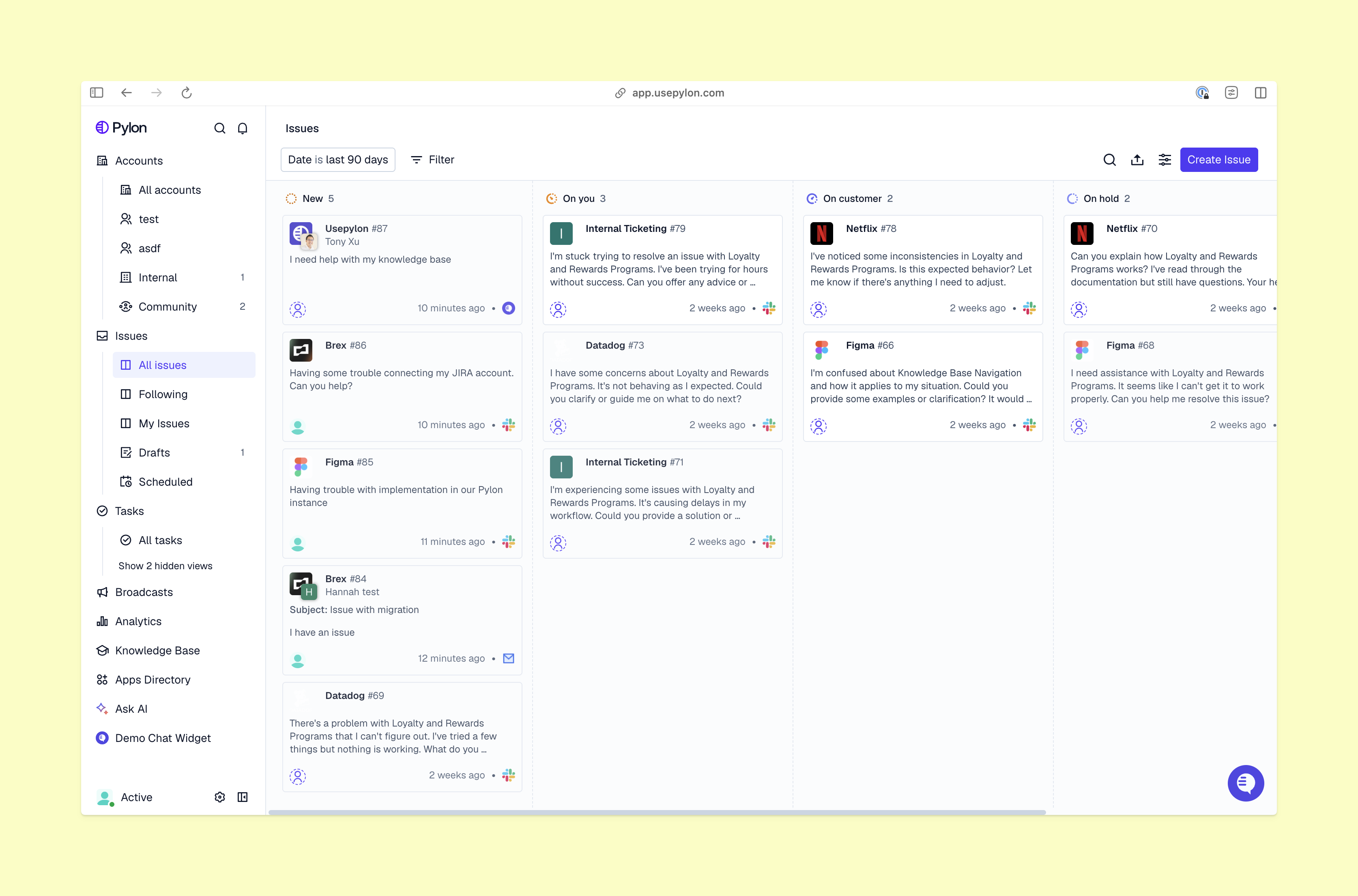
Issue View from Pylon's Platform
A customer support team is a group of people who help customers resolve any issues they run into while using your product or service. Their day-to-day tasks include:
Answering customer questions. When questions come up about your offerings, your support team needs to answer them promptly and accurately.
Resolving technical issues. A good support team also troubleshoots and resolves issues with your product or service. They need to know the product well enough to fix common technical problems or walk the customer through steps to solve it on their end. Some use help desk software (or run help desks) to resolve simple problems and route more complex issues to the right people.
Handling complaints. Part of resolving problems includes finding the core issue buried in a customer’s complaint. Your support team can keep the relationship positive if they navigate negative feedback with empathy and find solutions the account is happy with.
Collaborating to solve problems. Sometimes your support team will need to work with others to resolve a problem, like asking the engineering team to fix a bug or getting help from finance to sort out a complex billing issue.
Building trust. Knowing how to navigate problems and treat others with kindness and respect is the foundation of customer care. Teams that build positive emotional connections with accounts are more likely to see higher renewal rates and form long-term partnerships.
Keeping records. Support teams are responsible for keeping a comprehensive record of interactions so the next person who works with the account has full context and knows how previous issues were handled.
The most common ways accounts reach out for help are through email, phone, live chat widgets, and messaging platforms like Slack. Modern B2B customer support platforms make record-keeping across these channels easy with AI and automations, so you can keep account relationships strong and boost satisfaction no matter how they reach out for support.
Structuring a high-performing customer support team
Building a technical support team starts before you post the first job opening. Here are the most important steps to take before launch.
Choose the right structure
A well-organized customer support team needs clearly defined roles and hierarchies. Decide them before creating job postings so everyone knows your expectations ahead of time.
Here are some common support team models:
Tiered support. This structure provides different levels of support depending on the issue’s complexity. Tier one consists of general support representatives or help desks that can handle simple problems. If they can’t resolve an issue, they pass it to tier two, which includes product specialists and experts in different areas (like integrations or onboarding). The final tier is your customer support managers, who can handle complex issues and reach out to other teams to collaborate.
Product-based structure. In this model, your support team is split into different groups that focus on a particular product or service. They can become experts on niche products for more efficient support, but this method can create silos.
Geographic teams. If your company works in several different regions, it makes sense to have separate teams supporting accounts in each country. They’re more likely to know the cultural context and really understand their market’s needs.
Customer-focused teams. If you have several important, high-value accounts, you may want dedicated team members to work with client success managers on those specific accounts. This is a great way to offer personalized support.
You can combine different models to create the right structure for your needs. For example, you might segment your team by product, then create a tiered support structure within each group.
Hire the right people with the right skills
Whether you’re building a new team or improving an existing one, look for these important qualities when hiring for customer support roles:
Communication skills. Look for people who can communicate clearly, actively listen, and show empathy for their problems. Global companies also need multilingual customer support teams, so hire people who are proficient in the languages your customers speak.
Creative problem-solving. Great support employees think outside the box and come up with creative solutions. Teams often need to be flexible and willing to go beyond standard scripts to find new ways to help customers.
Good organization and time management. Prioritize efficiency and organization. Your support team will handle lots of tickets under time limits, so you need to make sure everyone can manage their own workload effectively.
Offer continuous training and feedback
Design your onboarding process to get new team members up to speed quickly. Train them on what your company expects from them long before they interact with accounts using tools like your customer care policy. And even after they’re onboarded, keep training them to make sure they’re building their key customer support skills.
Use customer support KPIs to figure out what your next workshop should be. When customers rate your support team, pay attention to the metrics and any written feedback they give. For example, if a customer mentions having to repeat themselves multiple times, remind team members to check account context or relevant resources before responding. Or if your average time to resolution is too long, try improving the processes or tools your team uses to troubleshoot issues.
The tech stack that empowers customer support teams
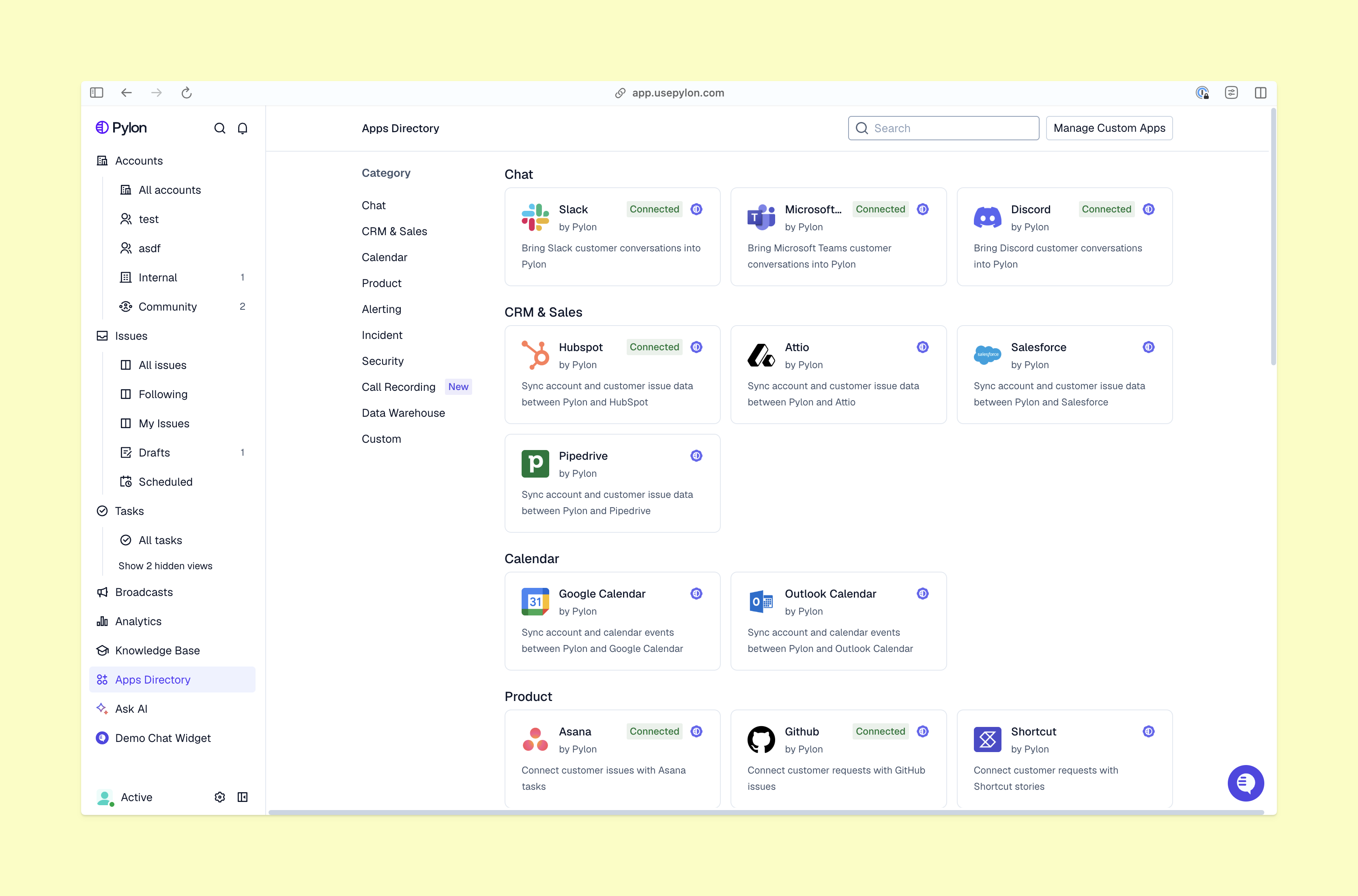
Chat Integrations from Pylon's Platform
Good customer support software means it’s easier to stay organized while answering queries and improve customer satisfaction with more detailed contexts.
The best customer success platforms for support teams typically have these features:
Efficient ticketing. Track issues with a robust ticketing system. It should route tickets quickly and document the full picture during interactions.
Omnichannel support. Let your accounts communicate in their preferred channels, whether that’s Slack, a phone call, or an automated chat widget. An omnichannel support solution makes it easy for your team to manage conversations with the same customer across multiple channels while keeping all the context visible in one place.
Self-service. Give your accounts tools to help them answer questions themselves, like messaging AI agents or searching a self-service knowledge base. Self-service options take tickets off your support team’s plate, and 61% of customers prefer them anyway.
Health monitoring. Use tools that gauge common support metrics and assign health scores. These figures give context to the relationship’s history and focus on accounts who are churn risks.
Workflow automation. Use AI tools to automate repetitive tasks like answering simple queries and sending follow-up messages. Automation in customer support can save time, cut costs, and let you provide better support with fewer resources.
Reporting and analytics. Track key performance data so you can find weak points and potential spots for friction. Keep a close eye on ticket volume, response times, and burnout levels to make sure there are enough resources for people and processes.
Deliver the best support possible with Pylon
Customer support teams can give new accounts the trust in your company necessary for long-lasting customer relationships. Strong omnichannel support software helps you meet accounts where they are and gives your team the tools they need to deliver outstanding support across multiple channels.
Pylon is the modern B2B support platform that offers true omnichannel support across Slack, Teams, email, chat, ticket forms, and more. Our AI Agents and Assistants automate busywork and reduce response times. Plus, with Account Intelligence that unifies scattered customer signals to calculate health scores and identify churn risk, we're built for customer success at scale.
Customer support teams resolve technical issues, handle inquiries about products or billing, and manage complaints to ensure user satisfaction and trust across various communication channels.
What skills are needed for customer support teams?
Essential skills include empathy, active listening, and clear communication. Technical product knowledge and proficiency with support platforms or ticketing tools are also vital for effective problem-solving.
How can I use MS Teams and Pylon for customer support?
Integrate Pylon with MS Teams to turn chat messages into trackable tickets. This enables support teams to manage and resolve customer issues directly within their internal collaboration workspace.