
Surveys show that most customers prefer live chat over phone and email for B2B customer support. Live chat software offers an average problem-solving satisfaction rate of 87%, compared to email’s 61% and phone’s 44%. A customer support chat platform helps you give customers the right answers for their needs quickly with friendly, personalized support.
In this guide, we’ll explore the features to look for in a customer support chat platform, a list of the 6 best platforms out there, and advice on choosing the right one for your company.
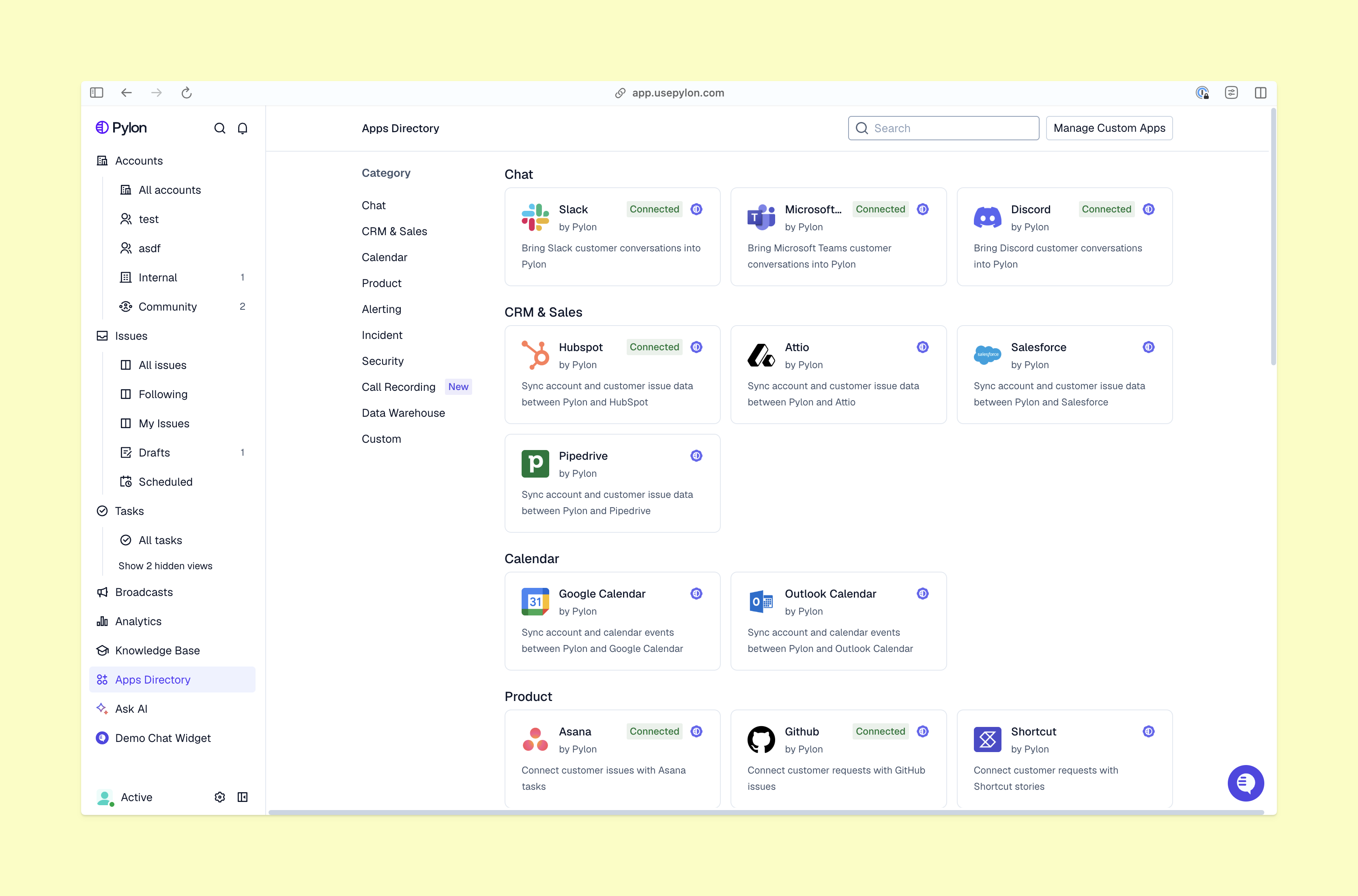
Instead of making customers search for your contact page and fill out a form, it’s more effective for them to ask questions while they’re using your product and get an instant response.
Customer support chat platforms are embedded as a widget in your website, app, or other product interface. Customers type their questions into the widget, which opens a support ticket for their conversation.
Early chatbots were limited to basic scripted responses, and using them was often frustrating. Today’s chat support software gives your customers thorough and personal support. You can automate answers for simple issues with knowledge bases or AI agents, or you can escalate more complex questions to your customer support team for white-glove treatment.
If you’re not sure whether you need a customer chat support platform, here’s a quick rundown of some of the benefits.
Chat support mirrors the ways your customers already interact with people. There’s been a steady decline of email and phone calls alongside the rise of texting and communication platforms like Slack, WhatsApp, and Discord. Offering a free live chat option allows customers to reach out in a way that feels natural — so they’ll use it more often. This results in a better overall customer experience.
Live chat is also the fastest way to solve customers’ problems. The best knowledge base software can’t include answers to every possible question, and even the most efficient AI ticketing systems can’t always match the speed of an instant automated response. Customers can also use chat platforms to get in touch with a team member and solve their problems in real time.
Some customer support chat platforms let customers self-service. They can search the knowledge base directly in the chat widget or access quick links to relevant documents. With access to AI agents, team support, and self-service opinions all in one place, your customers have multiple ways to quickly find what they need.
Here are some of the most important elements to look for in a chat support solution:
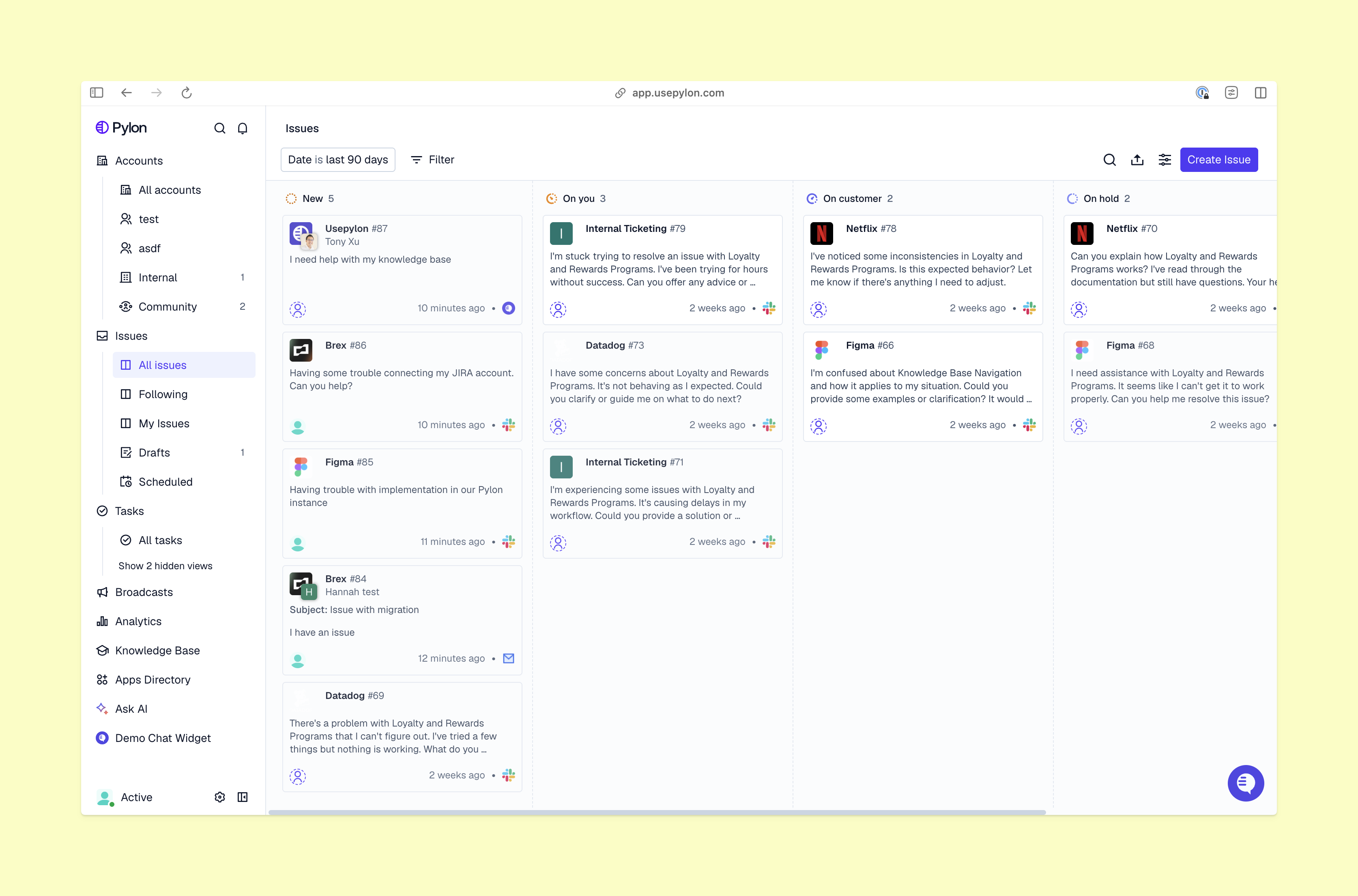
Here’s a look at the top chat support software’s strengths and weaknesses, cost, and integration options to help you pick the best option for your needs.
Pylon’s platform is built specifically for B2B customer support, so it has additional features you won’t find in a B2C solution, like account-level insights and automated support workflows. You can deploy Pylon’s chat widget as part of our omnichannel support system.
Pylon’s in-app chat makes it easy to offer live chat support to customers in your web and mobile apps, with custom quick links and integrated knowledge base search. You can configure AI agents that deflect chat issues and escalate to your team when needed.
Plus, each chat becomes a trackable support ticket, so you can preserve all the customer context from every conversation.
Pricing starts at $59/seat/month.
While Zendesk is primarily known for its ticketing system, it also offers a live chat option. Its features integrate with many kinds of different apps, so it’s a good option for larger companies and enterprises. However, its complexity can be overwhelming for smaller teams.
Zendesk’s cheapest plan that includes live chat costs $55/seat/month.
LiveChat’s UI is designed for live chat support. You can integrate it with other messaging platforms to make it easier to manage conversations across different channels. But it’s more of a B2C chat tool than a full B2B support platform, and its automation options aren’t very advanced.
The starter plan costs $19/seat/month.
LiveAgent is a simple chat app that’s affordable for small companies. It’s easy to embed the chat widget on your website, but doesn’t have any kind of advanced B2B functionality or many integration options. If you’re looking to scale your company or team in the near future, this may not be the right fit.
Pricing starts at $15/seat/month.
Tawk.to is a free live chat tool that covers all the basics. The free plan includes features like unlimited users, smart ticketing, and a predesigned knowledge base. But there are a few things behind paywalls: Removing branding, adding more AI agent messages, and screensharing all come with separate fees, starting at $29/seat/month.
Tawk.to doesn’t have many integration options or advanced features, but it’s a starting point for small companies and startups.
Re:amaze is a low-cost live chat option mostly aimed at B2C customer support, so it doesn’t offer B2B-specific features like issue tracking and routing. Like many of the low-cost options on this list, it’s simple to get started, and Re:amaze includes more automations than programs like LiveChat.
Pricing starts at $29/seat/month.
There’s no such thing as one “best” platform — your needs will depend on your company size, industry, and customer expectations, among other things. Here’s how to find the best fit for your customer support team:
Live chat is a great option for any company that wants to offer outstanding support and quick answers in a familiar form. Look for a powerful platform that’s built for B2B companies and gives you all the features to meet (or exceed) your customers’ expectations.
Pylon is the modern B2B support platform that offers true omnichannel support across Slack, Teams, email, chat, ticket forms, and more. Our AI Agents and Assistants automate busywork and reduce response times. Plus, with Account Intelligence that unifies scattered customer signals to calculate health scores and identify churn risk, we're built for customer success at scale.
Pylon Workforce Management is available now. See it in action with a live demo.