
As support volume grows, teams often hit a ceiling. You can only hire so many people, but ticket queues keep getting longer.
Companies are adopting customer support bots to handle the repetitive busywork that bogs scaling support teams down. And that frees them up to focus on the complex issues that actually require human involvement.
A good bot should be a force multiplier to your support operation by systematically improving metrics like response time, resolution rate, and customer satisfaction. In this guide, we’ll cover what a support bot is, how it works, and the most common use cases.
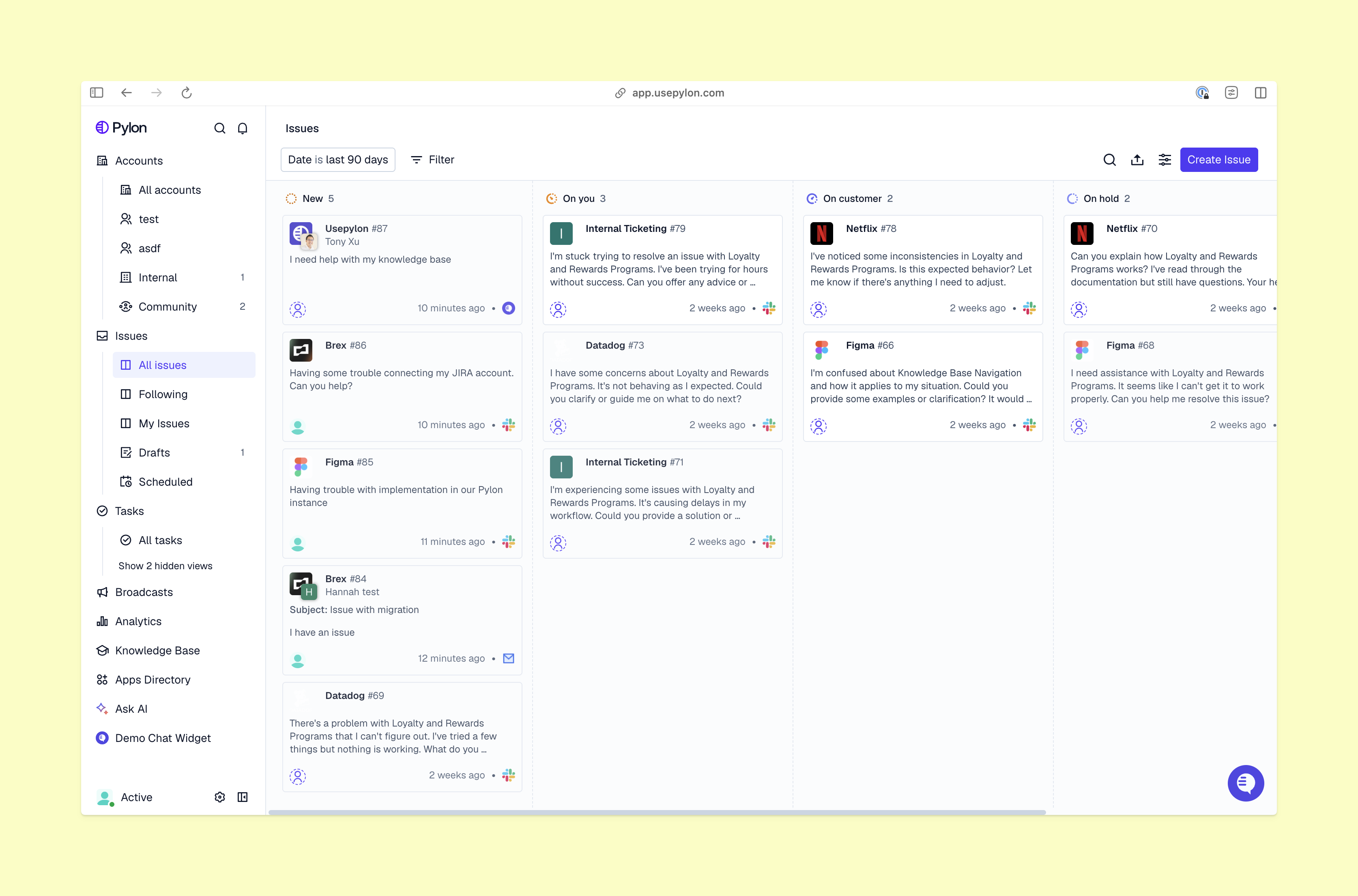
A customer support bot is an automated software application designed to interact with customers and handle common support tasks without human intervention. While a simple chatbot might follow a rigid, rule-based script, modern AI-powered chatbots for customer service leverage natural language processing (NLP), machine learning, and large language models (LLMs) to hold more natural, context-aware conversations.
These sophisticated bots — sometimes called AI agents — work by recognizing intent through conversational AI. For example, when a customer asks, “Where’s my order?” the bot identifies the “order status” intent and triggers a workflow to look up the information in your backend systems.
Here are some of the most common customer service chatbot examples in a B2B setting.
Questions about pricing, features, or account settings can get answered instantly. A well-trained bot can handle the majority of these simple, repetitive requests, freeing up your team for more complex work. This is often the first and easiest use case to implement, and it can have an immediate impact on your team’s workload.
Bots can provide real-time updates on software troubleshooting, new features, and even current support tickets being handled by your team members. Most questions a customer has about a status can be handled automatically.
Automated support bots can also guide users through a series of troubleshooting steps for common technical issues, like resetting a password or configuring certain product settings. The bot can ask a series of questions to diagnose the problem and provide step-by-step instructions. If the issue is too complex, the bot can escalate to your support team with all the context from the conversation.
Bots can integrate with calendars to book check-ins or support calls, and help customers manage their account details. This eliminates the back-and-forth of scheduling and lets customers self-serve. It’s a simple way to improve the customer experience and reduce the no-show rate.
Bots can also be used internally to answer common HR questions or help with technical support requests. This frees up your HR and tech teams to focus on more strategic initiatives, and it provides employees with a quick way to get the information they need.
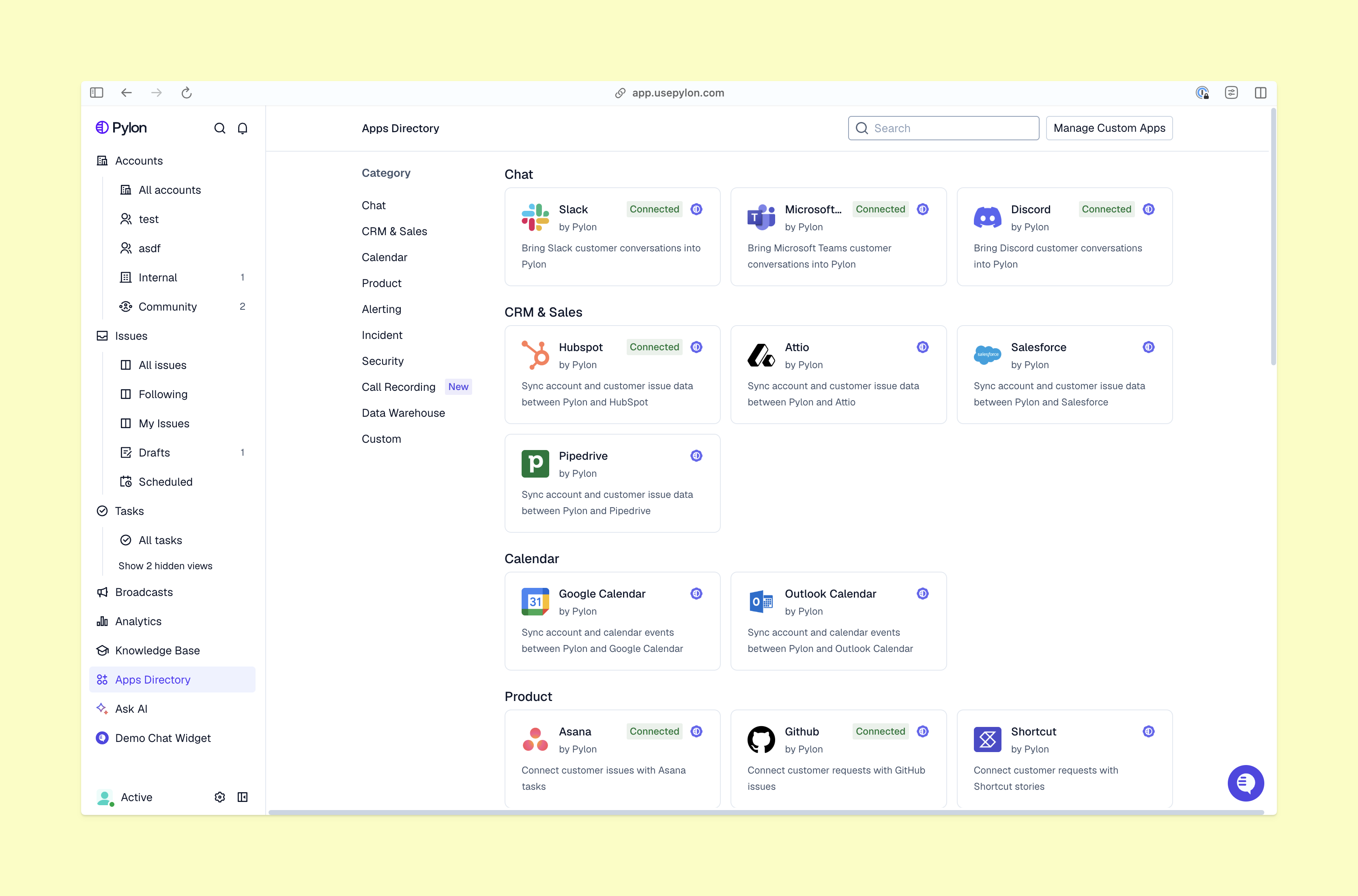
The best chatbot for customer service will fit your team’s unique support goals.
If you’re drowning in repetitive customer requests… You need an AI chatbot for customer support. These bots are designed for front-line interaction on your website, in an app, or on Slack/Teams — wherever you interact with customers.
A good chatbot for this use case should be able to understand the vast majority of common customer questions and provide the right answers from the data you train it on. This is one of the easiest ways to reduce ticket volume and free up your team.
If your internal workflows are disorganized… You need a help desk and ticketing bot. These bots live inside your support platform and focus on automating internal workflows, like tagging, routing, and closing tickets.
You’ll want to find a tool that integrates with your existing help desk and CRM. The bot should be able to read and write data in these systems, and you should be able to build custom workflows that match your team’s processes.
If you need to support customers across multiple channels… You need a virtual agent or conversational AI platform that offers omnichannel support. These more advanced bots can handle complex, multi-turn conversations and maintain context as customers move between channels like Slack, Teams, email, and chat.
Follow these best practices to make sure your automated support system helps your post-sales teams instead of adding unnecessary complexity and confusion.
Map out your conversation flows and define your intents carefully. A poorly designed bot or AI agent is worse than no bot at all, because of potential hallucinations (made up information), which can frustrate the customer. So start with your most common use cases and build from there. The goal is to create an agent that’s actually helpful. If you choose a top-tier customer support platform to build these out, this step will be simpler.
Add your support bots and AI agents to your customer escalation management strategy, defining rules for when something needs to escalate and who it should go to. You’ll want these bots to be connected to your customer support platform, where you house account context, so they can add to customer profiles to reduce repetition when issues move to another team.
Say a customer tells an AI agent they’re locked out of one of your platform’s features. The agent sends a knowledge base article that covers troubleshooting this issue. But, even after trying out the steps in the article, the customer can’t access the feature. This support bot would escalate the issue, including context that the customer already tried following the troubleshooting guide. That way, the customer doesn’t have to repeat their issue again and won’t get sent the troubleshooting guide again.
Whether a customer is interacting with your AI customer support agent on your website, in your app, or on a messaging platform, the experience should feel consistent and on-brand. This requires a thorough style guide AI bots can follow, that includes things like tone (casual? formal? friendly?) and language you want to avoid.
Track key metrics like resolution rate, deflection rate, and CSAT to identify improvement areas. Also look at escalation data, making sure the right issues are making it to the right teams.
Ask customers for feedback on their bot interactions to understand what’s working and what’s not. You could send a survey right after a bot conversation closes, or have customer success leaders chat with customers about how AI support is going. Then, make adjustments based on the insights you receive, keeping customers looped in about how you’re changing things based on their feedback.
Lastly, be super transparent about how these bots use customer information, and what measures you’re taking to use AI responsibly. You might publish a privacy policy that’s shared at the start of each bot conversation, for example. This will also require choosing a support platform that has comprehensive data and AI safety measures, so you can confidently reassure customers.
Customer support bots and AI agents are a powerful way to scale your support operations and improve the customer experience. They handle repetitive work, so your team can focus on what they do best: connecting with customers and solving interesting problems. By automating responses, routing tickets, and providing 24/7 support, bots help you deliver faster, more consistent service.
Pylon is the modern B2B support platform that offers true omnichannel support across Slack, Teams, email, chat, ticket forms, and more. Our AI Agents and Assistants automate busywork and reduce response times. Plus, with Account Intelligence that unifies scattered customer signals to calculate health scores and identify churn risk, we're built for customer success at scale.
Customer support chatbots use AI and predefined logic to understand customer questions, provide answers, and route issues to support team members when needed.
Bots can manage many complex scenarios when trained properly, but they work best when combined with easy escalation to your support team.
No. Most implementations use bots or AI agents to handle repetitive and tedious tasks, so support teams can focus on complex or sensitive issues.
Yes. Many bots integrate with CRMs, helpdesks, knowledge bases, and messaging platforms.
Common metrics include resolution rate, response time, customer satisfaction, deflection rate, and escalation frequency.
Pylon Workforce Management is available now. See it in action with a live demo.