
It’s more costly than ever to bring in new customers, so you’ll rely on your success team to keep existing customers satisfied. But it’s hard to make B2B relationships strong over the long term if you use outdated software.
With the right customer success tools, your company can keep people happy and boost retention. Let’s talk about what features to look for and which solutions are most useful.
.png)
Customer success management (CSM) software helps your team track feedback, review metrics, and improve customer relationships. Your team gets easy access to the info they need to pinpoint issues, and workflow automation tools so they can avoid repeat tasks and cut down on human error.
The best success tools pull in signals from all kinds of customer conversations so you see which accounts to focus on. And they help you build customer success playbooks and put them into action with automation.
Here are the most important features to look for in CSM software.
If you get the onboarding process right, it’s easier to keep customers happy long-term. So look for features that help you offer smooth onboarding, like automated tips and easy ways to reach out for support. Your software should also help you flag issues so your customer success team can fix them early.
To spot trends fast, your team needs clear and reliable customer data. Your CSM platform should make it easy to track key metrics like churn, customer satisfaction, net promoter score, and renewal rate. Look for tools that automate this tracking and show the results in an easy-to-read dashboard.
Numbers are useful, but direct feedback from customers is just as valuable. Your CSM software should pull in insights from customer conversations across all your channels, like Slack, Teams, email, and chat. It should also help you create surveys for people to fill out at key points in the customer lifecycle, so your team can find problems and take action.
The more repetitive tasks you automate, the more time your success managers get to spend on valuable, relationship-building work. So your CSM software should let you create custom triggers for tasks like welcome emails and customer check-ins.
Any new software should work smoothly with other tools you use, like your knowledge base, help desk, or unified B2B platform. You’ll need to bring in information from a range of sources to power the metrics and feedback management we talked about earlier, and that process should be quick and simple.
Some platforms like Pylon are all-in-one — so your help desk, knowledge base, and CSM software already live in the same place.
Now that you know what a customer success tool is, let’s look at some of the best platforms.
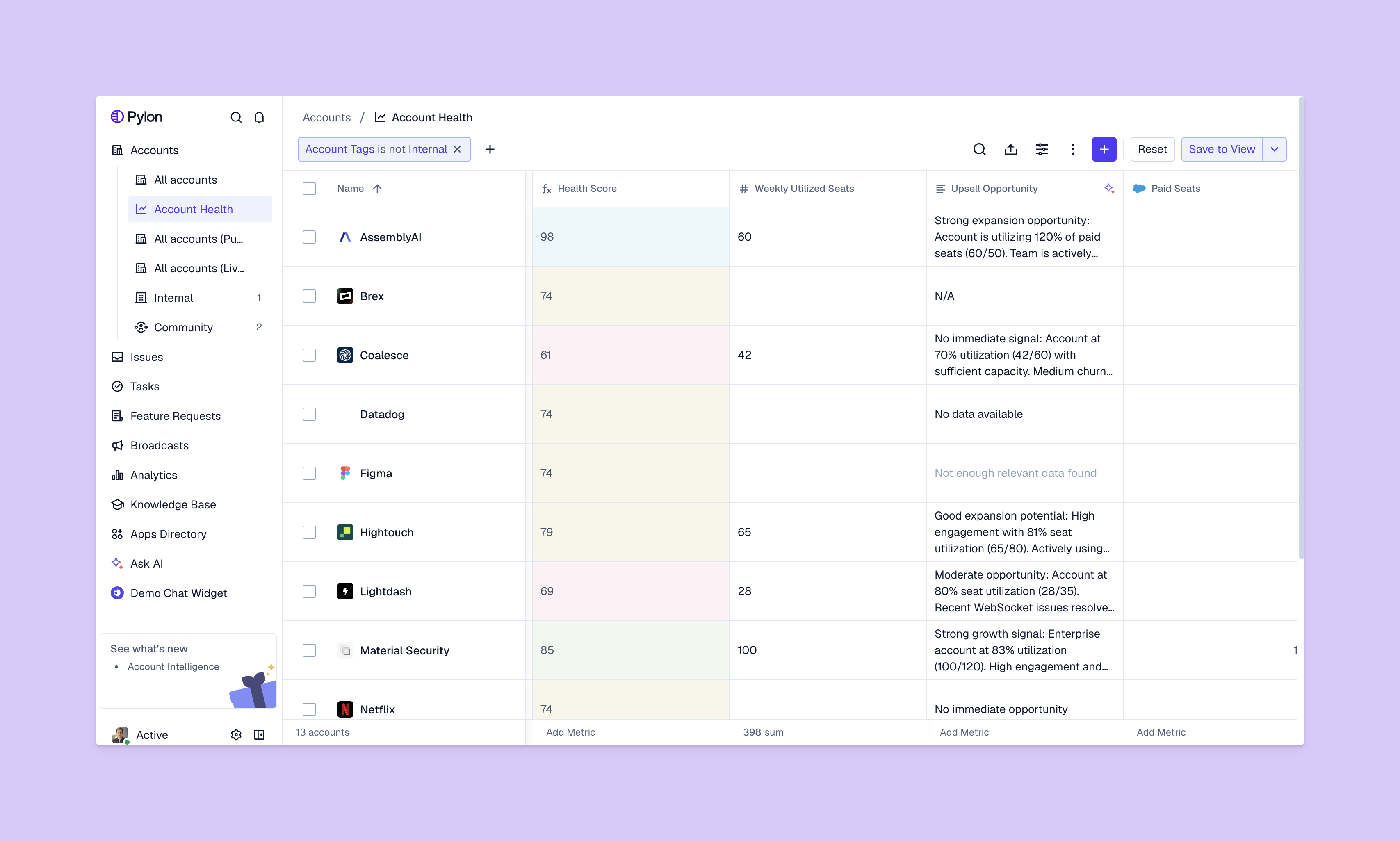
Pylon’s Account Intelligence makes it easy to keep track of the entire customer relationship. Because Pylon is an omnichannel support platform, it brings in customer information from your other tools and lets all your post-sales teams work from the same account context.
You can automate tasks like setting action items based on call recordings, or creating custom health scores for each customer to find the ones at risk of churn. Plus, AI agents and assistants suggest resources, summarize issues, help you write replies, and even handle some customer questions on their own.
It’s mostly known for its ticketing system, but Zendesk is also a good tool for customer success teams. This omnichannel platform gives you workflow automation options, along with customer engagement tools and metrics so your team can manage relationships and spot issues. Zendesk also integrates with other popular software and scales well for growing teams.
ChurnZero helps you retain customers with real-time alerts and constantly updated customer health scores. You can also automate communications, like onboarding emails and in-app engagement messages, and use AI agents to review customer feedback and personalize replies. ChurnZero has features for surveys and reports, and it integrates with tools like Slack and Salesforce.
HubSpot is used for sales, marketing, and customer relationship management (CRM). If you already use this platform, HubSpot's Service Hub integrates with those other tools and has useful options for your customer success team. You get health scores, automated engagement tools, customer feedback options, and third-party integrations.
Built for B2B startups, Vitally brings a range of customer signals into a central location, and is useful for workflow automation and teamwork. Its AI copilot can summarize call recordings and tickets, draft messages, and schedule follow-ups, and you can create profiles that give your team a clear idea of each’s customer needs and history.
Gainsight offers tools to manage each stage of the customer journey, from onboarding to renewal. You can use this platform’s agentic AI to build personalized experiences and identify customer health and sentiment issues early. Gainsight is built for enterprise customers, so it has a lot of options but also a fairly steep learning curve.
Intercom is another platform mostly known for ticketing and customer support, and it offers a range of features like an AI-enhanced help desk, product tours, and automated surveys. This tool has plenty of automation options to help you build tasks and customer success workflows, and you can integrate it with CRMs and analytics software.
OnRamp helps you build a personalized onboarding experience for each customer, with a playbook you set up in advance. Then you’ll use analytics features to see what worked and what didn’t, and adjust the onboarding process until it’s as smooth as possible. While OnRamp doesn’t help you manage the whole customer journey, it’s a useful tool in early stages.
With the right tools, your team can perfect customer success even at scale. Make sure the platform you pick has features to improve every step of the customer lifecycle, from onboarding to long-term retention. And you’ll want automated workflows and AI tools for customer success, so your team has the time and info they need to help every account.
Pylon is the modern B2B support platform that offers true omnichannel support across Slack, Teams, email, chat, ticket forms, and more. Our AI Agents and Assistants automate busywork and reduce response times. Plus, with Account Intelligence that unifies scattered customer signals to calculate health scores and identify churn risk, we're built for customer success at scale.
No. CRM helps manage sales, marketing, and customer data. CSM focuses on ensuring customers get value from what they bought and stay loyal long term.
Teams with recurring customers — such as SaaS, services, or subscriptions — benefit especially, since they need to manage customer onboarding, retention, and long-term satisfaction.
Not exactly. A CSM helps customers get the most value out of the product; an account manager focuses on renewals, upsells, and revenue growth. Roles overlap but differ in goals.
Pylon’s Account Intelligence is excellent for beginners and small teams, as it centralizes critical customer signals (health scores, churn risk) and automates workflows, making it easier to proactively manage accounts without complex setup.
Pylon Workforce Management is available now. See it in action with a live demo.