Proactive customer service means reaching out to customers before they contact you: anticipating needs, actively preventing problems, and addressing issues before they escalate into frustration or churn.
In this guide, we'll cover why B2B companies need proactive support, 7 strategies to implement it, and the tools that make it possible at scale.
Proactive customer service means you're reaching out to customers before they have to ask you about a bug or issue. You're anticipating what they'll need and taking action first. This could be sending them updates before an issue affects them, sharing resources before they get stuck, or checking in when their behavior suggests something's wrong.
The opposite is reactive support, where you wait for customers to come to you. Someone files a ticket and you respond. Someone emails with a question and you answer. But with proactive support, you rely on data about how customers use your product to spot potential problems early and fix them before they need to ask for help.
Here's how the two approaches compare in practice:
| Aspect | Proactive Support | Reactive Support |
|---|---|---|
| Timing | You reach out before problems happen | You respond after customers report issues |
| Customer Experience | Customers get help before they're frustrated | Customers hit a problem, then wait for your response |
| Ticket Volume | Fewer tickets because you prevent issues | High ticket volume from recurring problems |
| Data Usage | You analyze patterns to predict problems | You track what already went wrong |
In B2B, this could look like:
B2B relationships aren't one-time transactions. Each customer represents recurring revenue over months or years, which means small problems compound into churn if you don't catch them early.
When you solve problems before customers notice them, fewer tickets end up in your queue. Your team spends less time answering the same questions over and over, and more time on complex issues that actually need their attention. Each proactive notification or help article can prevent dozens of future support requests.
Customers notice when you reach out first. When you send them a heads-up about maintenance before it affects them, or share a relevant guide when their usage suggests they're confused, you're showing that you care about their success. In B2B, where acquiring a new customer costs significantly more than keeping an existing one, this directly impacts revenue.
Proactive support changes how customers see your team. You're not just there to fix things when they break, you're a partner who understands their business and helps them succeed. This matters for renewals, expansions, and referrals.
These are concrete ways to shift from waiting for problems to preventing them. Each one gives you a specific action you can take to get ahead of customer needs.
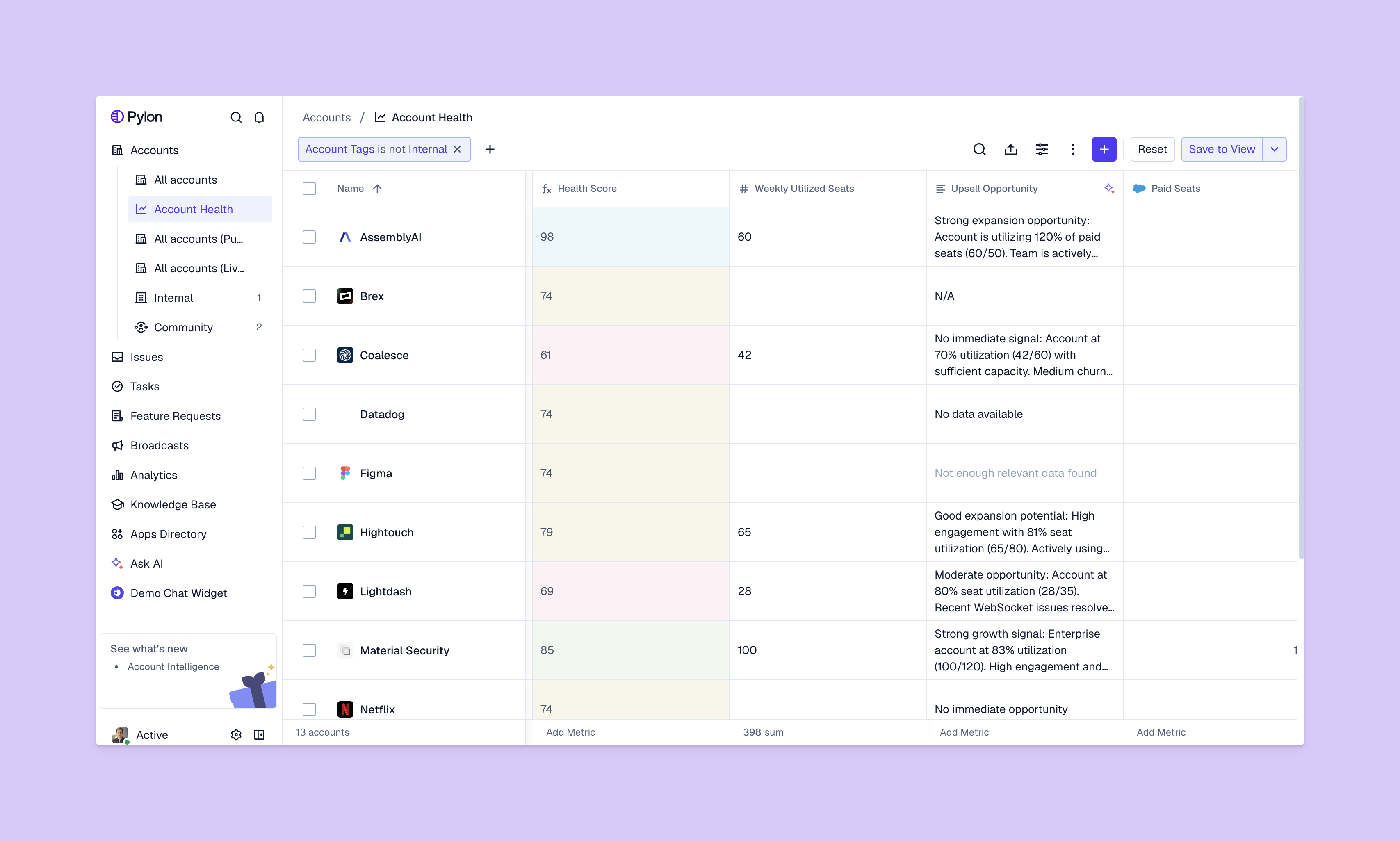
A customer health score combines multiple signals into one number that tells you if an account is doing well or at risk. The signals might include how often they log in, which features they use, how many support tickets they file, and whether their team is growing or shrinking.
When a healthy account's score suddenly drops, that's your cue to reach out. Maybe they've stopped using a key feature, or their login frequency dropped by 50% in the last week. You can contact them to understand what changed and offer help before they decide to leave.
The key is acting on what the data tells you. Set up alerts when scores change significantly, then create a simple workflow for your team to follow up with at-risk accounts.
A knowledge base lets customers find answers without waiting for your team to respond. This works well for common questions (setup instructions, troubleshooting steps, feature documentation) where the answer is the same for everyone.
The best knowledge bases anticipate questions at each stage of the customer journey:
Update your knowledge base based on what your team actually hears from customers. If you're answering the same question in 5 tickets this week, turn it into a help article. Fewer customers will need to ask next time.
When you know about planned maintenance, service disruptions, or product changes that affect customers, tell them before they're impacted. A good notification includes what's happening, when it will happen, how it affects them, and what action they need to take.
For example: "We're upgrading our API infrastructure on Saturday from 2 to 4 AM EST. Your integrations will keep working, but you might see response times 10 – 20% slower during this window."
This turns a potential support crisis into a non-event. Customers appreciate knowing what to expect, and your team doesn't spend Monday morning fielding similar messages.
AI can analyze thousands of customer interactions to spot patterns that predict problems. They might notice that dozens of customers are reporting the same bug — and alert you to a possible outage.
Or, AI can scan your customer conversations to track sentiment and flag churn risks. It can then remind you to reach out or check-in with that account.
The advantage here is scale. Your team can't manually monitor every customer, but AI can look for warning signs across all your accounts.
Quarterly business reviews, monthly check-ins, or post-onboarding calls create space to surface issues while they're still small. These aren't support calls. They're conversations about what customers are trying to achieve and how your product fits into their workflow.
During check-ins, you can identify upcoming needs, address minor frustrations before they grow, and show customers you're invested in their success. The goal is to hear about problems when you can still fix them, not after someone's already decided to cancel.
For high-value accounts, schedule these conversations regularly. For smaller accounts, you can use automated email check-ins or in-app surveys to achieve something similar at scale.
Your customers reach out through Slack, email, chat, and ticket forms. When you track what they're asking about across all channels, you can spot systemic issues that need fixing.
If the same question keeps coming up everywhere, that's a signal. Either your product has a usability problem, your documentation isn't clear enough, or you need better onboarding for that feature. Once you see the pattern, you can fix the root cause: update the product, rewrite the docs, or create a proactive resource that prevents the question entirely.
This only works if you can see all customer conversations in one place. When data is scattered across 5 different tools, patterns stay hidden.
Your support team hears feature requests, pain points, and product issues before anyone else. When you systematically share this feedback with your product team, they can fix root causes instead of symptoms.
The proactive part happens when features ship. If you track which customers requested each feature, you can notify them automatically when it launches. This shows customers you listened and closes the loop on their feedback.
Pylon's Product Intelligence automatically clusters similar feature requests, tracks which customers mentioned them, and helps you notify everyone when features ship.
You can't deliver proactive support without the right tools. You need visibility into customer behavior and automation to scale your outreach.
The most effective approach unifies all of this in one system. When your support tickets inform retention strategy and your customer success insights improve support personalization, you can actually be proactive.
Platforms like Pylon bring omnichannel support, AI workflows, and account-level context together. This gives your entire post-sales team the context they need to anticipate customer needs.

Here's what proactive support looks like in practice:
Each example uses customer data and behavioral signals to provide help before customers need to request it.
Most teams run into practical obstacles when they try to be more proactive. Here are the most common ones:
Better tooling solves most of this. When your platform automatically identifies at-risk accounts, surfaces trending issues, and unifies your customer context, you can scale proactive support.
Track reduced ticket volume, improved retention rates, and higher customer satisfaction scores. You can also measure time-to-resolution for issues you do receive. Proactive support often means problems get caught earlier when they're simpler to fix.
Proactive support focuses on preventing issues and answering questions before customers ask. Customer success takes a broader view of helping customers achieve business goals and driving product adoption over time. Both work better when they share customer data.
You don't need a large team to start. Begin with your existing team and use AI to scale proactive outreach (like automated health score monitoring or self-service resources). Expand as you see results.
Yes. Small teams can start with simple tactics like monitoring common questions, building a basic knowledge base, and sending proactive notifications about known issues. You don't need expensive tools or additional headcount, just a shift in mindset from reactive to preventive.
Proactive assistance means offering help before customers ask for it. This includes sending relevant documentation when you notice someone's struggling with a feature, reaching out when usage patterns change unexpectedly, or alerting customers to issues before they're affected.
For B2B teams, proactive customer service means preventing issues before they escalate. This builds trust through thoughtful outreach and reduces costs by lowering ticket volume. When strong customer relationships drive recurring revenue, being proactive directly impacts retention and growth.
To do this, you need unified customer data. You can't anticipate needs if your support tickets, product usage, and customer conversations live in separate systems. When you bring this context together with omnichannel support, AI workflows, and account-level insights, your team can finally get ahead of customer needs instead of constantly firefighting.
Pylon is the modern B2B support platform that offers true omnichannel support across Slack, Teams, email, chat, ticket forms, and more. Our AI Agents & Assistants automate busywork and reduce response times. Plus, with Account Intelligence that unifies scattered customer signals to calculate health scores and identify churn risk, we're built for customer success at scale.
Pylon Workforce Management is available now. See it in action with a live demo.