
Your business operations structure acts as the blueprint for how customer-facing teams stay organized. It defines how work moves across tools and channels and how responsibility flows across the organization. A strong structure supports collaboration and ensures customer conversations reach the right team without delay.
In this article, you’ll learn the optimal business operations structure for B2B support and how to design one for your team.
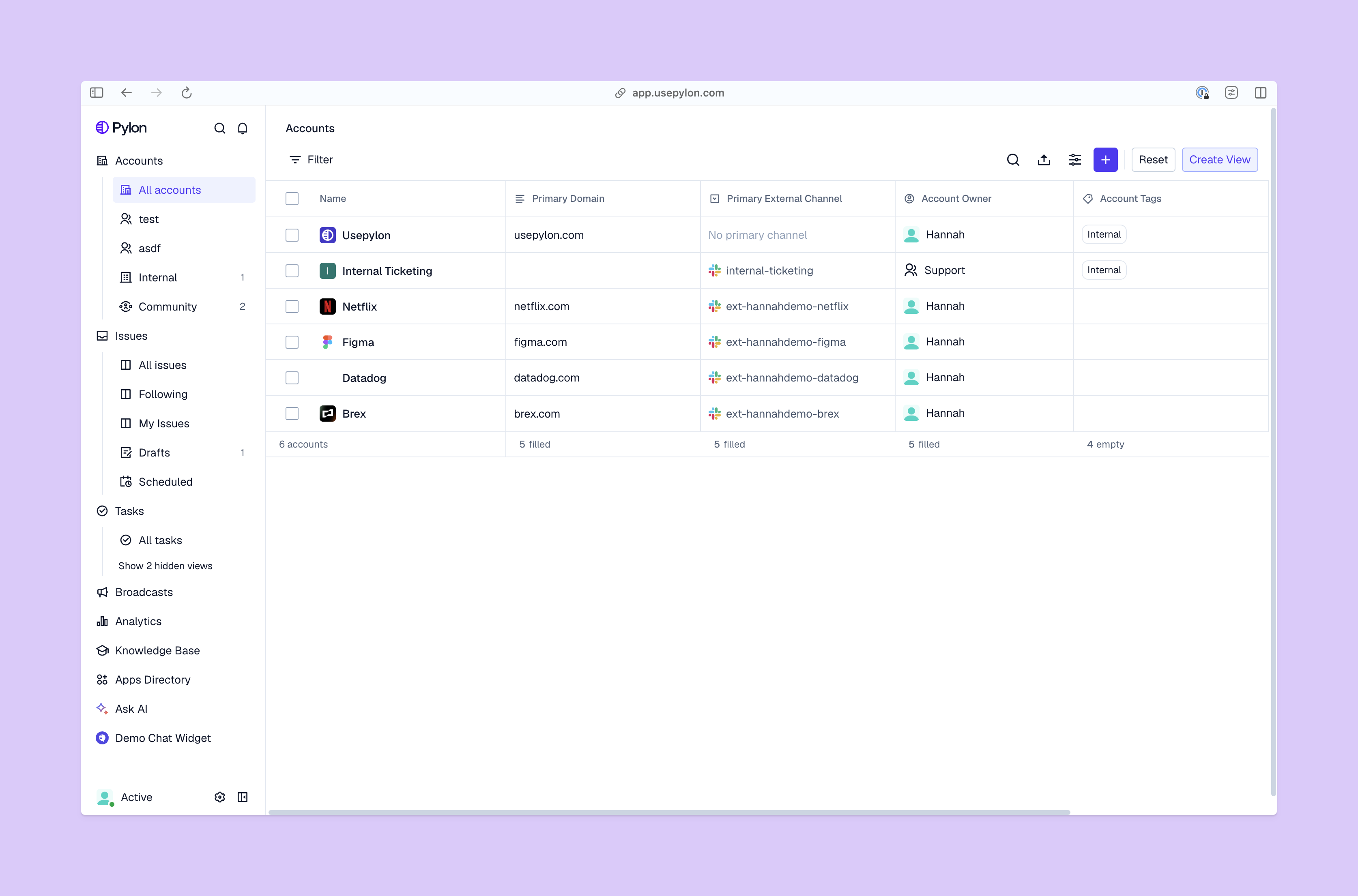
A B2B support operations structure is the day-to-day system that defines how customer conversations move across channels. It’s also how support and customer success teams coordinate on shared accounts.
This organizational structure is what shapes the customer experience. It’s the set of workflows, tools, and coordination patterns that determine how quickly issues move and get resolved. A clear structure reduces friction and gives teams a predictable way to manage responsibility across functions.
Here are the top four benefits of a robust B2B support structure:
Structural gaps in your support structure are what typically affect performance. Here are the core elements to prevent those failures and help keep teams organized.
When a single account has both a support team that handles day-to-day issues and a client success manager (CSM) who manages the relationship, confusion is inevitable unless reporting lines are explicit. A defined reporting structure reduces misalignment. It clarifies who owns the account relationship and who handles each interaction.
Customer issues can’t get resolved when teams lack clarity about who has the authority to take action. A decision-rights framework, such as RACI or DACI, clarifies who owns escalations, who sets service level agreement (SLA) changes, and who prioritizes competing customer needs. Without this, routine questions shift to upper management, which creates delays and inconsistent outcomes.
Support handles the immediate issue, customer success manages the long-term relationship, and pre-sales owns the fix. That’s an example of clear boundaries that prevent overlap and dropped responsibility.
Your customer support strategy needs to define where each handoff happens and who’s responsible for keeping the customer informed. For example, a customer might report a bug to their CSM, who forwards it to support, who logs the issue for pre-sales and confirms next steps with the customer.
If your customer support team works in one tool and your success team works in another, handoffs break down. The function of organizational structure is to create pathways that connect these tools — whether that’s through shared views, unified inboxes, or an omnichannel support platform like Pylon. When you have a defined communication pathway, context moves with the conversation. This reduces silos while improving collaboration.
Standard workflows support interactions that follow a predictable pattern. But flexibility may be needed for accounts that require personalized support. For example, enterprise accounts with custom SLAs need a different level of support than mid-market accounts on standard terms. Your operations structure should define both the default process and the approved exceptions.
The right organizational structure type depends on your customer base, your team size, and how much complexity you’re willing to manage. Here are the common support operation models:

Before you start reorganizing your team, you’ll need to map out these specific artifacts:
These artifacts only work if your tools support them. For instance, your cross-functional interface map might specify that when support escalates a bug to pre-sales, the handoff includes the account tier, the conversation history, and the SLA deadline. But if support works in one tool and pre-sales works in another, that context is lost in Slack or email handoffs. Scale B2B support by choosing a platform that can enforce the workflows you’ve designed as your company grows.
The most common organizational structure example in B2B follows a predictable arc: A company starts with a centralized model, runs into problems as enterprise accounts grow more complex, and shifts toward pods or a hybrid model. The companies that handle this transition well build the artifacts first. They define ownership before reorganization and establish governance before they scale into new segments.
If you’re early in this process, start with the decision-rights matrix and the interface map. Those two solve the majority of coordination failures, and everything else builds on top of them.
Your business operations structure is only as strong as the systems that support it. The frameworks, roles, and coordination patterns described above all depend on your team having the same view of customer conversations and handoffs. Without that shared visibility, even well-designed roles and workflows break down.
Pylon is the modern B2B support platform that offers true omnichannel support across Slack, Teams, email, chat, ticket forms, and more. Our AI Agents and Assistants automate busywork and reduce response times. Plus, with Account Intelligence that unifies scattered customer signals to calculate health scores and identify churn risk, we're built for customer success at scale.
In B2B ops, the core functions usually include:
In B2B operations, hierarchy usually flows from executives to department heads, managers, team leads, and individual contributors.
A simple B2B structure is often functional: Teams are grouped by function, with clear reporting lines and fewer management layers.
Start by defining roles and reporting lines so each team understands its responsibilities. Then clarify who makes decisions before you map workflows. Pylon helps unify channels, context, and AI support so your organization stays aligned as it grows.
Pylon Workforce Management is available now. See it in action with a live demo.