Register for our upcoming webinar → How Haus Analytics rebuilt its support automation



Your support engineers sit between your product and your customers. They reproduce bugs at 2:00 p.m. and translate error logs into something your dev team can act on. These engineers have a unique set of technical and people skills, and they encourage revenue directly through customer support.
This combination of technical depth and customer-focused judgment is hard to find, recruit, and retain. And even after you secure a great hire, your tech stack affects whether those engineers solve problems or search for context.
In this guide, you’ll learn what technical support is, what a support engineer does in a B2B SaaS environment, and how the right platform turns individual contributors into a scalable support operation.
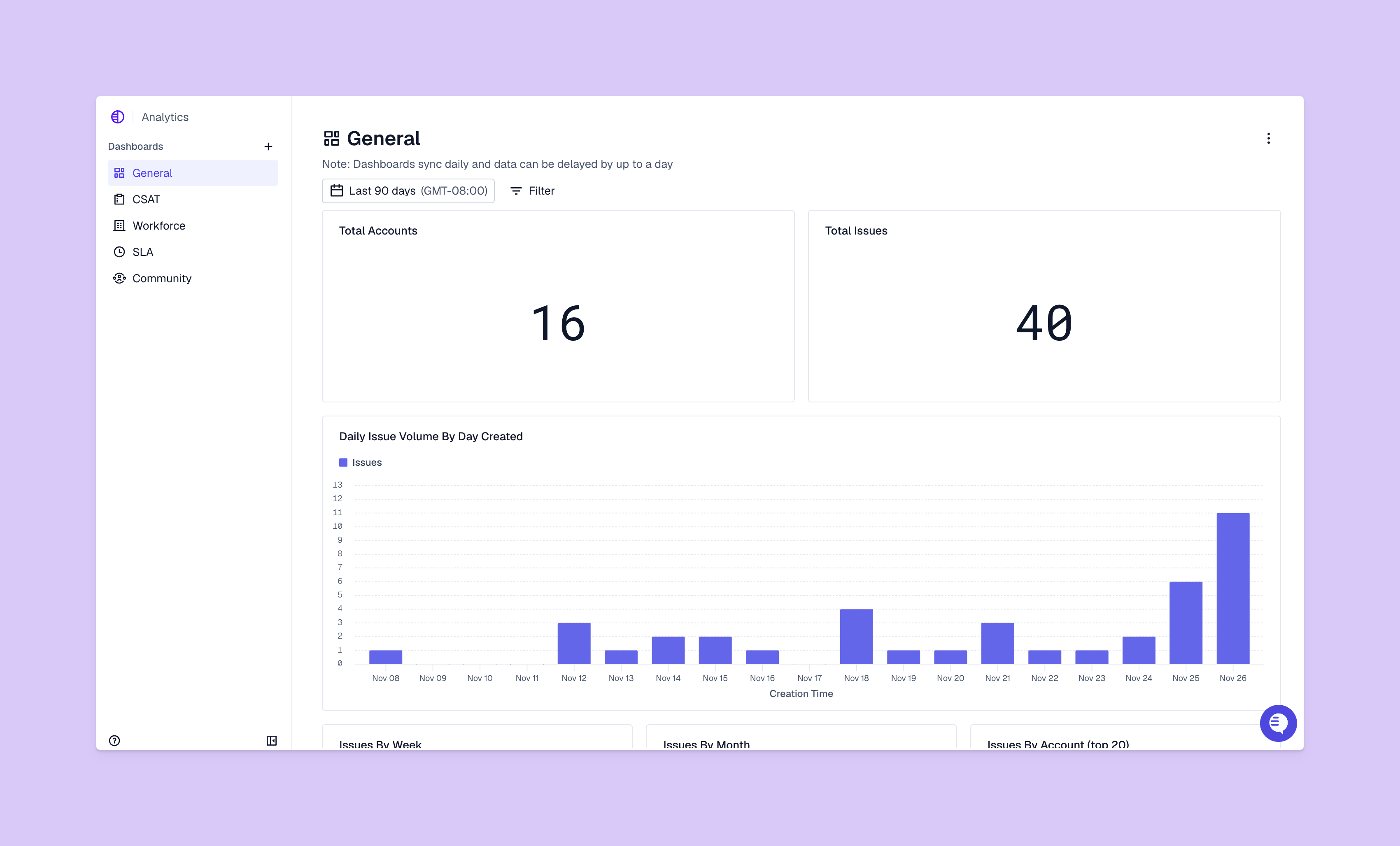
A support engineer bridges the gap between customers and technical teams. They’re distinct from general customer support and IT help desk representatives. Most support engineers help diagnose product-level issues, coordinate fixes across teams, and manage the customer relationship through the resolution process.
Let’s take a closer look at how these professionals combine technical investigation with careful account awareness.
A support engineer’s day usually starts with triage. Conversations come in from Slack, email, and chat, and they’re often about similar issues reported by different customers. First, engineers figure out what’s actually broken versus false positives (like a configuration question or a confusion around expected behaviors).
Once they confirm the issue, they reproduce it. This is where the role diverges from general support. To reproduce the bug, support engineers often need to pull up the customer’s specific situation, check API logs, and document the exact sequence of steps that triggers the failure. This process creates a detailed bug report, which gives the technical team account context and reproduction steps that helps them address the problem quickly.
From there, the support engineer manages the escalation process. They coordinate with the dev team on timelines, give progress updates to customers, and verify the fix once it ships. In between, they write internal documentation. They could update the knowledge base with new troubleshooting steps, or note bug patterns for the post-sales team to investigate.
Typical consumer-focused customer support is high-volume and transactional. Most interactions are straightforward: A customer has a question, your team answers it, and the conversation ends.
B2B support engineers operate differently. Your customers are accounts with contract values, renewal dates, and multiple stakeholders. There’s a lot at stake, and one unresolved issue could mean a customer’s lifetime value is cut short, which may lose your company thousands of dollars down the road.
This difference changes how support engineers organize their work. For example, a $500k account gets priority over an entry-level tier with a couple of users. Enterprise customers expect different communication levels, like proactive updates after each milestone. The support engineer who manages that communication directly protects (and sometimes increases) revenue, whether or not it shows up in their job description.
Cross-functional dependencies are also tighter. In B2B, support engineers work closely with customer success on account health and feature requests. They also collaborate with dev teams on escalations that need code-level fixes.
B2B support engineers need instant updates and smooth transitions — so even the best professional may struggle without a solid platform. When teams juggle account inquiries, dev fixes, and customer success requests, the whole resolution cycle can slow down. The right software lets B2B engineers manage seamless hand offs and maintain context between conversations.
The best support engineers balance interpersonal skills, like communication and collaboration, with technical know-how. Here are the main abilities to look out for.
The support engineers on your team don’t need to write production code, but they should be able to read it well enough to understand it. When they can spot errors based on customer descriptions, they can save your dev team a full round of back-and-forth feedback loops. Plus, they can document the failure path clearly to speed up the escalation and resolution processes.
Next, SQL comes up more than most job descriptions suggest. Customers often report unexpected behavior, and engineers may need to query account data to confirm whether the issue is a real bug or a misconfigured setting. If they can run that check independently, it keeps resolution times tight and dev teams focused on actual code issues.
Lastly, there’s documentation. When your engineer resolves a complex issue and can accurately record the fix in your knowledge base, the next person who hits that problem can resolve it in minutes. This helps support teams scale without extra headcount.
Half of technical support relies on communication. On any given day, your engineers speak directly with implementation leads and point of contacts, or even C-suite stakeholders who want to know why their team’s workflow is blocked.
Support engineers need to explain complex product issues to non-technical VPs in plain language and give dev teams technical descriptions of the same problem — which are two very different skills. For many people, it’s hard to switch between those two modes quickly, and support engineers need to daily.
Incident communication puts this skill to the test. When a high-value account hits Priority 1 (P1), the contact expects proactive updates at a regular cadence. Your engineer needs to provide those updates even when there’s nothing new to report simply to touch base and let the customer know that the team is hard at work.
Silence reads as neglect, and in B2B, neglect reads as risk. The teams that expertly handle incident communication build the kind of trust that survives a rough quarter. The ones that go quiet until the fix ships might field calls from customer success about a renewal that’s in jeopardy.
Support engineers work with pre- and post-sales teams and developers. That means they need a little bit of know-how from every department involved so they can use the right terminology and coordinate workflows between teams.
This cross-functionality gives support engineers some of the most useful product data in your company. They see the same bugs appear across four different accounts in a week and hear frequent feature requests. And because they field onboarding tickets, they know exactly which parts of your product cause the most friction for new customers.
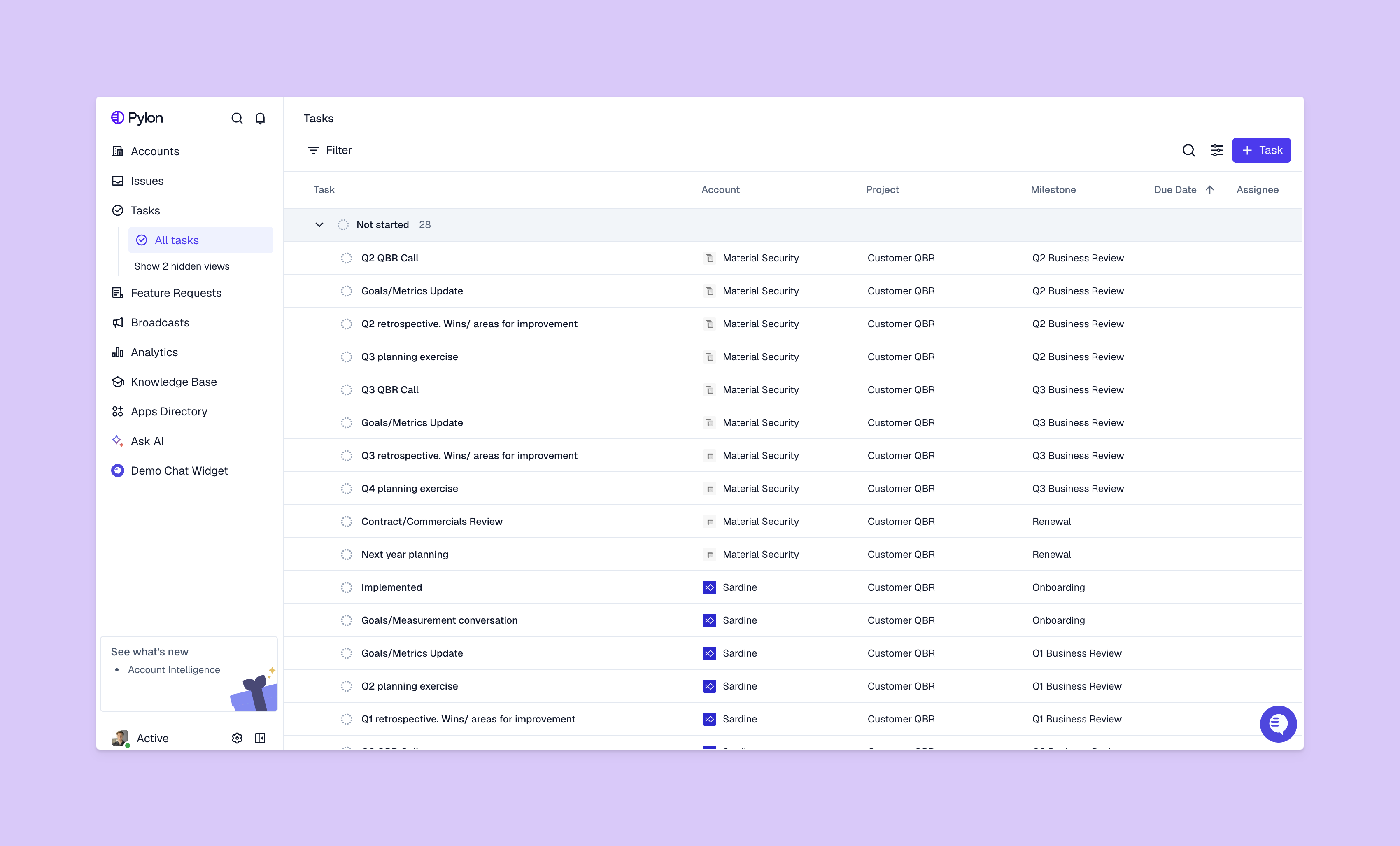
The gap between a good support engineer and a great support operation usually lies in technology. Your engineers might have the skills, but they could waste precious time stuck between Slack, email, and a ticketing system to reconstruct customer context.
Tools like Pylon close that gap in a few specific ways:
The engineers on your support team are the people closest to your customers’ real experience with your product. They keep accounts healthy and renewals on track, but those skills only scale when the platform underneath them keeps up.
Pylon is the modern B2B support platform that offers true omnichannel support across Slack, Teams, email, chat, ticket forms, and more. Our AI Agents and Assistants automate busywork and reduce response times. Plus, with Account Intelligence that unifies scattered customer signals to calculate health scores and identify churn risk, we're built for customer success at scale.
A support engineer in SaaS is a technical specialist who helps customers resolve product issues, diagnoses bugs, and acts as a liaison between end users and internal dev teams. Their responsibilities go beyond standard help desk support to provide deep, product-level expertise.
A support engineer primarily handles reactive, technical issue resolution, while a customer success manager focuses on proactive relationship management, renewals, and expansion. In many B2B SaaS companies, both roles work closely together.
Support engineers commonly work with ticketing systems, knowledge bases, and communication platforms. Modern teams rely on unified platforms like Pylon to reduce tool sprawl and centralize customer context.
Pylon Workforce Management is available now. See it in action with a live demo.