
As B2B companies scale, support requests often become less predictable. Issues require more context and detailed product knowledge to fix, and the line between simple solutions and escalations can blur.
Customer support tiers give you a way to handle this range of issues. Instead of treating every ticket the same, you route problems based on what they need and which team member is best equipped to handle them. This way, requests don’t bounce around or get stuck.
The following guide explains how these levels of support work and how to set up a system that holds up as volume continues to increase.
Customer support tiers, developed from the traditional tiered IT support model, are a structured way to organize incoming requests by complexity, urgency, and the expertise required. For instance, tier 1 support might answer common questions, while tier 2 would troubleshoot complex problems (more on the typical breakdown for this below).
Most tiered models include frontline support, deeper technical support, and specialized experts. Some also have third-party support, depending on the product and customer base.
A tiered system helps you move tickets along faster, so customers aren’t waiting as long for help. So instead of having a generalized support employee try their best to find an answer for a complex troubleshooting question — and potentially need to ask colleagues in the process — this ticket can immediately be routed to an expert on the topic.
More generally, using support tiers lets your team:
Without establishing tiers, small tickets compete with more serious ones. With tiers in place, everyone can expect requests to be routed correctly, so nobody's time is wasted.
Not every company uses the same number of tiers, but most B2B customer support teams follow a similar structure. Here’s a breakdown of the most common levels.
Tier 0 includes resources customers can use without contacting support, like knowledge base articles, agentic AI agents, and FAQs.
Self-service works best for repeat questions and typical early-stage setup issues. It gives customers a quick option while reducing inbound ticket volume for your team.
To be effective, you’ll want to keep tier 0 content current and easy to find. You might publish a knowledge base on your site that gets maintained every few months, for example.
Tier 1 IT/customer support teams respond to new tickets and answer common questions. This team will often resolve:
Many teams use an automated help desk for this tier, setting it up with triggers for escalating issues to human support teams if necessary.
Tier 2 focuses on complex troubleshooting that requires a stronger understanding of the product than basic documentation will provide. Examples include:
Tier 3 handles the most complex or high-impact cases, typically getting senior leadership involved. Customer success managers might work with senior engineers to solve an account’s team-wide feature outage, for example.
Across all customer support interactions, continuous and empathetic communication is important — but that’s especially true at this stage. These issues often impact a customer’s workflows and timelines, and getting bounced around without adequate help can be frustrating. Escalating issues to this tier should signal to all employees involved in the case that they need to deliver extra-thoughtful customer care and act quickly to resolve the issue.
An ITIL level 4 support definition is similar for customer support: These issues escalate to third-party providers because your team lacks the specialization required to solve them.
Say one of your key integration partners changes their API without notice, breaking a shared integration. This is a workflow blocker for one of your high-level accounts. Your technical team would need to work alongside this partner’s technical team, as customer support/success teams keep the customer updated on timelines and consequences of the issue. Even though resolution sits outside your organization, ownership doesn’t. Your team is still responsible for updates, expectation-setting, and follow-through.
For most scaling B2B teams, a tiered support strategy is necessary to escalate issues effectively. But there are some trade-offs worth considering before you implement it.
Most of the challenges listed above come from unclear tier expectations and problematic issue escalation management. Here’s a five-step guide for setting up a tiered system that works for your team’s support capabilities.
Start by looking at the requests already coming into your support queue. Focus on patterns instead of edge cases: Which questions keep cropping up? Which issues continue to take the longest to resolve or get escalated?
Pay attention to:
This gives you a baseline instead of having to guess where tier boundaries might be. Instead, you can see which issues are simple enough for frontline support and which consistently require deeper product knowledge.
Escalations should follow a predictable process. Define when a request moves to the next tier and what information has to be included, such as:
This prevents teams from having to ask the same questions twice. It also shortens resolution time, since specialists can spend their time solving the issue without having to figure out what’s already been tried.
Once you understand your request patterns and clarify escalation routes, define responsibilities for each tier and part of the escalation process. Be specific about which problems are resolved directly and which are passed forward.
Being this specific prevents two common problems:
Write down who handles which types of requests, using straightforward instructions. Keep them brief and be sure everyone’s on the same page about where requests should go, to speed up routing and minimize confusion.
Use past tickets to show what belongs in each tier. Focus on examples like:
This gives teams a shared understanding of how routing decisions should be made.
Continue to review what customers are contacting you about and grouping requests by complexity and frequency. Pay attention to:
Learn from your findings to make small updates, such as refining tier boundaries, changing what information you ask for upfront, or being clearer about when a request should be passed along.
As your support team scales, you need a well-defined and tested way of escalating issues, so nothing gets missed and nobody’s stuck waiting. A tiered support system benefits everyone involved: employees aren’t overwhelmed with issues irrelevant to them, and customers get the help they need the first time around.
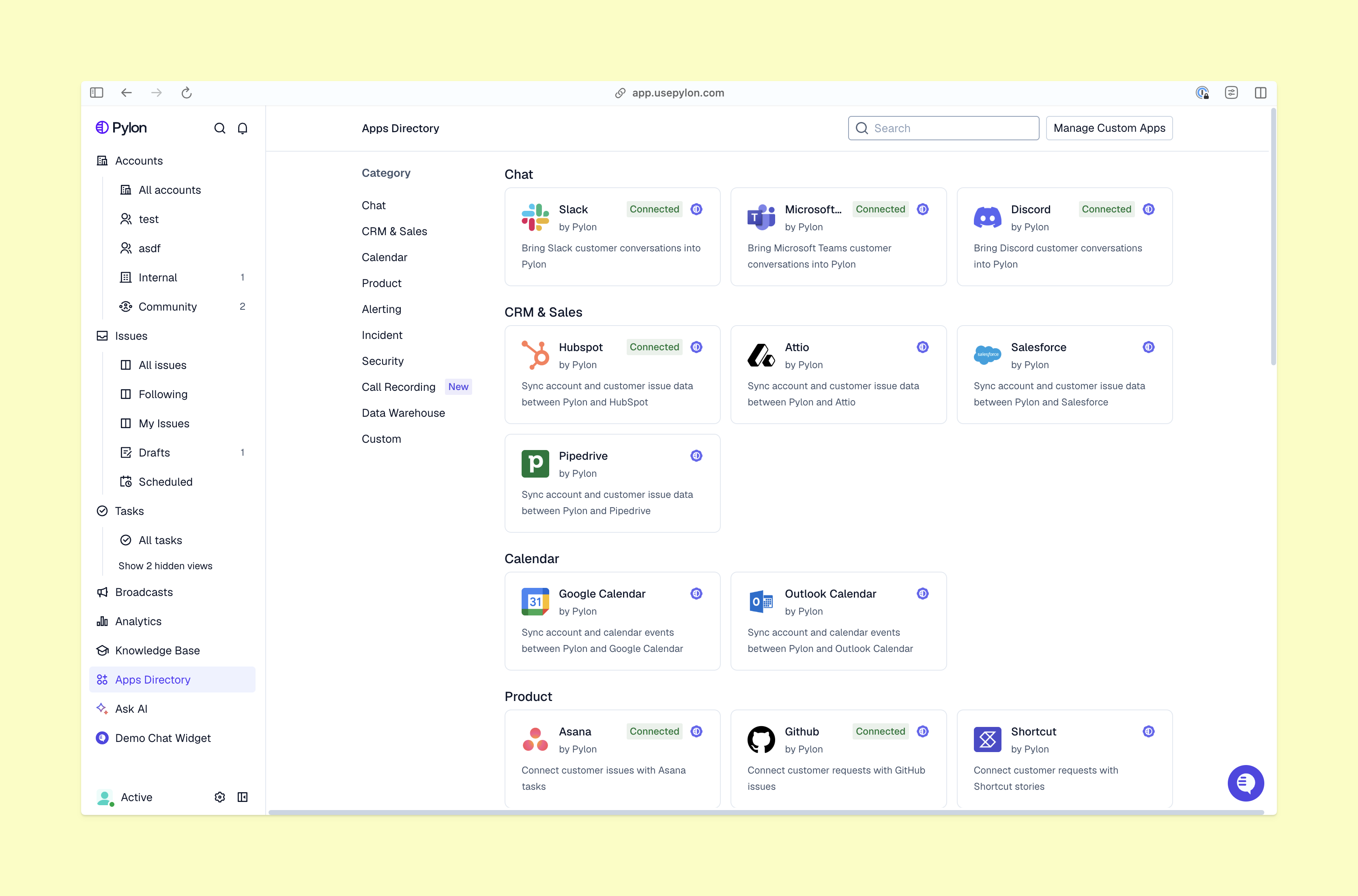
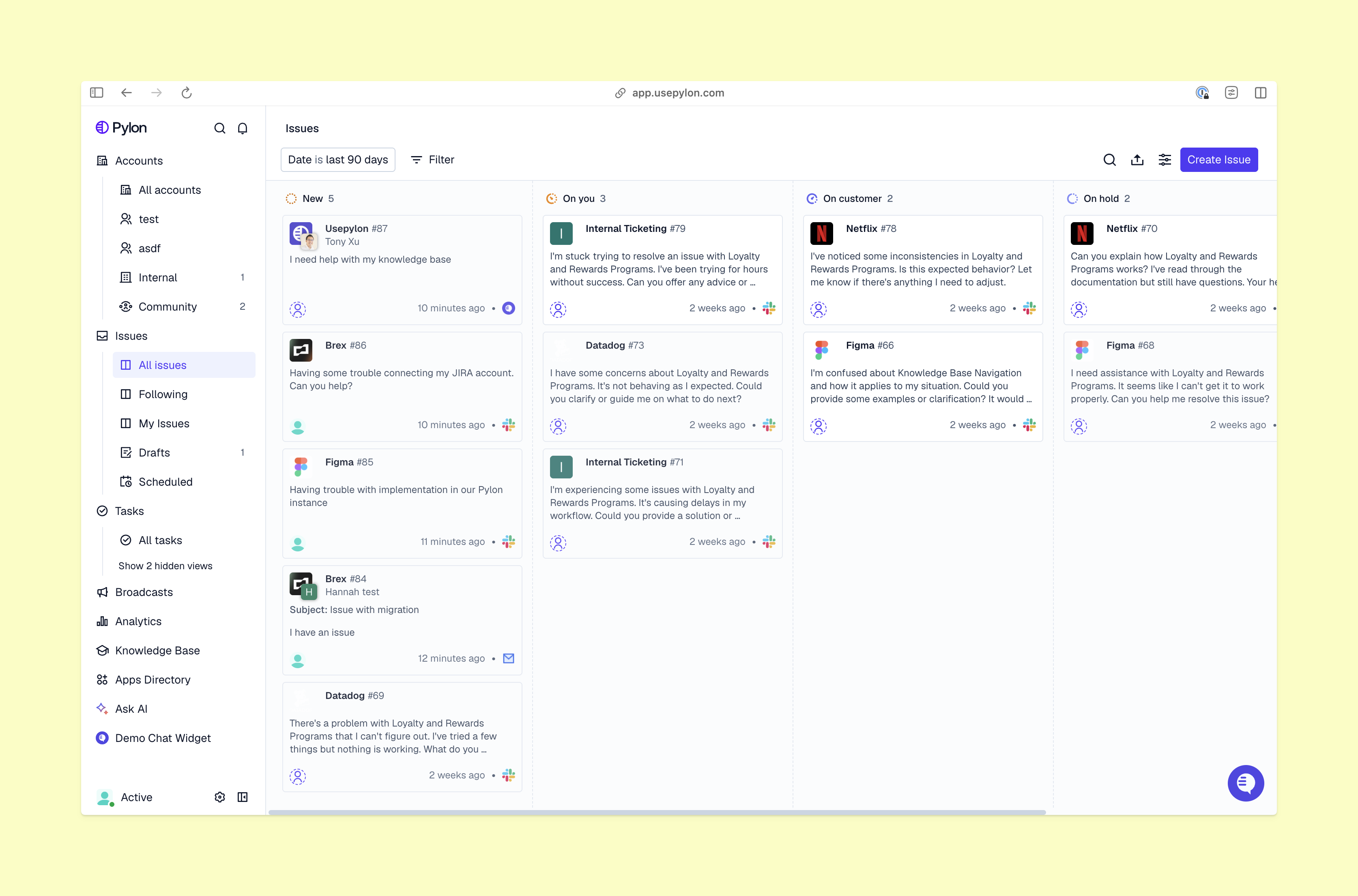
A key aspect of tiered support is account context. As issues move around, each team needs to know where something is at and how each problem fits into the account’s general health. You can gain this context by using a B2B support dashboard that centralizes all of this information.
Pylon is the modern B2B support platform that offers true omnichannel support across Slack, Teams, email, chat, ticket forms, and more. Our AI Agents and Assistants automate busywork and reduce response times. Plus, with Account Intelligence that unifies scattered customer signals to calculate health scores and identify churn risk, we're built for customer success at scale.
Ticketing systems typically include help desk systems for customer support, IT service desk platforms for internal teams, and omnichannel systems that unify all requests in one place.
They centralize requests, automate routing, improve visibility, and ensure faster, more consistent responses across channels.
AI can automate categorization, routing, and responses, but human agents are still essential for complex or sensitive issues.
Pylon Workforce Management is available now. See it in action with a live demo.